
Last updated September 23, 2026
Seasonal Insulation Care for West Hollywood: Year-Round Homeowner’s Guide
West Hollywood’s climate is mild enough that most homeowners never think about their insulation until something goes wrong. That’s the trap. Because we rarely hit freezing or sustained triple-digit heat, the slow degradation of attic performance happens invisibly, year after year. In our experience across 9,000+ homes since 2016, the properties with the worst insulation problems in West Hollywood are often the ones where owners assumed “mild weather means mild wear.” The 65°F delta between a June attic hitting 130°F and your indoor conditioned air is more than enough to drive convective air movement, moisture cycling, and the gradual compression or delamination of insulation materials. In The Complete Guide to Insulation in West Hollywood, we’ll walk through what actually happens to your building envelope across West Hollywood’s four seasons, what to look for, and when the signs point to a deeper problem.
Quick Answer
Seasonal insulation care in West Hollywood means monitoring for four distinct pressure and moisture cycles: summer attic heat exceeding 130°F that degrades spray foam adhesion, fall marine-layer condensation that reveals vapor drive failures, winter heating season stress on duct connections and top-plate sealing, and spring as the only comfortable window for depth inspection before summer makes attics inaccessible. Most homeowners can track performance passively through monthly utility bills; a sudden change in the slope of your cooling curve between May and September usually indicates attic bypass has worsened.
Table of Contents
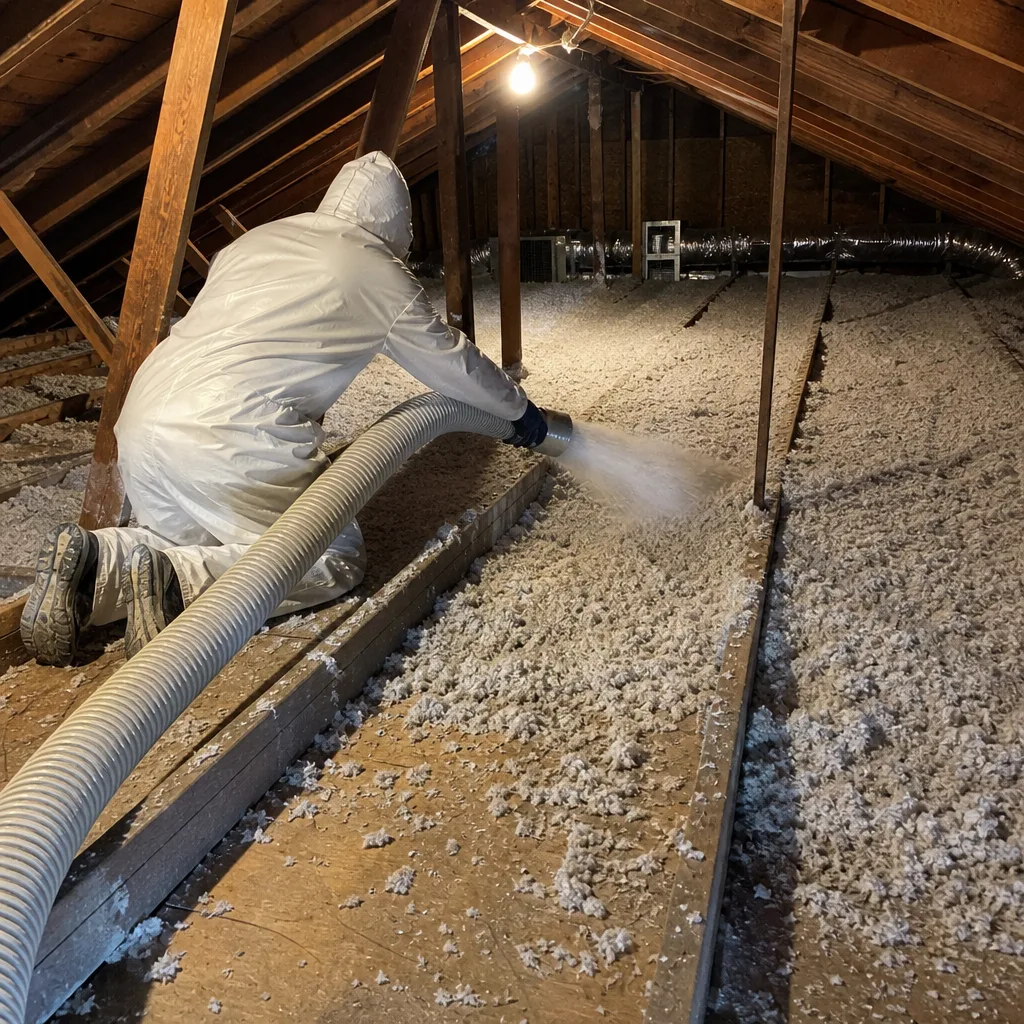
- Summer: Attic Heat and Spray Foam Adhesion in WEHo’s Inland-Adjacent Zones
- Fall: Marine Layer Nights and the Condensation Window
- Winter: The Hidden Heating Season Stress Test
- Spring: The Inspection Window Before Heat Arrives
- Year-Round: Reading Your Utility Bills as a Passive Diagnostic
- Insulation Depth-to-R-Value Guide for Common Materials
- Common Mistakes to Avoid
- When to Call a Professional
- Frequently Asked Questions
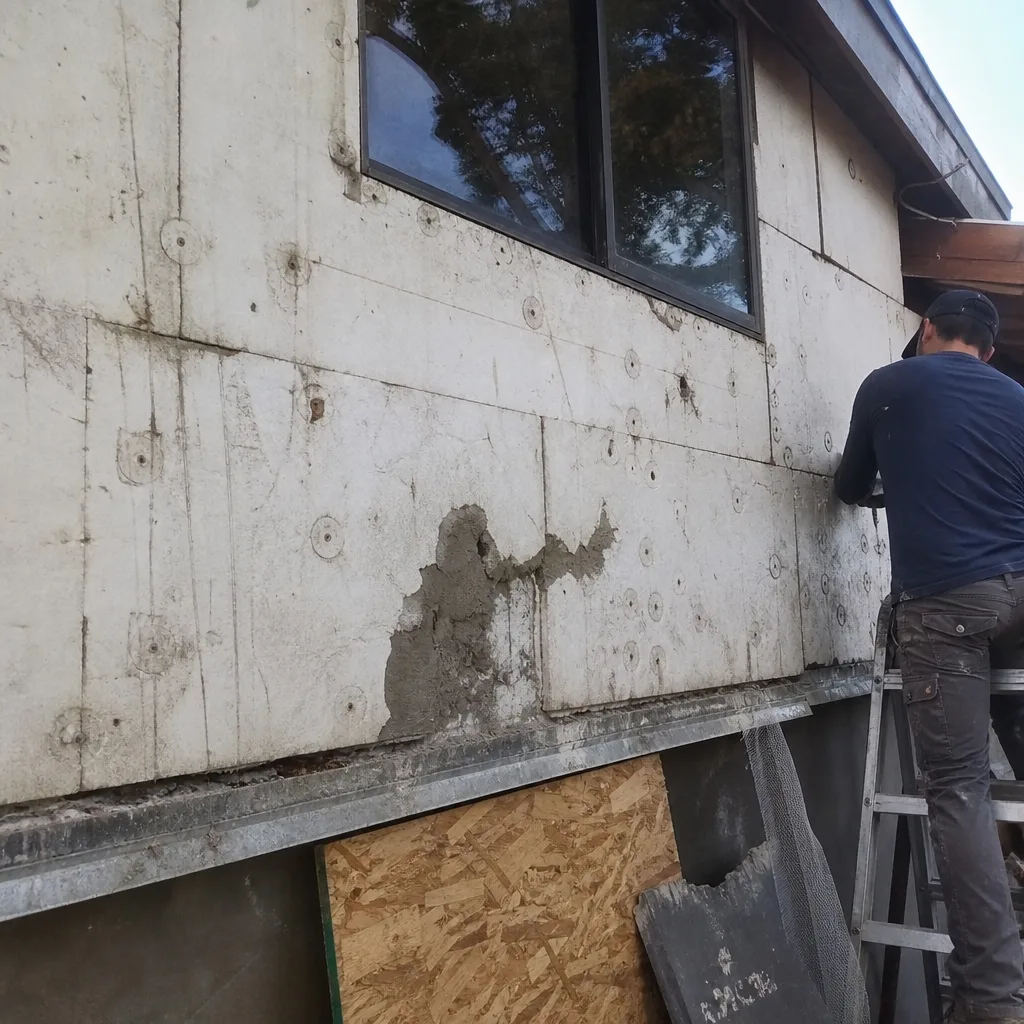 Before
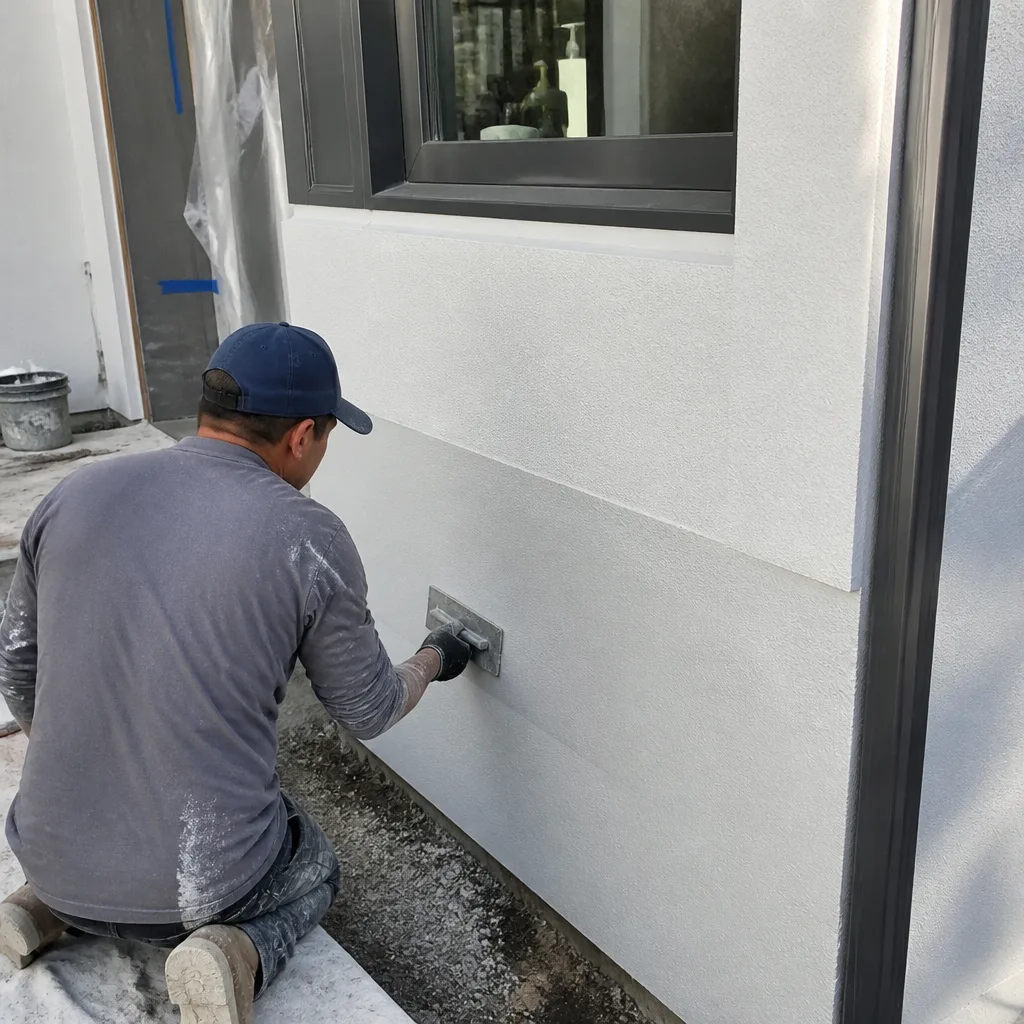 After
AfterSummer: Attic Heat and Spray Foam Adhesion in WEHo’s Inland-Adjacent Zones
West Hollywood sits in an interesting microclimate position. We’re close enough to the coast to get marine layer influence, but the eastern neighborhoods, particularly around Melrose Heights and the lower Sunset Strip slopes, track much closer to inland temperature patterns than Santa Monica or Venice. On a typical July afternoon, we’ve measured attic temperatures of 130°F to 145°F in these areas. That’s not exceptional by Phoenix standards, but it’s sustained heat over four to five months, and it’s the duration that matters for certain materials.
Spray foam insulation, particularly open-cell formulations installed in the mid-2000s to early 2010s, has a known degradation pattern in these conditions. The adhesive bond between the foam and roof deck sheathing can begin to fail when the substrate temperature stays above 140°F for extended periods. We’ve pulled down sections in West Hollywood homes where the foam had partially detached, creating air gaps that rendered the R-value essentially meaningless in those spots. Closed-cell foam holds up better, but even it can develop surface checking, fine cracks that don’t compromise the whole installation but do create thermal bypass paths.
What to look for in summer:
- Rooms that cool unevenly, with the east-facing spaces lagging behind west-facing ones by more than 2°F
- A musty or chemical odor in the attic or upper floor on the hottest days, which can indicate off-gassing from overheated foam
- Visible sagging or detachment of spray foam at roof deck joints, visible from attic access points
- Cooling bills that rise year-over-year for the same thermostat setting and occupancy pattern
The correct response isn’t to add more insulation on top of failing foam. We’ve seen that mistake repeatedly. The failed sections need to be removed, the substrate prepared, and new material installed with proper adhesion protocols. For homeowners with spray foam in West Hollywood’s warmer microzones, we recommend a visual attic inspection every three years, timed for late September when the attic is still hot but not dangerous to enter; for a full checklist, see our Attic Insulation Maintenance Checklist for West Hollywood Homeowners.
Our spray foam insulation in West Hollywood page details the installation standards we use to prevent these adhesion failures, including substrate temperature requirements and the specific Demilec and Icynene formulations we specify for high-heat applications.
Fall: Marine Layer Nights and the Condensation Window
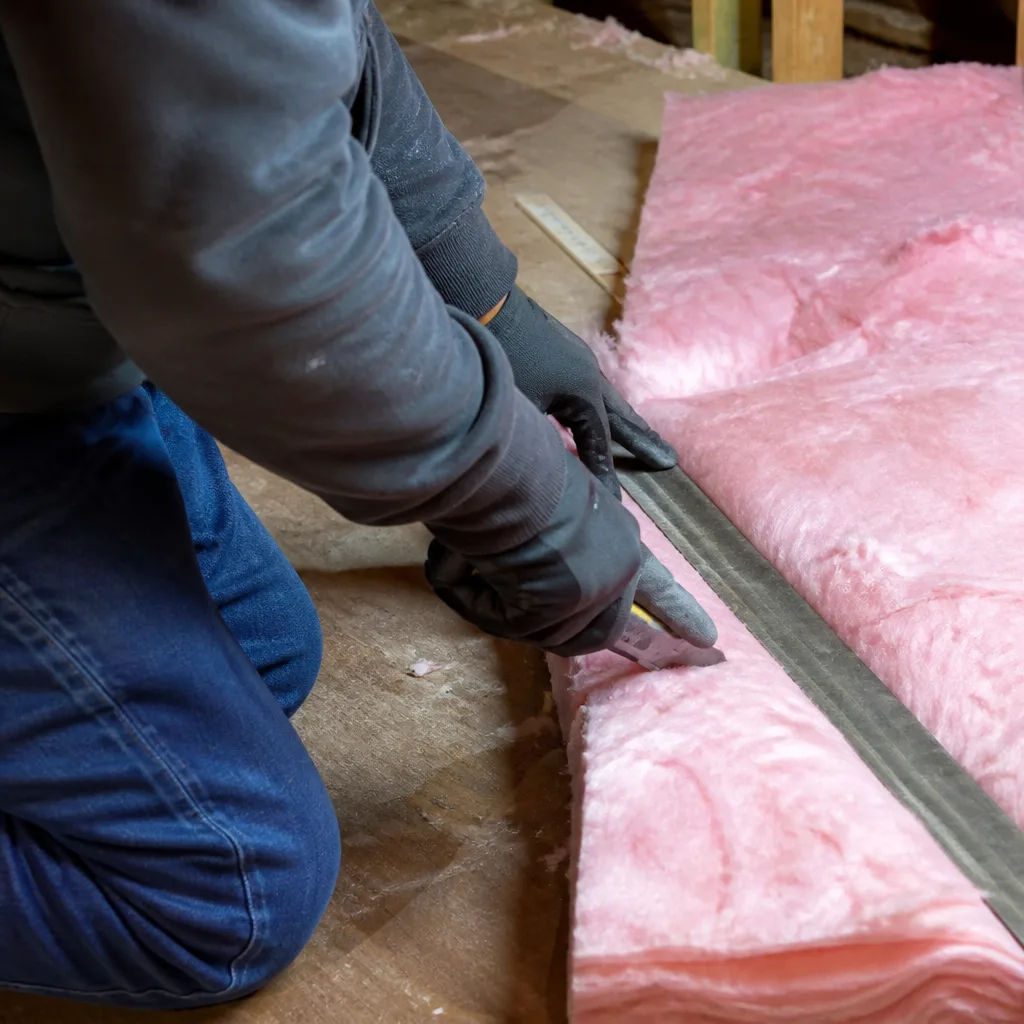
October through November is the most diagnostically valuable period for West Hollywood attics, and almost no one uses it. Here’s why it matters.
As the Santa Monica Mountains cool and the marine layer pushes further inland, West Hollywood gets nights with 90%+ relative humidity and temperatures dropping into the 50s. Your attic, if it’s been heating all summer, retains thermal mass and stays warmer than ambient for weeks. When that warm, conditioned air leaks through ceiling penetrations into the cooler attic space, it hits the dew point on roof deck undersides, rafter surfaces, and any metal fasteners or ductwork. The condensation is often slight, a faint sheen that dries by mid-morning, but it’s enough to start the cycle that produces mold staining, compressed fiberglass, and eventually wood rot.
This is the season when vapor drive problems reveal themselves. Vapor drive is the pressure differential that pushes moisture from warm, humid areas toward cooler, drier ones. In a properly sealed and ventilated attic, the drive is managed. In an attic with unsealed top plates, can light penetrations, or bathroom fan ducts dumping into the space rather than through them, the moisture accumulates faster than it can vent.
Specific signs to check for during the fall condensation window:
- On the first cool, foggy morning after a warm spell, enter the attic within two hours of sunrise with a flashlight. Look for any sheen on the underside of the roof deck, particularly at the north-facing slope.
- Check for darkening or water staining on the attic side of drywall around bathroom fans, kitchen range hoods, and any recessed can lights.
- Smell for mustiness that wasn’t present in summer. Fall humidity makes latent mold active.
- Inspect fiberglass batts for any surface darkening or clumping, which indicates they’ve begun acting as a moisture sink rather than an insulator.
The neighborhoods north of Santa Monica Boulevard, where older construction predates modern vapor barrier requirements, show this pattern most clearly. We’ve documented cases in the Norma Triangle and Spaulding Square where the fall condensation window revealed attic moisture loads that had been building for years, invisible to the occupants until the seasonal conditions made them detectable.
Proper remediation starts with air sealing, not more insulation. The attic insulation in West Hollywood approach we use begins with sealing all penetrations with fire-rated caulk and foam, installing proper duct boots and connections, then verifying with a blower-door test before any new insulation goes in. Sealed first, then insulated. In that order.
Winter: The Hidden Heating Season Stress Test
West Hollywood’s heating season is short but real. From December through February, nighttime lows regularly drop into the 40s, and the occasional Santa Ana event can push daytime heating demand in homes with poor solar gain or older single-pane windows. Most homeowners run heat for perhaps 200 to 400 hours total across the season. That limited runtime makes it easy to miss what’s actually happening in the building envelope.
Here’s what we observe: when heating systems cycle on, the pressure differential between conditioned space and attic increases because warm air is being generated faster than it can distribute. This pressure forces air through every remaining leak path, top plates, electrical penetrations, chimney chases, partition walls. In summer, the same leaks exist but the pressure differential is weaker and the direction reverses. Winter is when the leaks become measurable.
We use the heating season as a natural blower-door test. Not the formal kind with a calibrated fan, but the real-world version: your furnace or heat pump is the fan, and your utility bill is the gauge. A home with properly sealed top plates and duct connections will show a linear relationship between heating degree days and gas or electricity consumption. A home with attic bypass will show a steeper slope, more energy per degree day, because the heated air is leaking faster than the thermostat setting would predict.
Specific winter checks:
- Feel for drafts at ceiling electrical outlets on exterior walls on cold, windy mornings. This indicates top-plate leakage into the wall cavity.
- Check for rooms that never reach thermostat setpoint despite adequate duct sizing, a sign of duct leakage into the attic.
- Look for frost or condensation on nail points protruding through roof sheathing in the attic after cold nights, which indicates interior moisture is reaching the cold surface.
- Track your January gas or electric bill against the prior January. A 15%+ increase with similar thermostat settings suggests envelope degradation.
The blower-door test, a pressurization reading that shows in one number how much air your building envelope is losing, is the definitive diagnostic. We’ve tested West Hollywood homes that showed 4,200 CFM50 before sealing and 2,100 after, a 50% reduction that translates directly to heating and cooling efficiency. Every applicable job we complete includes before-and-after blower-door numbers so the homeowner can verify the result they paid for.
Spring: The Inspection Window Before Heat Arrives
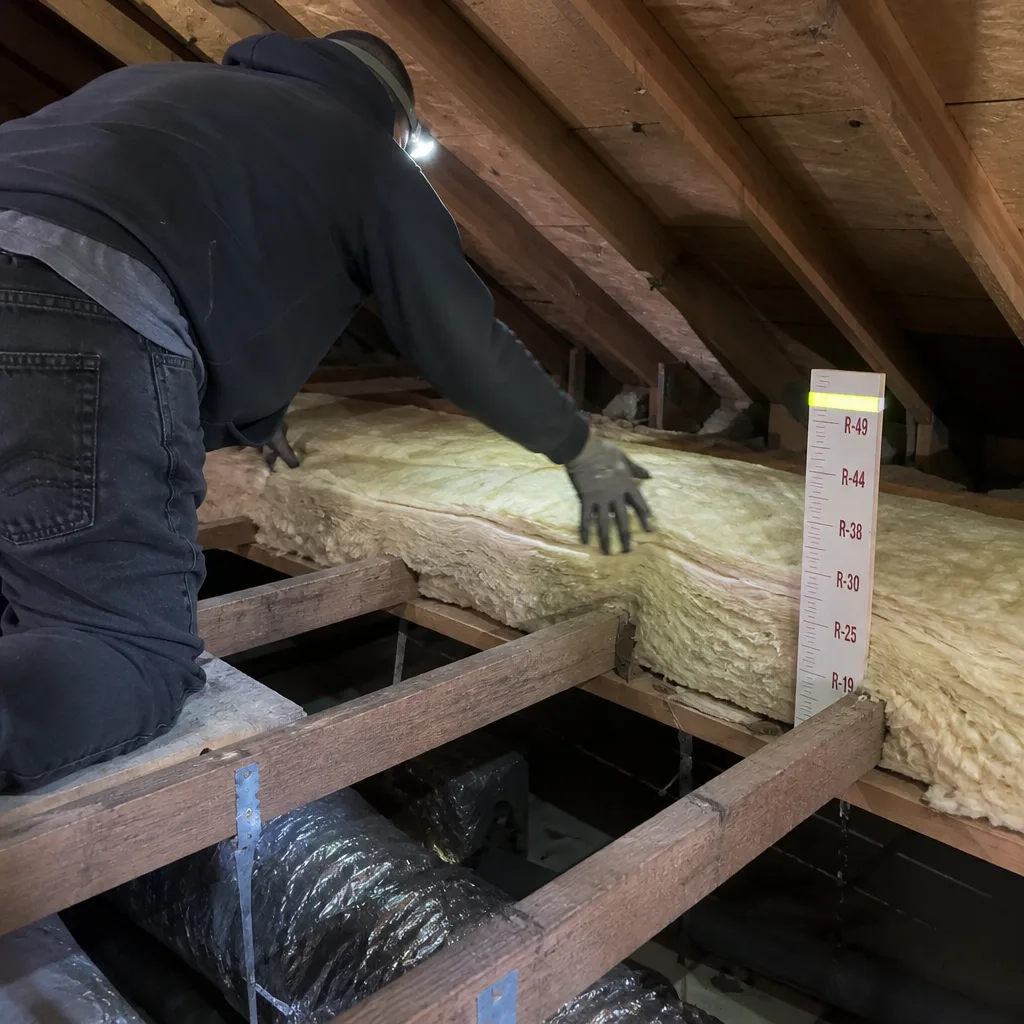
March through early May is the only window when West Hollywood attics are comfortable enough to work in for extended periods, dry enough that moisture readings are reliable, and still cool enough that spray foam and adhesive materials can be handled safely. By late May, attic temperatures begin the climb toward summer peaks, and competent contractors start scheduling early mornings or pushing work to fall.
This is the correct season for a depth inspection. Not a glance from the access hatch, but a systematic measurement across multiple attic locations. Insulation settles, gets disturbed by prior trades, and is unevenly installed in the first place. What you need to know is whether you have consistent, full-depth coverage everywhere it matters.
How to conduct a spring depth inspection:
- Wait for a dry day, ideally 48 hours after any rain, so you’re not measuring damp material.
- Bring a tape measure, a camera, and a marker. Wear a respirator if the insulation is disturbed or if you see any rodent evidence.
- Measure at six locations: center of attic, each of four quadrants, and directly above any known air handler or duct trunk location.
- For loose-fill fiberglass or cellulose, use a ruler to probe to the substrate. For batts, measure uncompressed thickness at the edge of a bay.
- Photograph each measurement location with the ruler visible. This becomes your baseline for future comparison.
- Check for any areas where insulation has been displaced by wiring, plumbing, or prior work, and note the dimensions of those gaps.
What you’re looking for is variation. A properly insulated attic should show no more than 1 inch of depth variation across measurement points. Gaps, compression paths where someone walked, or thin spots above top plates are all correction targets.
Spring is also when rodent activity from winter becomes visible. We’ve found that West Hollywood’s older neighborhoods, particularly those with mature tree canopy connecting rooflines, see more attic intrusion than newer construction areas. Look for droppings, tunneling in loose-fill, or compressed paths. If you find evidence, insulation removal and replacement with rodent proofing should happen before summer, when the smell becomes unbearable in heat.
Our Topside Attic Insulation West Hollywood home page outlines the full service line, including attic cleaning and rodent proofing, for homeowners who discover more than they expected.
Insulation Depth-to-R-Value Guide for Common Materials
California Title 24 currently requires R-38 minimum for attic insulation in climate zone 6, which includes West Hollywood. Most existing homes fall short, not because the original installation was deficient but because settling, moisture compression, and disturbance have reduced performance over time.
Use this table to convert measured depth to approximate R-value. These figures assume dry, uncompressed material at standard density:
| Material | R-value per inch | Depth for R-38 | Depth for R-49 |
|---|---|---|---|
| Loose-fill fiberglass (Owens Corning AttiCat or equivalent) | R-2.5 | 15.2 inches | 19.6 inches |
| Loose-fill cellulose (GreenFiber or equivalent) | R-3.2 | 11.9 inches | 15.3 inches |
| Fiberglass batts (Johns Manville or equivalent) | R-3.0 | 12.7 inches | 16.3 inches |
| Mineral wool batts (Rockwool or equivalent) | R-3.7 | 10.3 inches | 13.2 inches |
| Open-cell spray foam | R-3.6 | 10.6 inches | 13.6 inches |
| Closed-cell spray foam | R-6.0 | 6.3 inches | 8.2 inches |
Important caveats for West Hollywood conditions: Cellulose can lose 10-15% of its R-value if it has absorbed moisture, which is common in attics with vapor drive problems. Fiberglass batts lose effectiveness if compressed or if gaps exist between batts and framing. Spray foam R-values are rated at installation thickness; if the foam has detached or checked, the effective R-value is lower in those areas.
We specify materials from Owens Corning, Johns Manville, Knauf, Rockwool, CertainTeed, Icynene, Demilec, and GreenFiber based on the application, not proprietary lock-in. The right material depends on the assembly, the moisture conditions, and the access constraints of your specific attic.
Year-Round: Reading Your Utility Bills as a Passive Diagnostic
The most powerful tool for seasonal insulation care is already in your mailbox or inbox: your monthly utility bill. Most West Hollywood homeowners glance at the total and pay it. The ones who track performance look at consumption patterns, kWh for electricity or therms for gas, normalized against degree days.
Here’s the specific pattern that suggests attic bypass has worsened: a change in the slope of your cooling curve between May and September. In a stable building envelope, your kWh per cooling degree day should be consistent year to year, varying only with thermostat setpoint changes or occupancy. If the slope steepens, meaning each additional degree day costs more than it used to, air is leaking faster from conditioned space to attic than previously.
How to set up passive monitoring:
- Download 24 months of billing history from your utility’s website.
- For each month, record total kWh (electric) or therms (gas), not the dollar amount, which is distorted by rate changes.
- Look up heating and cooling degree days for West Hollywood, 90069 or your specific zip, from NOAA or a weather data service.
- Calculate kWh per cooling degree day for May through September, and therms per heating degree day for December through February.
- Plot the monthly ratios. A steady state is good. A rising trend is a warning.
We’ve seen West Hollywood homeowners catch developing problems two to three years before they became symptomatic, simply because the data showed a 12% increase in cooling consumption per degree day that couldn’t be explained by equipment aging or occupancy changes. In one case near Fountain Avenue, the data pointed us to a failed duct boot that was dumping 20% of conditioned air into the attic. The homeowner had noticed nothing except a slightly warm second bedroom.
The Haven Standard approach to this is documentation. We provide before-and-after blower-door numbers on applicable jobs, a Documented Photo Record on every visit, and a written scope before any work starts. You leave with evidence, not assurances.
Common Mistakes to Avoid
- Adding insulation over unsealed air leaks. We’ve pulled back new cellulose in West Hollywood attics to find the original bypass paths completely unchanged, now buried and harder to access. The insulation performs poorly and can mask moisture problems until they’re severe.
- Assuming mild weather means mild wear. West Hollywood’s climate is gentle on people and hard on building envelopes precisely because the stress is chronic, not acute. The 65°F attic-to-indoor delta in June drives more cumulative air movement than a single freeze-thaw cycle in Minneapolis.
- Ignoring the fall condensation window. October and November are when vapor drive failures become visible. Missing this diagnostic period means waiting another year to catch a moisture problem that’s already active.
- Measuring insulation depth at only one point. Attic insulation is almost never uniform. A single measurement at the access hatch, where installers often add extra material for visibility, tells you nothing about the corners and edges where heat loss actually concentrates.
- Using dollar amounts on bills instead of consumption units. SCE and SoCalGas rates have shifted significantly; comparing $200 to $250 tells you about rate changes, not performance. Always normalize to kWh or therms per degree day.
- Delaying spring inspection until summer. By June, West Hollywood attics are too hot for safe, thorough work. The inspection window closes, and problems discovered in July often can’t be properly addressed until September or October.
- Hiring based on price per square foot without a written scope. Insulation pricing without specification of material type, depth target, air sealing extent, and verification method is meaningless. Under Haven Standard Clause 1, every job begins with a flat price, written scope, and written warranty before anyone lifts a tool.
When to Call a Professional
Some conditions require trained assessment and shouldn’t be DIY projects. Call for professional evaluation if you find: spray foam detachment or surface checking exceeding 10% of visible area; moisture staining or mold growth on any attic surface; rodent droppings or tunneling in insulation; rooms that vary more than 3°F from thermostat setpoint; or any increase in consumption per degree day exceeding 15% year-over-year. High-tension garage door springs, electrical panel work, and gas line connections are genuinely dangerous and should never be approached without proper training.
Topside Attic Insulation West Hollywood offers free estimates in West Hollywood. We’ll read your utility data with you, inspect your attic with you present if you’d like, and provide a written scope and flat price before any work starts. Call (213) 306-2607 to schedule. We also offer a Free Second Opinion on any written estimate from another contractor, we’ll review their scope and explain what we see.
Frequently Asked Questions
Most attic insulation jobs in a typical West Hollywood home run between $2,800 and $6,500, depending on existing material condition, square footage, and whether air sealing is needed before new insulation goes in. Spray foam applications range higher, from $4,500 to $12,000, based on thickness and whether roof deck or floor application. We provide a flat, written price before any work starts, always, and we never ask you to call for a quote without context. Call (213) 306-2607 for a free estimate with specific numbers for your home.
Insulation can be installed in summer, but attic work in West Hollywood becomes hazardous by late June, with temperatures exceeding 130°F in many attics. We schedule summer jobs for early morning starts and limit duration for crew safety. For comprehensive inspections or spray foam applications requiring extended cure time, spring or fall is preferable. If you’re reading this in July and suspect a problem, call now, we can assess conditions and schedule appropriately rather than delay until the issue worsens.
Look for three specific indicators: visible detachment from the substrate, particularly at roof deck joints; surface checking, fine cracks that create thermal bypass paths; and uneven cooling in rooms beneath the foam, suggesting air gaps have developed. Spray foam installed in West Hollywood before 2015, particularly open-cell formulations, is more susceptible to heat-driven adhesion failure. A visual inspection from the attic access, using a flashlight to examine the full roof deck surface, will reveal these conditions. We do not recommend walking on foam to inspect it, damage risk is high.
Repair is cheaper only when the problem is localized and the surrounding insulation is dry, uncontaminated, and at full depth. For moisture-damaged, rodent-compromised, or significantly settled material, replacement is more cost-effective because repaired sections rarely match the thermal performance of intact original material, and the labor to isolate and patch often approaches replacement cost. We evaluate this case by case and will show you the specific math. Our Free Second Opinion on any written estimate includes a repair-versus-replace analysis if another contractor has proposed one approach.
California Title 24 requires R-38 minimum for attic insulation in climate zone 6, which includes all of West Hollywood. New construction and major renovations must meet R-49 in some configurations. Existing homes are not required to upgrade to current code unless triggering a specific alteration, but performance at R-38 or below is the practical minimum for reasonable heating and cooling efficiency. Many West Hollywood homes built before 1980 perform at R-11 to R-19 equivalent due to settling and degradation.
We answer calls with a live person 24/7, no voicemail loops. For urgent conditions, attic moisture or rodent contamination that affects indoor air quality, we typically schedule within 48 hours. Standard estimates are usually available within one week. Every visit includes a Documented Photo Record, and applicable jobs receive before-and-after blower-door readings. The 365-Day Done Right Promise applies to all completed work, if it’s not done right, we make it right.
The Bottom Line
West Hollywood’s mild climate conceals insulation degradation that would be obvious in harsher regions. The four seasonal pressure cycles, summer attic heat, fall marine-layer condensation, winter heating stress, and spring’s diagnostic window, each reveal different failure modes. The homeowners who stay ahead of problems track utility consumption per degree year, inspect attic depth annually in spring, and watch for the specific signs each season produces. Documentation beats assumption every time: written scope, written price, photo record, and blower-door verification. For more guides & resources on protecting your home, visit our blog. That’s the Haven Standard, and it’s how we’ve operated since 2016.
Written by Wes Okafor, Owner at Topside Attic Insulation West Hollywood, serving West Hollywood since 2016.