
Last updated September 23, 2026
The Complete Guide to Insulation in West Hollywood
A typical 1940s West Hollywood bungalow loses more conditioned air through top-plate gaps and recessed-light penetrations than through its entire wall assembly - yet most insulation quotes never mention those gaps at all. We’ve spent nine years and over 9,000 homes learning this: in West Hollywood’s mild Mediterranean climate, air sealing is the load-bearing part of the job, and insulation is what holds the conditioned air in place after the leaks are stopped. This guide maps the actual thermal and pressure dynamics of a WEHo home before recommending a single material, and points to more guides & resources for related projects. You’ll learn why your attic bypass matters more than your wall R-value, how to read a blower-door report, and what documentation you should walk away with.
Quick Answer
Insulation in West Hollywood should start with air sealing, not material selection. Most homes here - built between 1920 and 1965 on tight lots with minimal attic ventilation - lose 30-50% of conditioned air through thermal bypasses before it ever reaches the insulation layer. A proper job includes a blower-door test, targeted sealing of top plates and penetrations, then insulation matched to CEC Climate Zone 9’s mild heating and cooling loads. Expect to invest $2,800-$6,500 for a complete attic air seal plus insulation in a typical 1,200-1,800 square foot West Hollywood home; see our Insulation Cost Breakdown: The West Hollywood Homeowner’s Reference for 2026 for detailed pricing factors.
Table of Contents
- Why Air Leakage Beats R-Value in West Hollywood
- How West Hollywood’s Housing Eras Change the Sealing Strategy
- The Blower-Door Test: What ACH50 Means and Why It Matters
- Material Selection for CEC Climate Zone 9
- What a Completed Job Record Looks Like
- Common Mistakes to Avoid
- When to Call a Professional
- Frequently Asked Questions
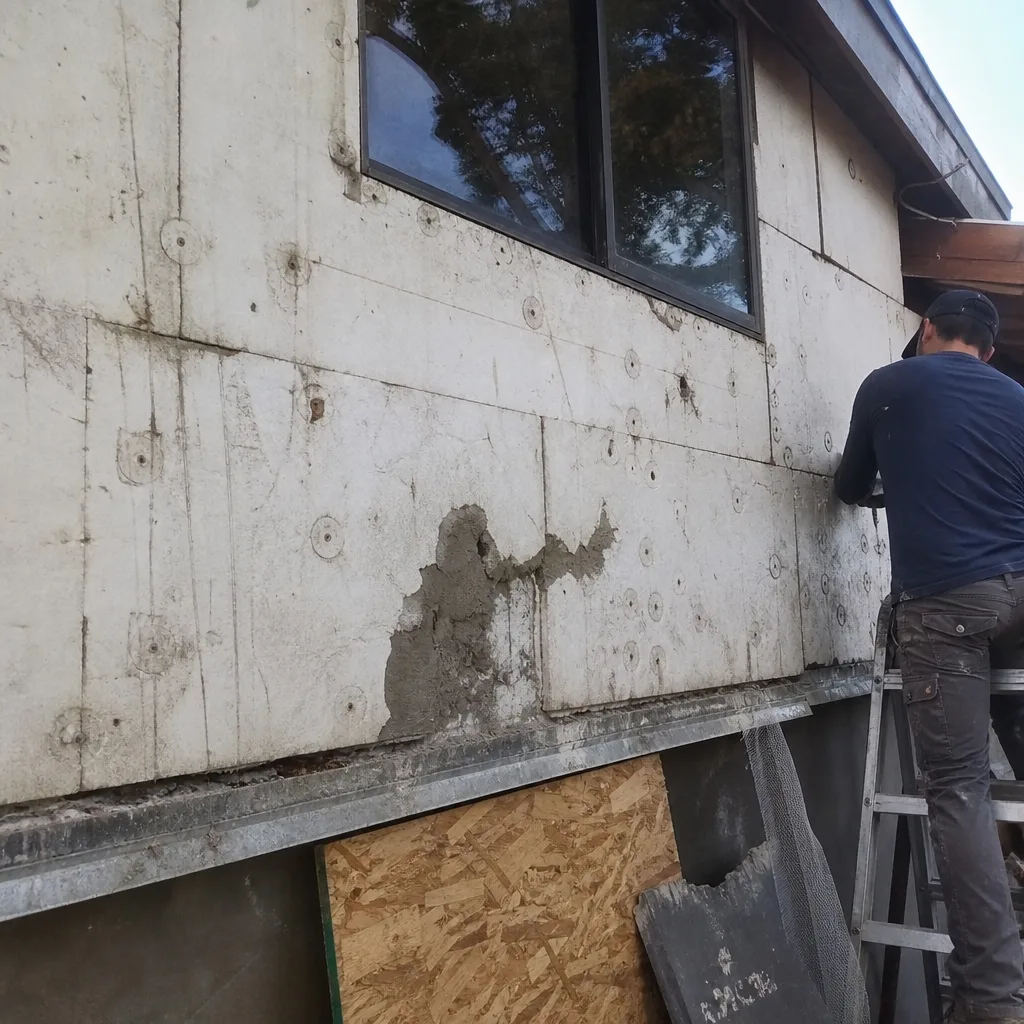 Before
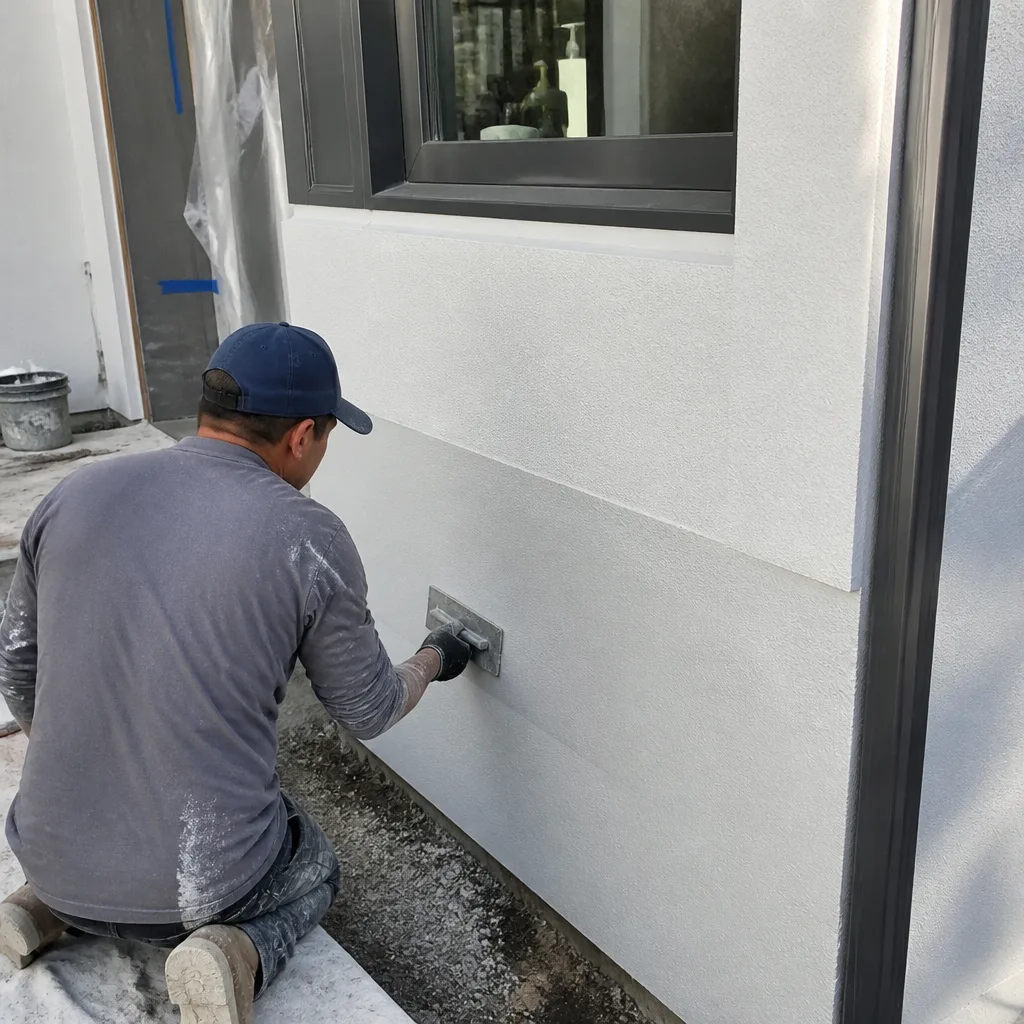 After
AfterWhy Air Leakage Beats R-Value in West Hollywood
West Hollywood sits in CEC Climate Zone 9, where design temperatures range from roughly 40°F in winter to 85-90°F in summer. That’s mild. Your furnace or heat pump isn’t fighting Death Valley heat or Tahoe cold. The real enemy is the pressure difference between your conditioned space and your vented attic, which drives conditioned air outward through every gap in the ceiling plane.
Here’s what we’ve measured in West Hollywood attics: a home with R-19 batts and a well-sealed attic floor often performs better than a home with R-38 blown fiberglass and an unsealed top plate. The R-value measures resistance to conductive heat flow through a material. It does not measure the convective air movement that carries your heated or cooled air directly into the attic through gaps around chimney chases, recessed can lights, and the joint where interior walls meet the ceiling.
We call these thermal bypasses. In West Hollywood’s pre-war bungalows and post-war ranches, they’re everywhere. The top plate - the horizontal framing member where wall studs meet the ceiling joists - is rarely sealed in construction from this era. Electrical penetrations, plumbing vent stacks, and HVAC duct boots add more holes. Each one is a small chimney, moving air on stack effect in winter and wind pressure in summer.
The city’s tight lot lines compound this. Homes sit close to neighbors, often with limited side-yard ventilation. Attic ventilation depends on small gable vents or undersized ridge vents that don’t relieve pressure effectively. Stagnant, hot attic air in summer creates a stronger pressure differential against your ceiling plane. In winter, the mild days and cool nights produce a steady stack effect that pulls conditioned air upward for hours at a time.
This is why our Topside Attic Insulation West Hollywood home process begins with a blower-door test and visual inspection for bypasses. We don’t quote insulation until we know what we’re sealing. Under Haven Standard Clause 1, that inspection produces a written scope with flat pricing before any work starts.
Key takeaway for West Hollywood homeowners: R-value is a material property. Air leakage is a system failure. Fix the system first.
How West Hollywood’s Housing Eras Change the Sealing Strategy
West Hollywood’s building stock falls into three dominant eras, each with a distinct air-sealing profile. We’ve worked in all of them, from the Norma Triangle bungalows to the 1970s condo conversions along Fountain Avenue.
Pre-War Bungalows (1920s-1941)
These homes - common in the Norma Triangle, Spaulding Square, and pockets north of Santa Monica Boulevard - have balloon framing, no top plates in the modern sense, and plaster-and-lath ceilings that crack around penetrations. The wall cavities open directly into the attic. Without blocking and sealing at the wall-to-attic junction, you’re insulating the walls but not stopping the air highway between floor and roof.
Our approach: install fire-blocking and air-sealing foam at the top of each wall cavity, then treat the attic floor as a continuous air barrier. Recessed lights in these homes are almost always unsealed cans from retrofits; we replace them with IC-rated, airtight LED housings or build sealed boxes over them. The plaster cracks around chimney chases are sealed with fire-rated caulk and flashing tape.
Post-War Ranches (1945-1965)
The single-story ranches in West Hollywood West and the flats south of Melrose represent the era when platform framing became standard. These homes have proper top plates, but they’re rarely sealed. The attic is often a simple pitched space with a central hallway ceiling that creates a long, linear thermal bypass. Original insulation, if present, is thin rock wool or early fiberglass batts with significant settling.
We see two recurring issues in these ranches: HVAC ducts routed through the attic with unsealed boots at the ceiling, and whole-house fans installed in the 1960s-70s that were never properly dampered or sealed. The fan opening is a massive thermal bypass, often 3-4 square feet of unimpeded air movement. Our scope always includes sealing or removing these, with written documentation of the change.
Condo Conversions (1965-1985)
The fourplex and sixplex conversions along Fountain Avenue, Harper Avenue, and the eastern edge of the city present a different challenge: party walls with shared attic spaces. Your unit may be well-sealed, but air moves laterally through the attic from neighboring units with open soffits or unsealed penetrations. We’ve measured pressure equalization across party walls that effectively negates individual-unit sealing efforts.
In these buildings, we often recommend a compartmentalization approach: sealed attic dams at party walls, combined with individual unit air sealing and insulation. This requires coordination with HOA boards and sometimes neighboring units. We document the compartmentalization with photos and blower-door readings specific to each unit, so owners have proof of their envelope performance for resale or refinancing energy assessments.
Each era demands a different sealing sequence before insulation goes in. Our Attic Insulation in West Hollywood page details the material options we match to each construction type.
The Blower-Door Test: What ACH50 Means and Why It Matters
A blower-door test is a pressurization reading that shows, in one number, how much air your building envelope is losing. We run this test on every West Hollywood job, before and after our work, so homeowners can verify the result they paid for.
Here’s how it works. A powerful fan mounts in an exterior door frame and depressurizes the house to 50 Pascals below outdoor pressure - roughly equivalent to a 20 mph wind hitting all sides simultaneously. The airflow required to maintain that pressure, measured in cubic feet per minute (CFM50), tells us the total effective leakage area. Divide by the home’s volume and multiply by 60, and you get Air Changes per Hour at 50 Pascals: ACH50.
For West Hollywood’s climate and housing stock, here’s what those numbers mean in practice:
| ACH50 Range | Condition | Typical West Hollywood Source |
|---|---|---|
| 15-25+ | Very leaky | Unsealed pre-war bungalow with original construction, no prior air sealing |
| 10-15 | Leaky | Post-war ranch with minimal sealing, some DIY attempts |
| 7-10 | Moderate | Some prior weatherization, unsealed attic bypasses remain |
| 5-7 | Tight | Well-sealed attic, good window condition, minimal duct leakage |
| 3-5 | Very tight | Comprehensive air sealing with mechanical ventilation added |
We target 5-7 ACH50 for most West Hollywood homes after our work. Below 5 ACH50 in this climate, without mechanical ventilation, you risk elevated indoor humidity and pollutant buildup. The mild temperatures mean natural ventilation through windows is often sufficient for eight months of the year, but a tight house needs a plan for the other four.
Our documentation includes:
- Pre-work CFM50 and ACH50, with outdoor temperature and wind conditions noted
- Post-work CFM50 and ACH50, same conditions or noted differences
- Calculated air leakage reduction, in percentage and absolute CFM50
- Photo log of sealed locations, with before and after images
- Installed insulation R-value, material type, and coverage area
These numbers become part of the home’s record. When you sell, refinance with a green mortgage, or apply for a utility rebate, you have dated, third-party-verified performance data. Not marketing claims. Numbers.
Material Selection for CEC Climate Zone 9
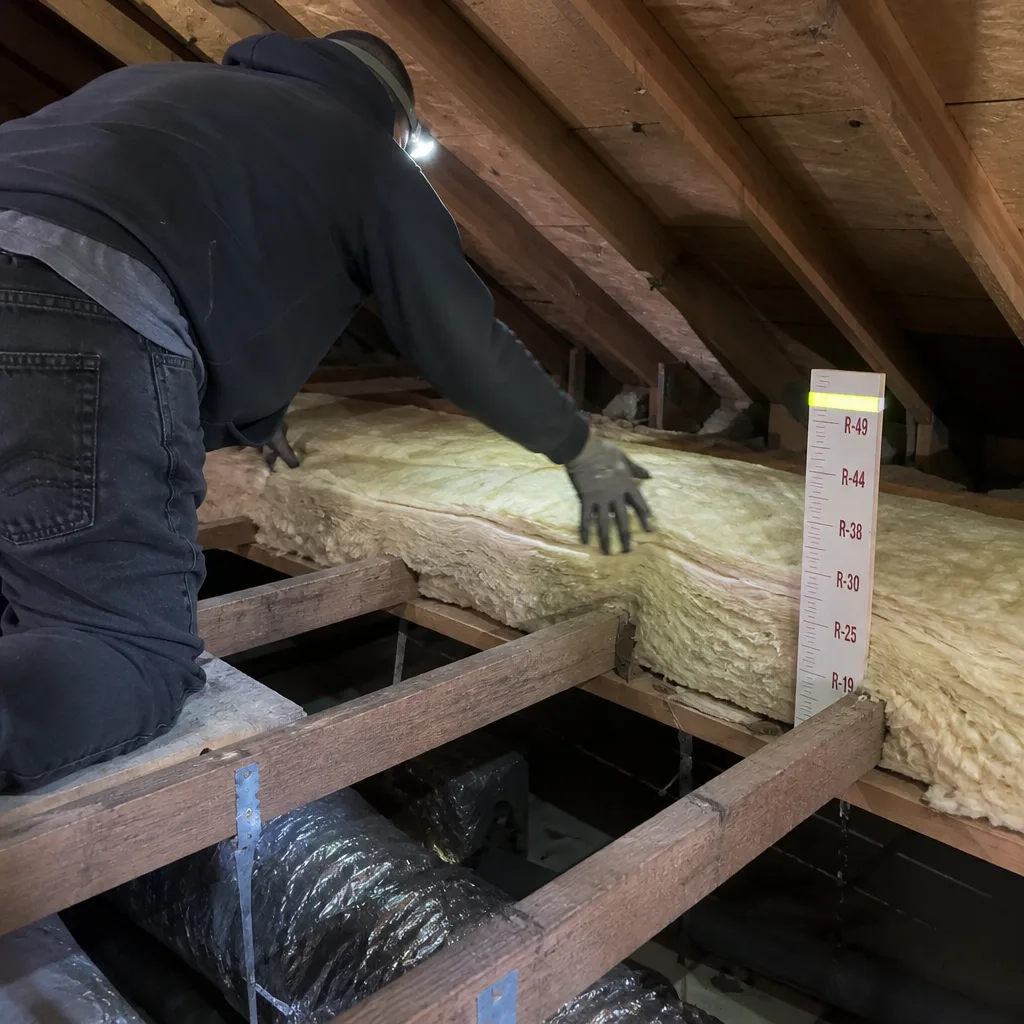
Once the attic floor is sealed, we select insulation for West Hollywood’s specific conditions: mild heating loads, moderate cooling loads, and attics that rarely drop below 45°F or exceed 130°F. The material matrix below matches what we’ve installed across 9,000 homes to the three most common West Hollywood applications.
Open-Cell Spray Foam
Open-cell spray foam - the half-pound density product we source from Icynene and Demilec - expands to fill framing cavities and provides both insulation and an air barrier in one application. In West Hollywood, we use it primarily for:
- Cathedral ceilings with limited attic space, common in 1970s-80s remodels near the Sunset Strip
- Rim joist and crawl space sealing, where access is tight and air sealing is critical
- Attic floors with complex geometry - multiple levels, dropped soffits, mechanical platforms - where batt or blown installation would leave gaps
Open-cell yields roughly R-3.6 per inch. In Climate Zone 9, we typically install 5-6 inches for an R-19 to R-21 assembly. The product is vapor-permeable, which matters in West Hollywood’s occasional winter rains: moisture that gets in can dry to the interior, reducing condensation risk in older construction with limited vapor barrier detailing.
Cost in West Hollywood: $3.50-$5.50 per board foot installed, with air sealing included. A typical 1,200 square foot attic at 5 inches runs $2,100-$3,300 for the foam layer alone, after sealing.
Dense-Pack Cellulose
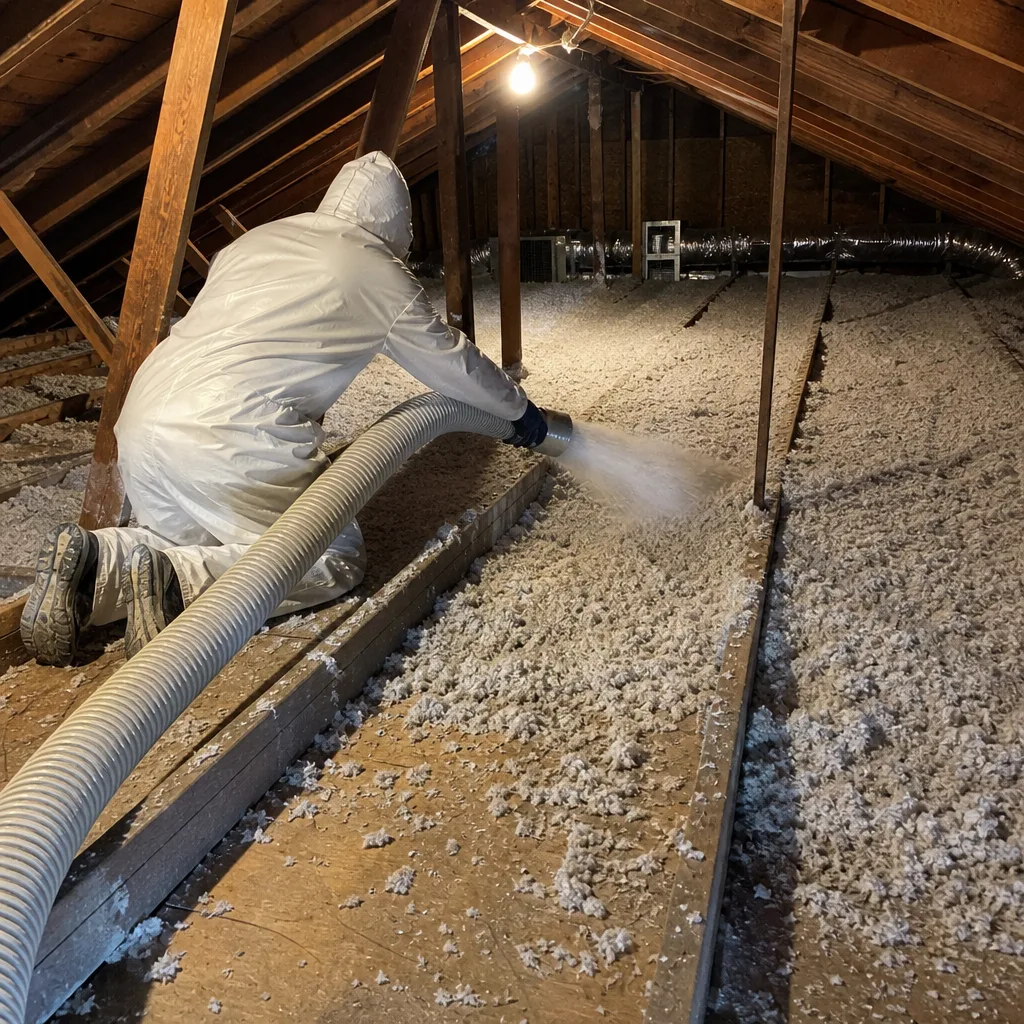
Dense-pack cellulose - ground recycled paper treated with borate fire retardant - is our most common choice for West Hollywood walls and vented attics. Blown at 3.5 pounds per cubic foot, it fills irregular cavities and provides modest air-sealing benefit through density alone. We source from GreenFiber and local suppliers.
In attics, we blow over a sealed floor to R-38 (approximately 10-12 inches) for most West Hollywood homes. The material performs well in the mild climate, doesn’t settle significantly at proper density, and the borate treatment deters rodents and insects - a consideration in older neighborhoods with mature tree canopies and active squirrel populations.
For walls in pre-war bungalows, dense-pack is often the only practical option without extensive demolition. We drill and blow from the exterior, seal the holes, and match stucco or siding texture. R-value: R-3.2-R-3.8 per inch, depending on density and moisture content.
Installed cost: $1.20-$1.80 per square foot for attic fill over sealed floor; $3.50-$5.00 per square foot for dense-pack walls with patching.
Blown Fiberglass
Blown fiberglass - Owens Corning AttiCat or Johns Manville Climate Pro - offers higher R-value per inch (R-2.5-R-4.2, depending on product and density) and doesn’t absorb moisture. In West Hollywood’s occasional humid marine layer mornings, this can matter in attics with marginal ventilation.
We use blown fiberglass primarily when:
- The homeowner has chemical sensitivity concerns with cellulose dust or spray foam off-gassing
- The attic has adequate ventilation and we want the fastest possible drying if roof leaks occur
- We’re topping existing fiberglass to avoid mixing material types, which can cause interface issues
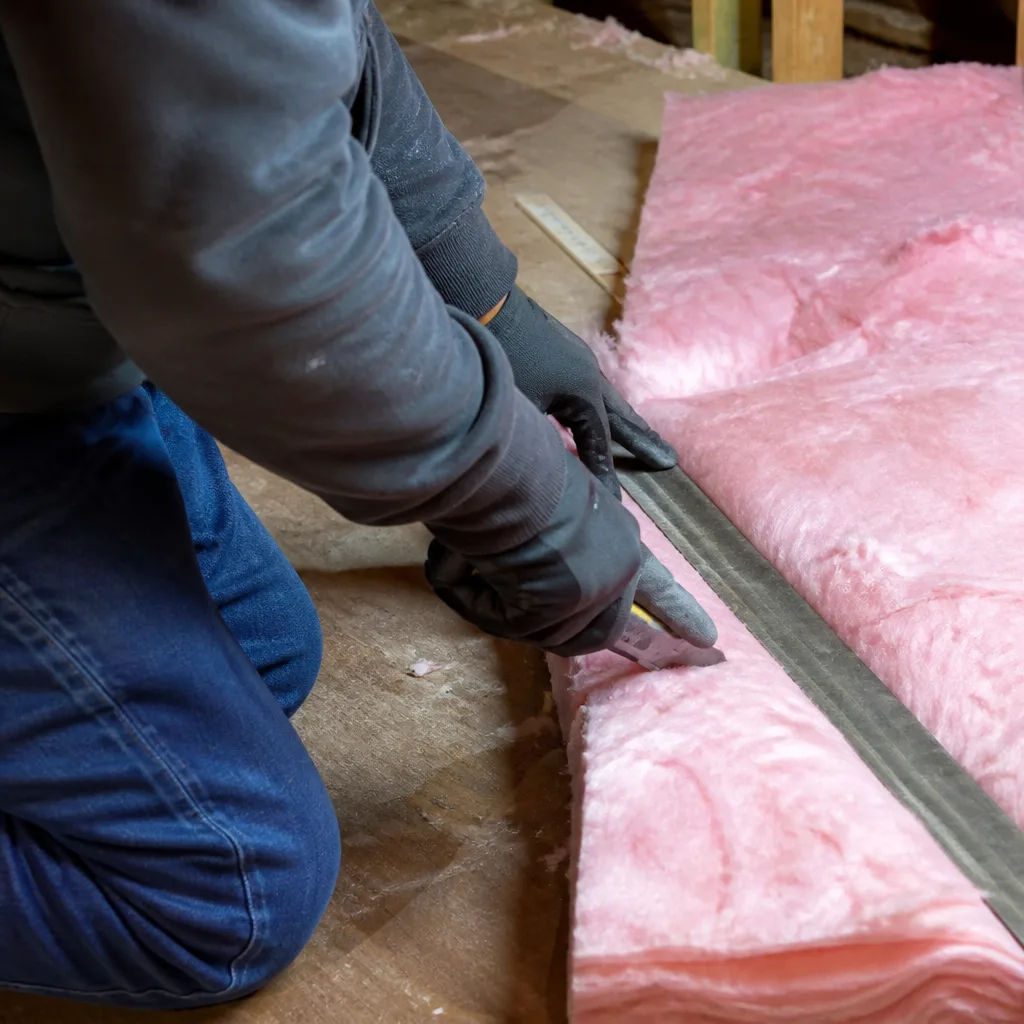
Blown fiberglass requires more depth for equivalent R-value - typically 14-16 inches for R-38 - and doesn’t provide the air-sealing benefit of dense-pack cellulose. The sealing work must be more thorough before installation.
Installed cost: $1.00-$1.50 per square foot for attic fill over sealed floor.
Radiant Barriers
In West Hollywood’s sun-exposed attics, particularly south-facing slopes in the hills, a radiant barrier can reduce cooling loads 5-15% by reflecting infrared radiation. We install foil-faced sheathing or draped radiant barrier foil, always with proper ventilation clearance. This is an add-on to insulation, not a replacement - the barrier addresses radiant heat gain, not conductive loss.
Our Spray Foam Insulation in West Hollywood page details hybrid assemblies combining spray foam sealing with blown insulation for complex rooflines.
What a Completed Job Record Looks Like
Every Envelope Insulation Co. job closes with documentation. Not a handshake and a promise - a written record that defines what was done, how it performed, and what the warranty covers. Here’s what a West Hollywood homeowner receives:
The Written Scope (Delivered Before Work Starts)
Under Haven Standard Clause 1, you get a flat price, written scope, and written warranty before anyone lifts a tool. The scope lists:
- Each air-sealing location identified during inspection (top plates, can lights, duct boots, chimney chase, plumbing vents, etc.)
- Insulation material, target R-value, and installed depth or thickness
- Areas excluded from scope, with reason noted
- Pre-work blower-door reading and target post-work reading
- Total project price, payment schedule, and 365-Day Done Right Promise terms
No surprises. No “we found more than expected” mid-job. The price is the price.
The Documented Photo Record
Our crews photograph every stage: attic condition at arrival, each sealed location before and after, insulation depth markers, and final condition. These photos are delivered with the final invoice, not held for request. They show:
- Pre-work attic condition, including any hazards or access limitations noted
- Each penetration before sealing, with location tag
- Sealed penetration after work, with material type noted
- Insulation installation in progress, showing depth and coverage
- Final attic condition, with R-value depth markers visible
The Blower-Door Report
For applicable jobs, the before-and-after blower-door numbers are printed on a one-page report with:
- Date, time, outdoor temperature, and wind speed
- Pre-work CFM50 and ACH50
- Post-work CFM50 and ACH50
- Percentage reduction in air leakage
- Technician signature and calibration date of equipment
This is the document that matters for resale, refinancing, or utility rebates. It’s third-party-verified performance, dated and signed.
The Warranty Record
The 365-Day Done Right Promise is backed by a written warranty delivered at job close. It covers workmanship defects, material settling below specified R-value, and air-sealing failures at locations listed in the scope. If it’s not done right, we make it right. The warranty transfers to subsequent owners with written notice.
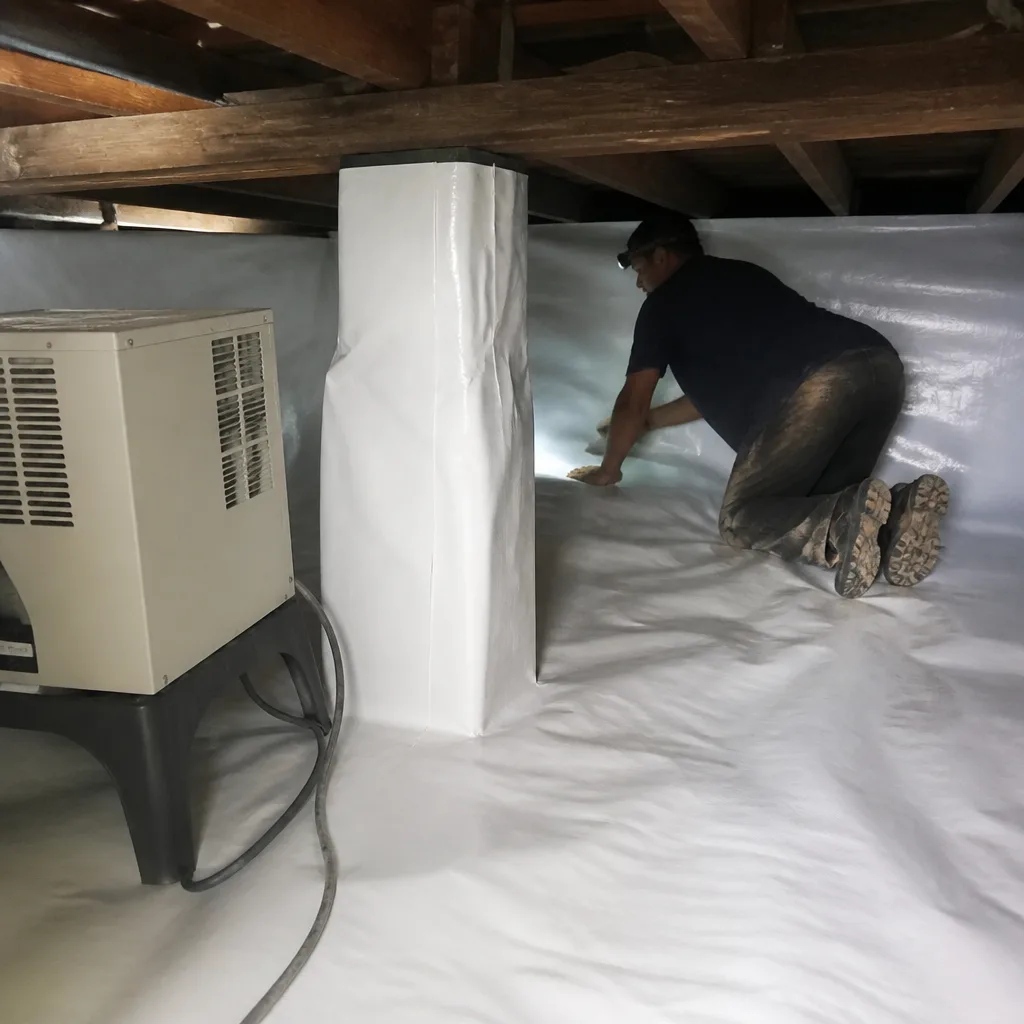
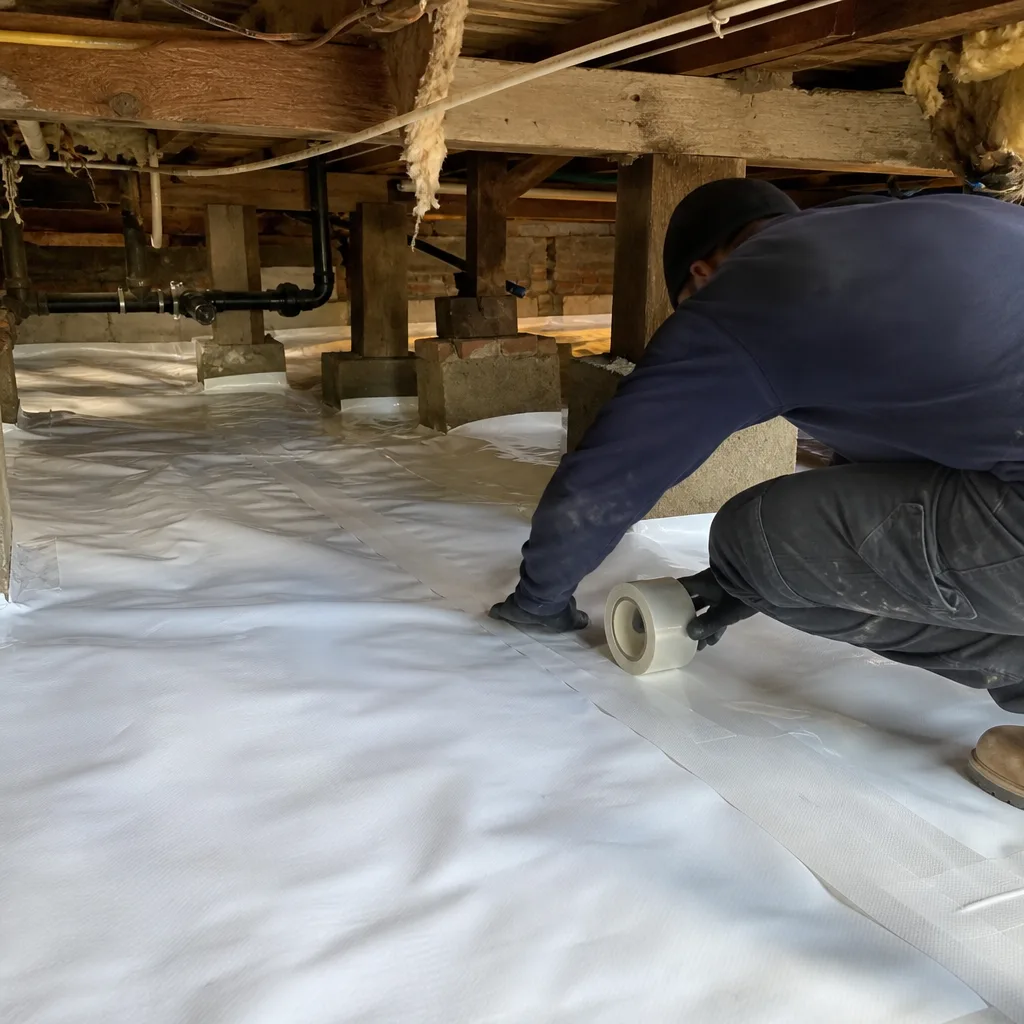
For Crawl Space Encapsulation & Vapor Barrier in West Hollywood, the documentation includes vapor barrier thickness, seam sealing method, and dehumidifier sizing calculations if applicable.
Common Mistakes to Avoid
- Blowing insulation over an unsealed attic floor. This is the most common error we correct in West Hollywood. The new insulation buries the leaks, making them harder to find later, while conditioned air continues to escape through the thermal bypasses. The homeowner pays for R-value they can’t use.
- Ignoring recessed can lights. Original unsealed cans in pre-war and ranch homes are massive thermal bypasses. Covering them with insulation without sealing creates a fire hazard and does nothing to stop air movement. We replace with IC-rated airtight housings or build sealed enclosures.
- Mixing insulation types without understanding interface issues. Adding blown fiberglass over settled cellulose, or spray foam over damp existing material, can trap moisture or create thermal gaps. We assess existing conditions and specify removal when necessary.
- Sealing without measuring. Air sealing without blower-door verification is guesswork. We’ve seen homes where aggressive sealing missed the largest leaks and created pressure imbalances that backdrafted water heaters. Test in, test out.
- Over-insulating without ventilation. In West Hollywood’s tight attics, piling insulation against roof decking without proper ventilation traps moisture and voids shingle warranties. We specify baffle installation and verify airflow paths.
- Neglecting the crawl space. In hillside homes and raised ranches, an unsealed crawl space with dirt floors creates a moisture and radon pathway that undermines attic work. Our crawl space encapsulation addresses this as a system.
- Accepting verbal estimates. West Hollywood’s tight spaces and varied construction make ballpark pricing unreliable. A written scope with flat pricing, delivered before work starts, is the only way to compare quotes fairly.
When to Call a Professional
Call when your energy bills spike without explanation, when rooms are persistently hot in summer or cold in winter despite the HVAC running, or when you can feel air movement around outlets and baseboards on the top floor. These symptoms point to attic bypasses, not insufficient insulation.
Call before you add insulation to an unfinished attic. The sequence matters. Sealing first, then insulating, is the only approach that produces measurable results.
Call if you’re buying or selling a West Hollywood home built before 1970. A blower-door test and documented air-sealing work add defensible value and protect against post-sale disputes about energy performance.
Topside Attic Insulation West Hollywood offers free estimates in West Hollywood. We’ll inspect your attic, run a blower-door test if indicated, and deliver a written scope with flat pricing before any work starts. Call (213) 306-2607.
Frequently Asked Questions
Most complete attic jobs in West Hollywood - including air sealing, blower-door testing, and insulation to R-38 - run between $2,800 and $6,500 for a 1,200-1,800 square foot home. The range depends on accessibility, existing conditions, and whether removal of old material is required. We deliver a written price before any work starts. Call (213) 306-2607 for an exact quote - estimates are free.
Repair is cheaper only when the existing insulation is dry, uncontaminated, and installed over a sealed attic floor. In West Hollywood’s older homes, we rarely find all three conditions. Settled fiberglass, rodent-affected cellulose, or insulation installed over unsealed bypasses should be removed so the sealing work can be done properly. The cost difference between repair and replacement is often less than the energy penalty of leaving compromised material in place.
No. Our process requires a written scope with flat pricing, delivered for your review before work is scheduled. Same-day work without a written scope violates Haven Standard Clause 1. Most West Hollywood jobs are scheduled within 3-7 business days of scope acceptance, with written confirmation of date, arrival window, and technician name.
CEC Title 24 requires R-38 in vented attics for new construction and major renovations in Climate Zone 9. For retrofit work in existing homes, we target R-38 as the performance baseline but emphasize that air sealing effectiveness matters more than incremental R-value. A well-sealed attic at R-30 outperforms a leaky attic at R-49.
Properly installed blown fiberglass or cellulose lasts 20-30 years without significant degradation in West Hollywood’s mild climate. Spray foam, when protected from UV exposure, lasts the life of the building. The failure mode we see is not material aging - it’s settling, moisture damage, or disturbance by rodents or maintenance workers. Our 365-Day Done Right Promise covers settling below specified depth; the photo record documents original installation condition for future reference.
Insulation retrofit in existing residential attics typically does not require a permit in West Hollywood if no structural, electrical, or HVAC modifications are made. If we replace recessed light housings, modify ductwork, or install radiant barrier with structural attachment, permitting may apply. We research permit requirements for each scope and include any fees in the written price.
Insulation provides modest sound attenuation, particularly dense-pack cellulose and Rockwool products with their higher mass and fiber density. For significant noise issues in West Hollywood’s tight multi-family buildings, we recommend a dedicated acoustic assessment. Insulation alone will not address flanking paths through structure, shared ductwork, or inadequately sealed party walls.
The Bottom Line
West Hollywood’s mild climate and vintage construction create an insulation profile that starts with pressure, not temperature. The gaps in your attic floor move more conditioned air than your walls lose through conduction. A proper job sequences air sealing first, verifies with a blower-door test, then adds insulation matched to your home’s era and your budget. The documentation - written scope, photo record, and performance numbers - is what separates a guess from a guarantee. We’ve sealed and insulated over 9,000 homes since 2016, every one with a written price before work started and a documented record when the crew left. In West Hollywood, that’s the standard your home deserves.
Written by Wes Okafor, Owner at Topside Attic Insulation West Hollywood, serving West Hollywood since 2016.