
Last updated September 23, 2026
Insulation Cost Breakdown: The West Hollywood Homeowner’s Reference for 2026
Last month we reviewed two quotes for a 1,200-square-foot attic on North Flores Street. One contractor priced the job at $1,800. Another priced it at $3,100. Same house, same square footage, same R-38 target. The $1,800 quote covered blown cellulose and labor. The $3,100 quote included air sealing of top plates and can-light penetrations, LA County permit fees, and a blower-door test to verify the result. The cheaper quote was the more expensive job - because it left the home’s actual thermal envelope unaddressed. In West Hollywood’s competitive insulation market, sticker-price comparison is a reliable way to overpay for underperformance. This guide breaks every cost component into line items so you can compare quotes on what they actually deliver, not what they appear to cost, and points you to more guides & resources for deeper reading.
Quick Answer
A complete attic insulation job in West Hollywood in 2026 typically runs $2,800-$4,500 for a 1,200-square-foot home when air sealing, permits, materials, and verification testing are included. Stripped-down quotes that omit air sealing and blower-door documentation can start near $1,800 but leave the home’s thermal envelope leaking conditioned air. The meaningful comparison metric is not price per square foot - it’s cost per ACH50 point reduced, which measures actual performance improvement.
Table of Contents
- Why Insulation Quotes in West Hollywood Differ by 60-80%
- Line-Item Cost Breakdown: What a Complete Job Actually Includes
- Why R-Value Per Dollar Is a Misleading Metric
- SoCalGas and LA DWP Utility Rebates for 2025-2026
- Variables That Move the Final Price
- The Five Non-Negotiable Line Items in a Written Fixed-Price Quote
- Common Mistakes to Avoid
- When to Call a Professional
- Frequently Asked Questions
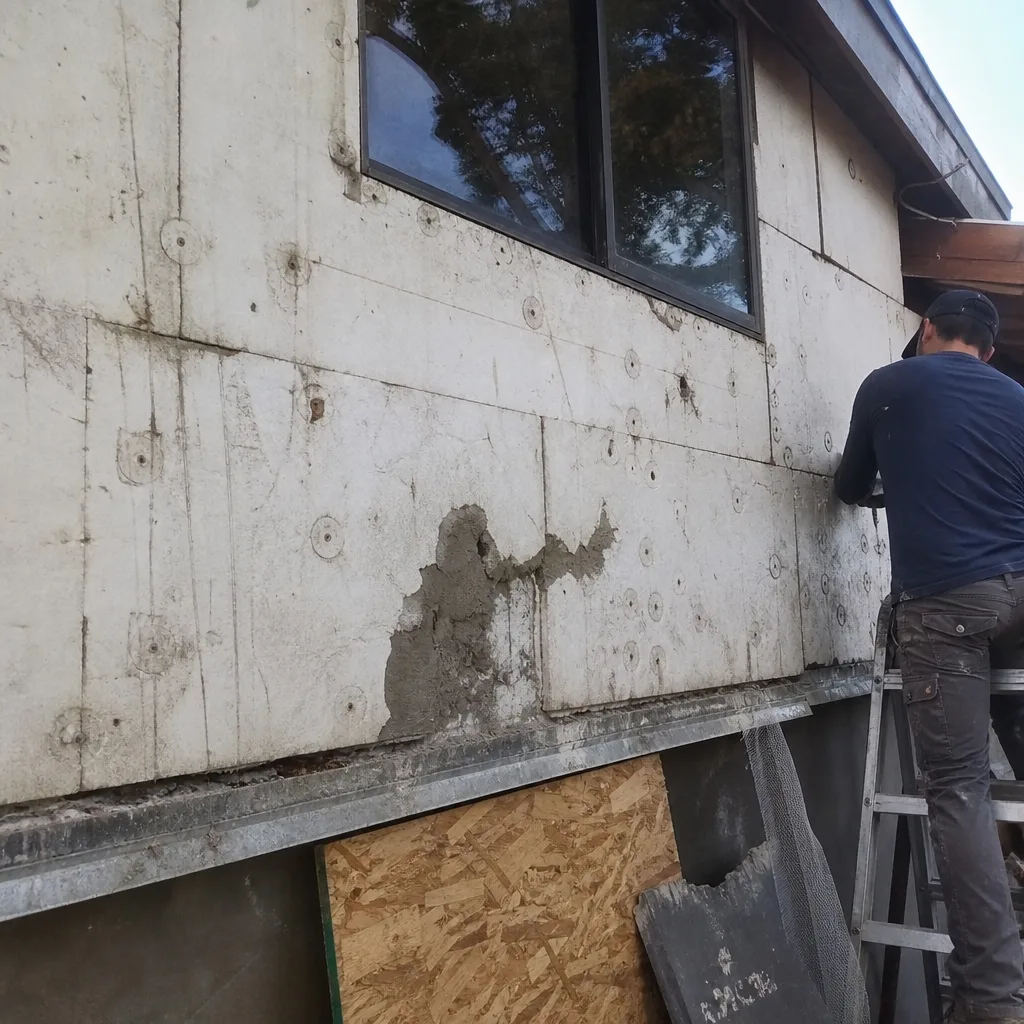 Before
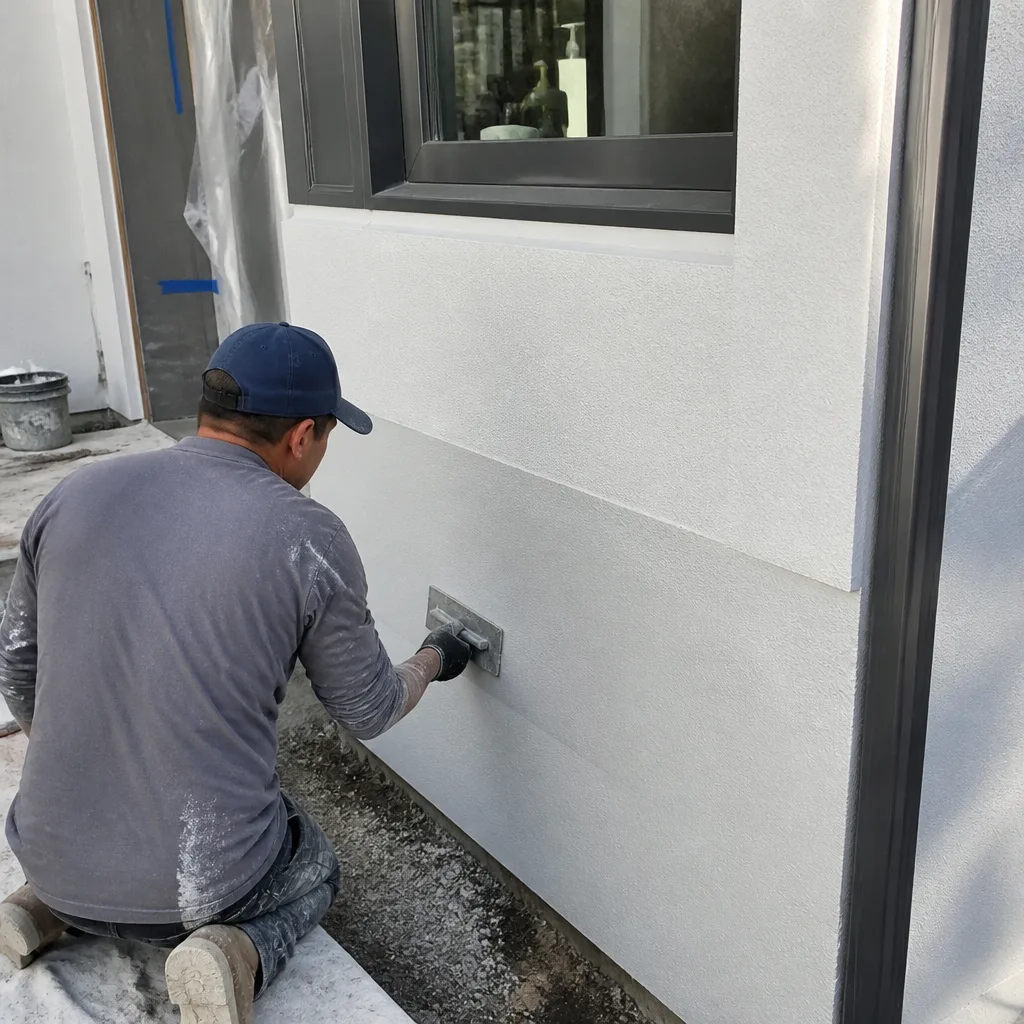 After
AfterWhy Insulation Quotes in West Hollywood Differ by 60-80%
The spread between low and high quotes for the same West Hollywood home is not padding. It’s scope omission. Contractors price different jobs, then present them as comparable because both mention “attic insulation” and the same R-value target.
We’ve reviewed hundreds of competing quotes since 2016. The pattern is consistent. The lower quote almost always excludes one or more of these: air sealing labor, permit fees, insulation removal, or post-installation verification. The higher quote treats these as standard. When we normalize for identical scope, the price spread collapses to 15-25%, which reflects real differences in labor rates, material sourcing, and overhead.
West Hollywood’s specific conditions amplify this problem. The city’s housing stock skews toward mid-century apartments, 1920s bungalows, and 1970s condo conversions - each with distinct attic geometries and existing insulation conditions. A contractor who prices by square footage alone without inspecting access difficulty, existing material condition, and air leakage pathways is guessing. Their guess becomes your change order.
The attic insulation in West Hollywood market includes everything from single-trade blow-in contractors to full building-envelope specialists. The critical distinction is whether air sealing precedes insulation installation. Blowing cellulose or fiberglass over an unsealed attic floor is standard practice for the low-quote tier. It meets code on paper. It fails in performance because the conditioned air you’re paying to heat or cool continues escaping through gaps the new insulation buries but does not close.
Our approach, developed under The Haven Standard since 2016, reverses this sequence. We seal first, then insulate. The air sealing phase - addressing top plates, plumbing and electrical penetrations, can lights, and the attic access hatch itself - typically adds $600-$1,200 in labor to a 1,200-square-foot attic. This is not an upsell. It is the difference between a job that performs and one that merely complies.
Line-Item Cost Breakdown: What a Complete Job Actually Includes
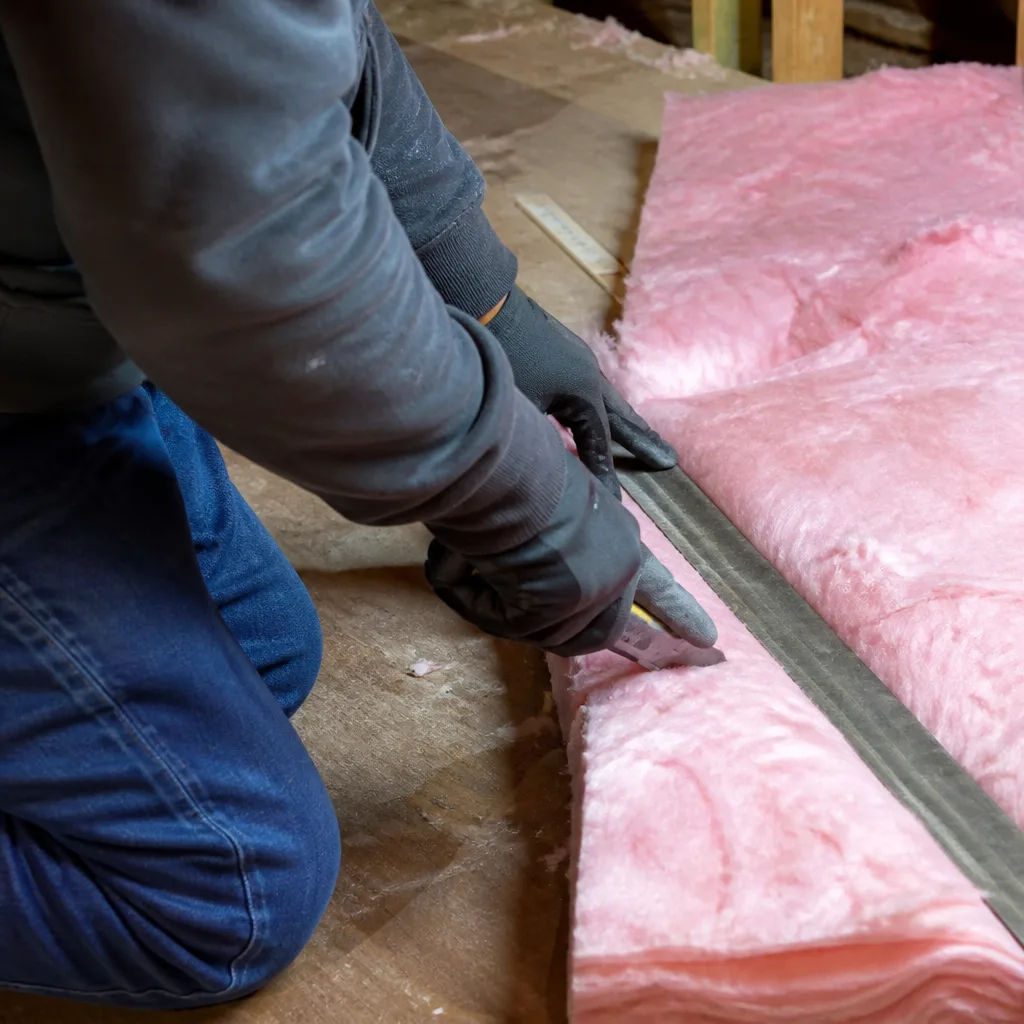
To compare quotes accurately, you need to see the same line items on each. Below is the component structure we use for every attic insulation job in West Hollywood, with 2026 price ranges based on current material costs and LA County permit schedules.
1. Air Sealing Labor
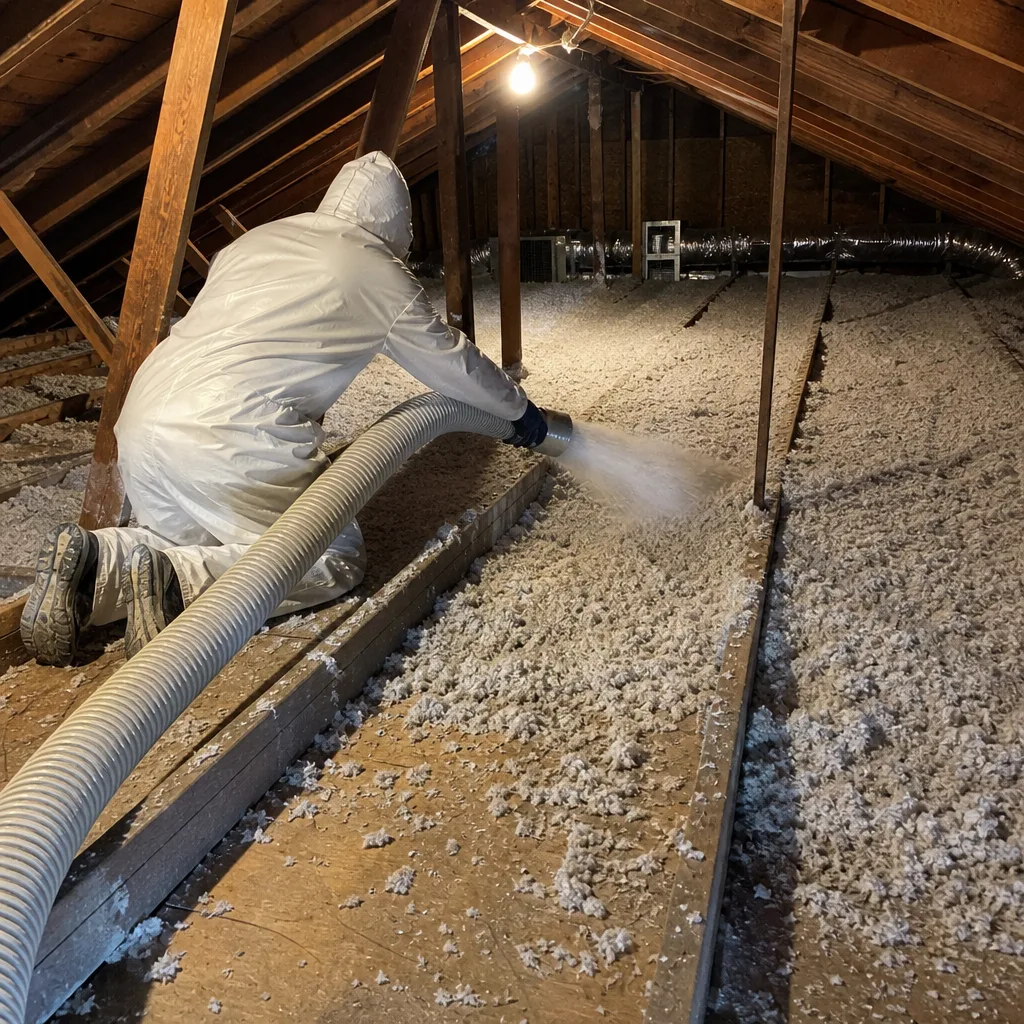
This is the most commonly omitted item. Air sealing uses caulk, expanding foam, rigid foam board, and specialized gaskets to close thermal bypasses before insulation covers them. For a 1,200-square-foot attic in West Hollywood, expect:
- Top plate sealing (where walls meet ceiling): 2-4 hours
- Penetration sealing (plumbing vents, electrical boxes, chimney chases): 2-3 hours
- Can-light enclosures or sealing: 1-3 hours depending on quantity
- Attic access hatch weatherization: 1 hour
Total air sealing labor: $600-$1,200
In older West Hollywood homes, particularly pre-1940 bungalows near Melrose or pre-1960 apartments along Santa Monica Boulevard, top plates are often irregular and require hand-fitting. This pushes labor toward the higher end. Newer construction, including 1980s condo conversions, typically has more predictable geometry.
2. Blown Insulation Material and Installation
R-38 cellulose - the most common specification for our climate zone - installs at approximately $0.85-$1.10 per square foot when blown to depth. For 1,200 square feet of attic floor:
- Cellulose material (Owens Corning, GreenFiber, or equivalent): $340-$440
- Blowing labor and equipment: $400-$600
- Baffle installation (to maintain vent channel at eaves): $150-$250
Total blown insulation: $890-$1,290
Fiberglass batts cost less per bag but install more slowly in irregular attic floors, so total cost often converges with cellulose. Spray foam insulation in West Hollywood runs substantially higher - typically $3.50-$5.50 per board foot for open-cell - and is generally specified for roofline applications or conditioned attics rather than floor blowing.
3. Permit Fee (LA County / City of West Hollywood)
Insulation upgrades requiring R-value changes or removal of existing material need permitting, a topic covered in detail in our guide to Insulation Permits, Codes & Inspections in CA: What You Need to Know. The City of West Hollywood processes through LA County’s consolidated system. Current fee schedule:
- Base permit for insulation upgrade: $150-$250
- Plan check fee (if required): $50-$100
- Final inspection: included in base
Total permit: $150-$300
Some contractors absorb permit fees into their base price. Others list them separately. What matters is whether the permit is actually pulled and the work inspected. Unpermitted insulation work can complicate future sales, insurance claims, or rebate eligibility.
4. Existing Insulation Removal (When Required)
Not every job needs removal. But West Hollywood’s older stock often contains degraded fiberglass, vermiculite that may contain asbestos (requiring abatement), or rodent-contaminated material - all Insulation Warning Signs: A West Hollywood Homeowner’s Reference Guide covers in depth. Removal adds:
- Standard fiberglass/cellulose removal and disposal: $1.00-$1.50/sq ft
- Asbestos-containing material abatement: $4.00-$8.00/sq ft (specialized contractor required)
- Attic cleaning and sanitizing: $0.50-$1.00/sq ft
For a 1,200-square-foot attic with standard removal needs: $1,200-$1,800
We evaluate existing material during our initial inspection and document condition with photos. If removal is necessary, it’s specified in the written scope before pricing is finalized.
5. Blower-Door Documentation
A blower-door test - a pressurization reading that shows, in one number, how much air your building envelope is losing - is the only objective verification that air sealing worked. Some contractors include this in base pricing. Others charge separately.
Standalone blower-door testing: $200-$350
At Envelope Insulation Co., we provide before-and-after blower-door numbers on every applicable job. The homeowner receives both figures in writing, with the percentage reduction calculated. In our experience, a properly sealed and insulated 1,200-square-foot West Hollywood home typically moves from 3,500-5,000 CFM50 to 1,800-2,800 CFM50. The specific number matters less than the documented trend - and far more than the R-value printed on the insulation bag.
Summary Table: Complete Attic Job Components
| Component | Price Range (1,200 sq ft) |
|---|---|
| Air sealing labor | $600 - $1,200 |
| Blown insulation (R-38 cellulose) | $890 - $1,290 |
| Permit fees | $150 - $300 |
| Existing insulation removal (if needed) | $1,200 - $1,800 |
| Blower-door documentation | $200 - $350 |
| Total complete job (no removal) | $1,840 - $3,140 |
| Total complete job (with removal) | $3,040 - $4,940 |
The $1,800 quote we mentioned at the start? It included only blown insulation. No sealing, no permit, no verification. The $3,100 quote was a complete job with sealing, permit, and blower-door test included. Once normalized, the real choice was between paying $1,800 for partial performance or $3,100 for verified performance - not between two versions of the same thing.
Why R-Value Per Dollar Is a Misleading Metric
R-value measures thermal resistance of the insulation material itself. It does not measure the thermal performance of your home. This distinction matters because R-value ignores air movement, which accounts for 30-50% of thermal loss in a typical West Hollywood attic.
A contractor selling “R-38 for $1,800” is selling material specification. They’re not selling measured performance. The homeowner who compares quotes on “R-value per dollar” is comparing the wrong numerator.
The meaningful alternative is cost per ACH50 point reduced. ACH50 - air changes per hour at 50 Pascals of pressure - is derived from the blower-door test. It expresses how many times per hour your home’s entire volume of air would leak out and be replaced under standardized test conditions. Lower is better. Code minimums vary, but a well-sealed home in our climate typically targets 5-7 ACH50 or below.
Here’s how the math works in practice. Suppose your West Hollywood home tests at 12 ACH50 before work and 6 ACH50 after. That’s a 6-point reduction. If the complete job cost $3,100, your cost per ACH50 point reduced is $517. A competing quote at $1,800 that skips air sealing might yield only a 2-point reduction (from 12 to 10, mostly from added insulation slowing conduction). That $1,800 job costs $900 per ACH50 point reduced - 74% more expensive per unit of actual performance improvement.
We publish before-and-after blower-door numbers on every applicable job so homeowners can run this calculation themselves. The numbers don’t require trust. They replace it.
R-value still matters for material selection. Owens Corning and Johns Manville publish reliable R-values per inch for their fiberglass products; Rockwool and Knauf do the same for mineral wool. But R-value is an input to performance, not a measure of it. The measure is ACH50, and the price comparison that matters is dollars per point of improvement.
SoCalGas and LA DWP Utility Rebates for 2025-2026
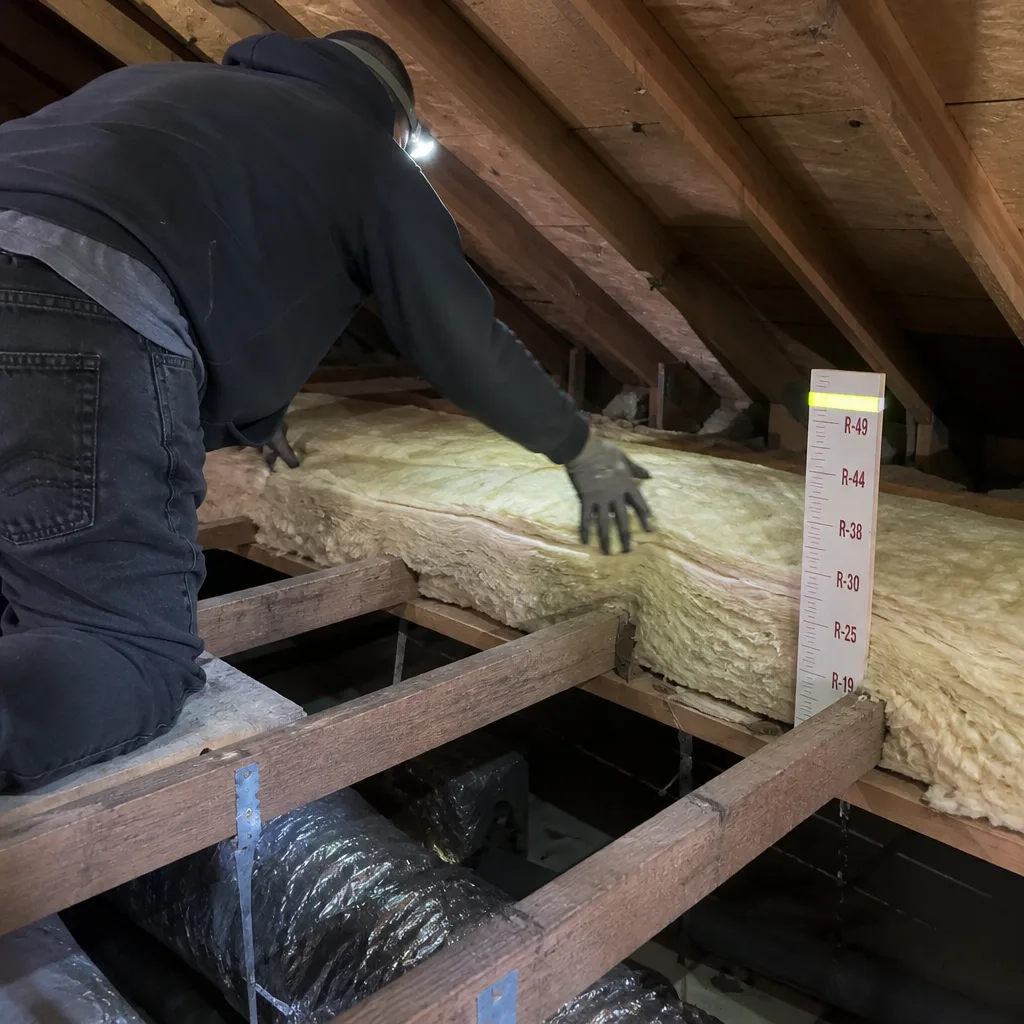
West Hollywood homeowners have access to overlapping rebate programs through Southern California Gas Company and Los Angeles Department of Water and Power. These programs change annually, and 2025-2026 includes specific opportunities for insulation and air sealing upgrades.
SoCalGas Energy Savings Assistance Program and Residential Rebates
SoCalGas offers attic insulation rebates for single-family homes through its Residential Energy Efficiency Rebate Program. As of early 2026:
- Attic insulation upgrade (meeting or exceeding Title 24 requirements): $0.15-$0.25 per square foot, depending on baseline insulation level
- Whole-house air sealing (when combined with insulation): $150-$400 flat rebate, contingent on pre- and post-blower-door testing
- Combined insulation and air sealing packages: up to $1,200 total for homes that demonstrate 15% or greater air leakage reduction
Eligibility requires that work be performed by a program-participating contractor and that pre-installation assessment documentation is submitted. The rebate is paid after post-installation verification, not at point of sale.
LA DWP Home Energy Improvement Program
LA DWP’s program runs on a calendar-year funding cycle and typically opens applications in January. For 2025-2026:
- Attic insulation: $0.20 per square foot for R-30 or greater upgrade
- Cool roof + attic insulation combination: additional $0.10 per square foot
- Home energy audit (required prerequisite for larger rebates): $200-$300 rebate or free through select participating contractors
LA DWP rebates stack with SoCalGas rebates for gas-heated homes with electric cooling, which describes most of West Hollywood’s housing stock. A typical 1,200-square-foot home completing insulation, air sealing, and audit could see combined rebates of $500-$900.
Rebate Math: A Realistic Example
Consider a complete job at $3,100 on a 1,200-square-foot home:
- SoCalGas attic insulation rebate (at $0.20/sq ft): $240
- SoCalGas air sealing rebate: $250
- LA DWP attic insulation rebate (at $0.20/sq ft): $240
- LA DWP energy audit rebate: $200
Total rebates: $930
Net homeowner cost: $2,170
The stripped-down $1,800 quote, if it qualifies for any rebate at all, might capture only the insulation portion ($240 from one utility) because air sealing wasn’t performed or documented. Net cost: $1,560. The performance gap remains enormous - the homeowner saved $610 but received less than one-third the measured improvement.
Rebate programs require specific documentation. We handle SoCalGas and LA DWP paperwork as part of our standard process, including the mandatory pre- and post-blower-door readings that some programs require. Homeowners who choose contractors without blower-door capability often discover too late that they’re ineligible for the larger air-sealing rebates.
Variables That Move the Final Price
Beyond scope inclusion and exclusion, several West Hollywood-specific variables shift pricing within the ranges above. Understanding these helps you interpret why your quote might land high or low relative to your neighbor’s.
Attic Access Configuration
How we reach the attic determines labor efficiency and safety requirements:
- Standard pull-down stair: Baseline labor, no adjustment
- Small ceiling hatch (typical in 1920s-1940s bungalows): +10-15% labor for material handling and worker positioning
- No attic access (flat roof or cathedral ceiling): Requires interior soffit removal or exterior roof access; +$800-$2,500 depending on finish repair scope
- Scuttle hole only (common in older apartment conversions): +15-20% labor; may require temporary platform installation
West Hollywood’s density means many buildings have limited exterior access. We’ve worked on Norton Avenue apartments where the only attic entry was through a closet ceiling, and on Havenhurst Drive condos where roof hatches were the only option. These constraints are documented during inspection and reflected in the written scope.
Existing Insulation Condition
The presence, type, and condition of existing material affects removal cost and disposal requirements:
- Clean, uncompressed fiberglass batts: Often left in place with new material blown over; minimal cost
- Compressed or moisture-damaged cellulose: Requires removal; $1.00-$1.50/sq ft
- Vermiculite (pre-1990): Must be tested for asbestos; if positive, abatement required at $4.00-$8.00/sq ft
- Rodent activity: Removal, sanitizing, and crawl space encapsulation and vapor barrier in West Hollywood may be recommended to prevent recurrence; $800-$1,500 additional
Roof Geometry and Obstructions
Simple gable roofs with clear span are fastest to insulate. West Hollywood’s architectural variety complicates this:
- Dormers, skylights, and vaulted sections: +20-30% material waste and labor
- HVAC ducting in attic: Requires careful work around flex duct; may reveal duct leakage that needs separate repair
- Knob-and-tube wiring (still present in some 1920s stock): Cannot be buried in insulation; requires electrician coordination; +$400-$1,200
Climate and Seasonal Timing
West Hollywood’s mild coastal climate means insulation work runs year-round, with timing considerations explored in our Seasonal Insulation Care for West Hollywood: Year-Round Homeowner’s Guide, but demand peaks in September-November as homeowners prepare for winter heating. Scheduling in January-March often yields 5-10% faster crew availability, though material costs are stable seasonally. The marine layer influence means moisture management is less critical than in inland valleys, but attic ventilation remains important for summer cooling load.
The Five Non-Negotiable Line Items in a Written Fixed-Price Quote
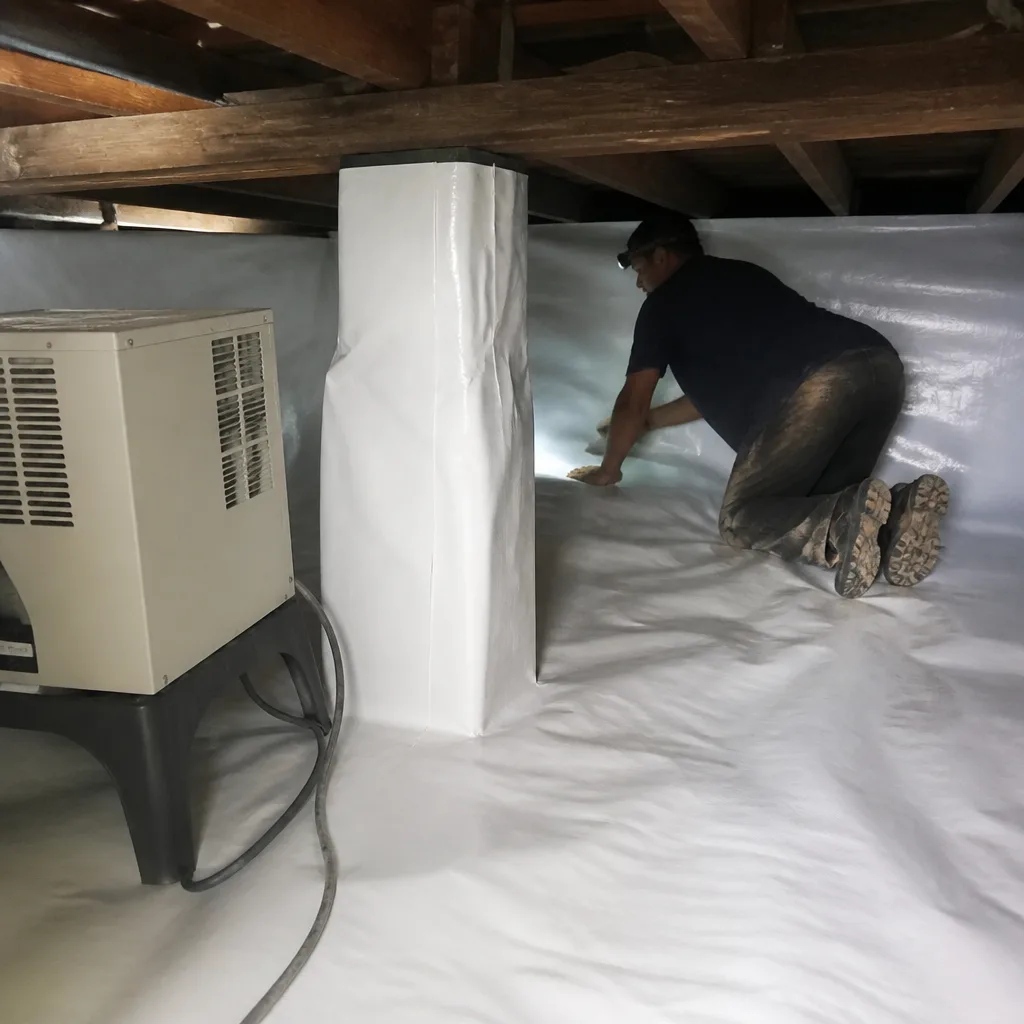
Under The Haven Standard, every job begins with a written price before any work starts. But not every “written estimate” is a real commitment. To be enforceable and comparable, a fixed-price quote must contain these five elements. If any are missing, you’re holding a ballpark dressed as a contract.
- Explicit scope of work with material specifications - Not “insulate attic.” Specify: insulation type (cellulose, fiberglass, spray foam), brand or equivalent, R-value target, and installation depth. For air sealing: locations to be sealed (top plates, penetrations, can lights, access hatch) and materials to be used (caulk, foam, gaskets).
- Permit status and fee responsibility - State whether permit is included, who pays, and who pulls it. The quote should name the permitting jurisdiction (City of West Hollywood / LA County) and indicate whether final inspection is scheduled.
- Pre-existing condition documentation and contingency trigger - Describe what was observed during inspection (existing insulation type and depth, access configuration, visible wiring or ducting). Include a clear trigger for additional cost: “If vermiculite is found to contain asbestos, abatement will be quoted separately before proceeding.”
- Verification method and documentation deliverables - Specify how performance will be verified. If blower-door testing: pre- and post-test with reported CFM50 and ACH50 figures. If not: state what substitute verification is provided. List deliverables: written test results, photo documentation, warranty document.
- Warranty terms in writing - Duration, coverage scope, and transferability. Our 365-Day Done Right Promise - if it’s not done right, we make it right - is documented in every written scope. The warranty should name what “done right” means in measurable terms, not just sentiment.
A quote missing any of these five elements is not a fixed price. It’s an opening position that will move. We’ve reviewed competitor quotes that listed only a total dollar figure and a payment schedule. When we asked about air sealing scope, the contractor said “we’ll see what’s needed when we get up there.” That’s not a plan. That’s a discovery process billed to the homeowner.
Our written scopes run 2-4 pages and include all five elements plus the Documented Photo Record specification - photos of condition before, work in progress, and completed installation, delivered digitally within 48 hours of job completion. Homeowners know what leaving looks like before we arrive.
Common Mistakes to Avoid
- Comparing total price without normalizing scope. A $1,800 quote and a $3,100 quote are not competing offers until you verify both include air sealing, permits, and verification. Line-item comparison reveals the real spread.
- Assuming R-38 means the same performance everywhere. R-38 installed over unsealed penetrations performs like R-20 or worse because air bypasses the insulation. The number on the bag is not the number in your walls.
- Skipping the blower-door test to save $300. Without measured verification, you have no evidence the air sealing worked. In West Hollywood’s competitive real estate market, documented performance improvements also support resale value.
- Ignoring rebate prerequisites until after work is complete. SoCalGas and LA DWP require specific pre-installation documentation and contractor eligibility. Retroactive rebate applications are routinely denied.
- Accepting verbal assurances about “equivalent” materials. Owens Corning fiberglass and a no-name alternative may carry the same R-value per inch but differ in density, fire rating, and long-term settling. The written scope should name the material or state “or equivalent” with qualifying standards.
- Neglecting attic ventilation when adding insulation. West Hollywood’s combination of mild winters and warm summers means attics need continuous airflow from soffit to ridge. Blocking soffit vents with new insulation creates moisture risk and voids some material warranties.
- Hiring based on lowest price for removal of unknown material. Vermiculite, old rock wool, and degraded UFFI (urea-formaldehyde foam insulation) each carry specific handling requirements. Untrained removal disturbs hazardous fibers and creates liability.
When to Call a Professional
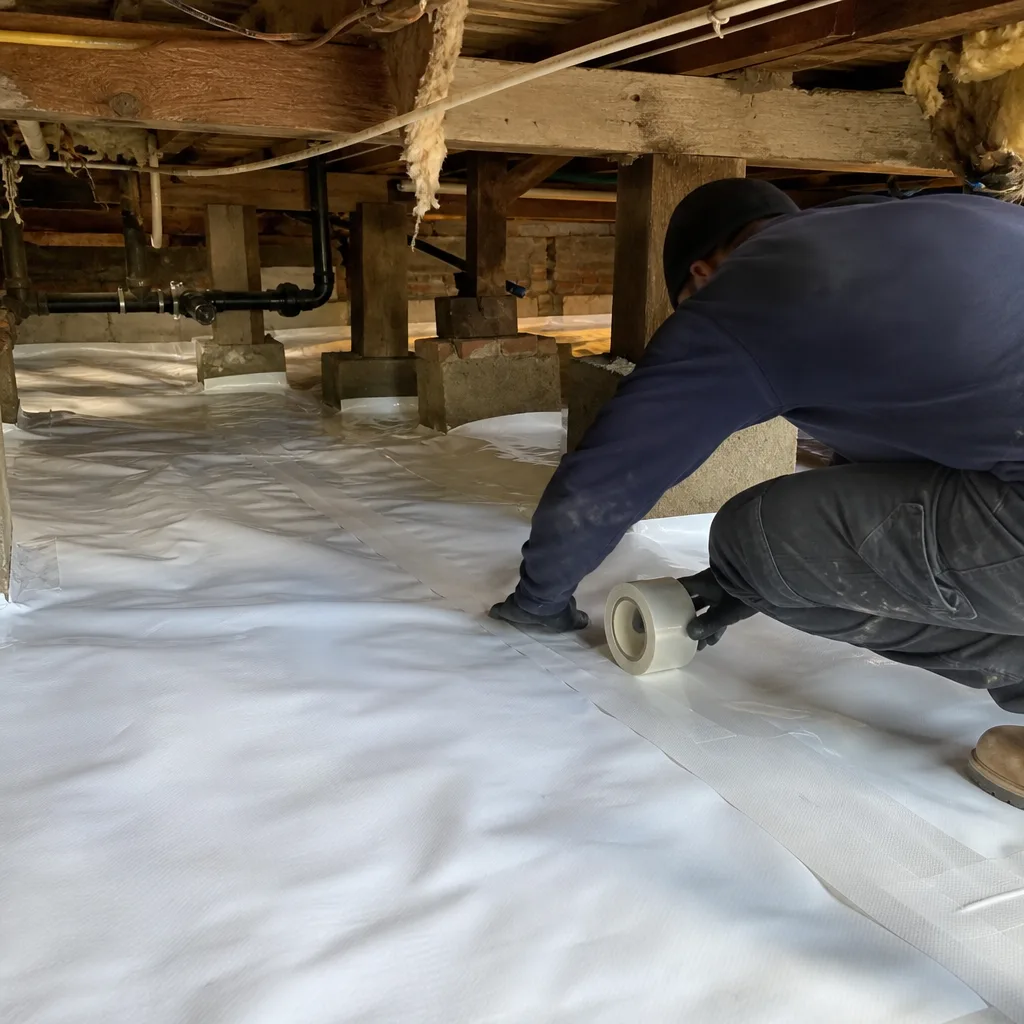
Call a building-envelope specialist when your home’s energy bills trend upward without usage changes, when rooms have persistent temperature stratification, when the attic shows signs of moisture or pest activity, or when you’re preparing to sell and want documented efficiency improvements. In West Hollywood’s market, where buyers scrutinize utility costs and permit history, a complete insulation job with blower-door documentation distinguishes a property from comparable listings.
Topside Attic Insulation West Hollywood offers free estimates in West Hollywood - call (213) 306-2607. Every estimate includes inspection, photo documentation of existing conditions, and a written fixed-price scope with all five non-negotiable line items before any work is discussed. We also provide a Free Second Opinion on any written estimate: bring us a competing quote and we’ll review it line by line, no obligation.
Our Topside Attic Insulation West Hollywood home page details our full service line, from attic insulation and spray foam to crawl space encapsulation and home energy audits. All work operates under The Haven Standard: written price, written scope, written warranty, documented result.
Frequently Asked Questions
A complete attic insulation job for a typical 1,200-square-foot West Hollywood home runs $2,800-$4,500 when air sealing, permits, materials, and blower-door verification are included. Stripped-down quotes starting near $1,800 typically omit air sealing and performance testing. Call (213) 306-2607 for a written fixed-price estimate - estimates are free.
Adding new insulation over clean, dry, uncompressed existing material is cheaper - typically $1,000-$1,500 less than removal and replacement. But existing insulation that is moisture-damaged, compressed, contaminated by rodents, or contains vermiculite must be removed. We document existing conditions with photos during inspection and specify in the written scope whether removal is required. The “cheaper” option that buries contaminated material creates health and performance problems that cost more later.
Most standard jobs on West Hollywood homes under 1,500 square feet complete in one day if no removal is required. Jobs with removal, extensive air sealing, or access complications may run two days. We specify duration in the written scope and arrive with crew size matched to the timeline. Call (213) 306-2607 to schedule - a live person answers 24/7.
SoCalGas offers $0.15-$0.25 per square foot for attic insulation plus $150-$400 for documented air sealing. LA DWP offers $0.20 per square foot for R-30 or greater upgrades, with additional amounts for combined improvements. Combined rebates for a typical 1,200-square-foot home often reach $500-$900. Eligibility requires pre-installation assessment, participating contractor status, and post-installation verification. We handle all rebate paperwork as part of our standard process.
They describe different jobs. The lower quote likely covers only material and labor for blowing insulation. The higher quote includes air sealing of thermal bypasses, permit fees, and blower-door verification. Normalized for identical scope, price spreads shrink to 15-25%. The meaningful comparison is cost per ACH50 point reduced - performance per dollar - not sticker price per square foot.
Yes, if you’re upgrading R-value or removing existing material. The City of West Hollywood processes permits through LA County’s system, with fees typically $150-$300. Unpermitted work may void insurance coverage, complicate home sales, and disqualify utility rebates. Our written scope specifies permit responsibility and includes the fee; we pull permits as standard practice.
You should receive: a final invoice matching the written price, photo documentation of completed work, blower-door test results if applicable, and a written warranty. Under The Haven Standard, we deliver all four within 48 hours of completion. The 365-Day Done Right Promise is included in writing. If your contractor delivers only an invoice, the job is not fully documented.
The Bottom Line
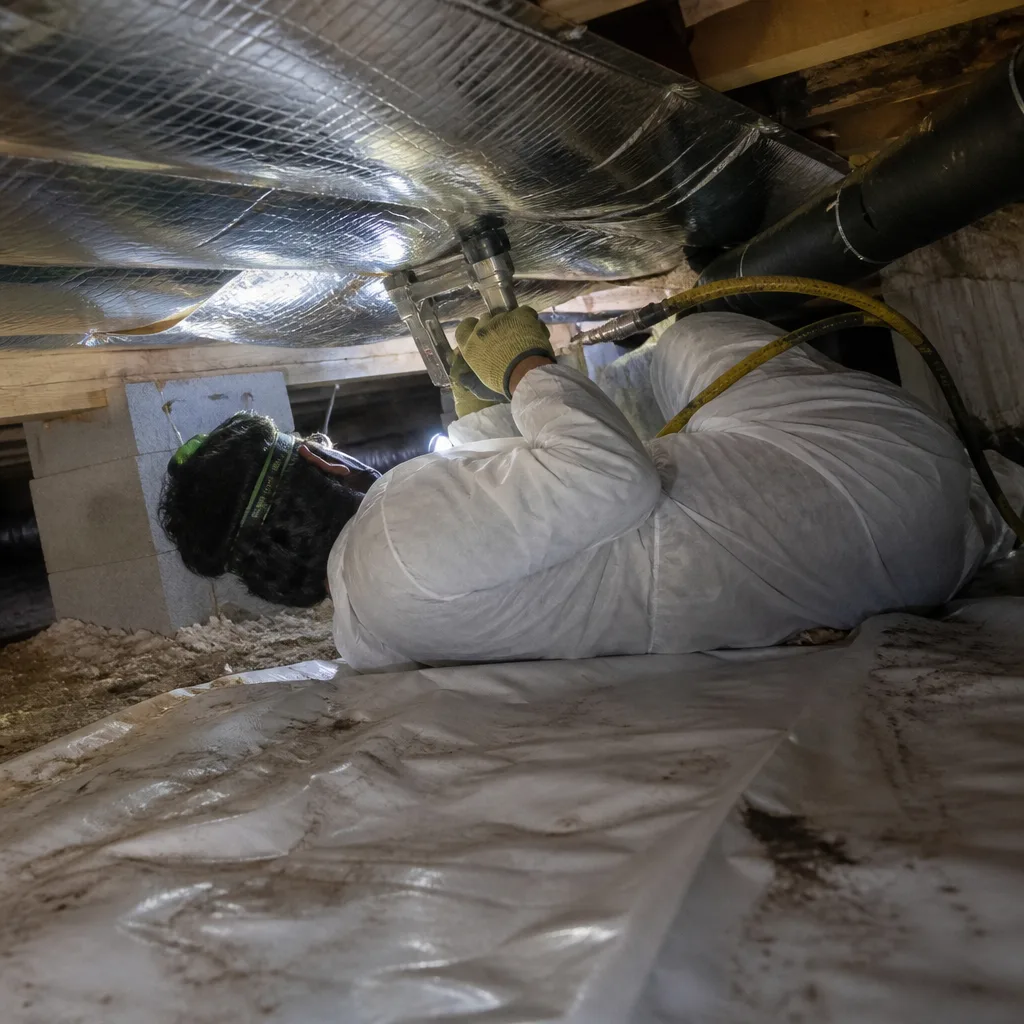
Insulation cost in West Hollywood is not a single number. It’s a sum of scope decisions that most quotes obscure. The homeowner who compares $1,800 to $3,100 as if they’re competing prices will either overpay for underperformance or miss the chance to verify real improvement. The correct comparison is line-item scope normalized to measured outcome - dollars per ACH50 point reduced, with rebates counted against net cost. Demand a written fixed-price quote with explicit material specifications, permit handling, pre-existing condition documentation, verification method, and warranty terms. Anything less is a conversation, not a commitment. Since 2016, we’ve completed over 9,000 homes with written prices before work started and documented records when the crew left. The pattern works because the documentation removes the need for trust.
Written by Wes Okafor, Owner at Topside Attic Insulation West Hollywood, serving West Hollywood since 2016.