
Attic Insulation Top-Up in West Hollywood, CA
An attic insulation top-up adds blown-in insulation over your existing material to bring the depth back to current California energy code – typically R-38 to R-60 for West Hollywood’s climate zone. Most top-ups in a standard West Hollywood bungalow or condo townhome run between $900 and $2,400, depending on square footage, current depth, and how much air sealing work the attic floor needs before the new material goes in. Jobs are usually completed in a single visit, and you leave with a written scope, a documented photo record, and – on every applicable job – before-and-after blower-door numbers that show exactly what changed.
If your home is losing conditioned air faster than it should, or your HVAC runs longer than your neighbors’ on the same summer afternoon, the attic is almost always worth inspecting first. Our Attic Insulation in West Hollywood page covers the full scope of what we do in the attic; this page focuses specifically on top-ups: when you need one, what the process looks like, and what it costs in this market.
Topside Attic Insulation West Hollywood operates under The Haven Standard – the same framework Envelope Insulation Co. has applied to every job since 2016. That means a written price before anyone enters your attic, no insulation added before air leaks are sealed, and a 365-Day Done Right Promise in writing when the crew leaves. Call us at (213) 306-2607 – a live person picks up, no voicemail loops.
When You Need an Attic Insulation Top-Up
West Hollywood’s climate sits in California’s Climate Zone 9. The city is dense, older housing stock dominates – Craftsman bungalows off Fairfax, mid-century stucco boxes near Santa Monica Boulevard, two-story townhomes in the flats west of La Brea – and a lot of that stock was insulated once, decades ago, and never touched since. Cellulose settles. Fiberglass batts compress. Code requirements have moved. Here are the clearest signs a top-up is overdue.
- Your current insulation depth is under 10 inches. California Title 24 targets R-38 minimum for attics in Climate Zone 9, which requires roughly 10 to 12 inches of blown cellulose or 13 to 15 inches of blown fiberglass. If you can see the tops of your ceiling joists clearly, you’re almost certainly under that threshold.
- Your summer cooling bills have climbed without a clear explanation. West Hollywood afternoons regularly push past 95°F in late August and early September. An under-insulated attic forces your HVAC system to cycle more often and longer – one of the most common complaints we hear from homeowners on the blocks between Melrose and Fountain.
- The home was built before 1990 and the attic has never been opened for inspection. Pre-1990 construction in West Hollywood frequently has R-11 or R-19 fiberglass batts – fine for the standards of the time, well short of what your envelope needs now. Older batts also develop gaps at the edges of joists over time, creating thermal bridges that defeat the rated R-value.
- You’ve noticed inconsistent room temperatures floor to floor. The top floor of a two-story home running 5 to 8 degrees warmer than the ground floor, even with the HVAC balanced, points to radiant heat transferring through an insufficiently insulated attic deck.
- A previous contractor added insulation without sealing the attic floor first. This is more common than it should be. Blown-in material over an unsealed attic floor moves conditioned air through it instead of slowing it down. The R-value on the label doesn’t reflect real-world performance when air is bypassing the material. We see this in a meaningful share of the attics we inspect near the Sunset Strip corridor and in the denser blocks east of Crescent Heights.
- You received a Home Energy Score or HERS audit that flagged the attic. If a rater gave you a written report noting inadequate attic insulation, a top-up is the targeted fix – provided the air sealing work happens first.
Our Attic Insulation Top-Up Process
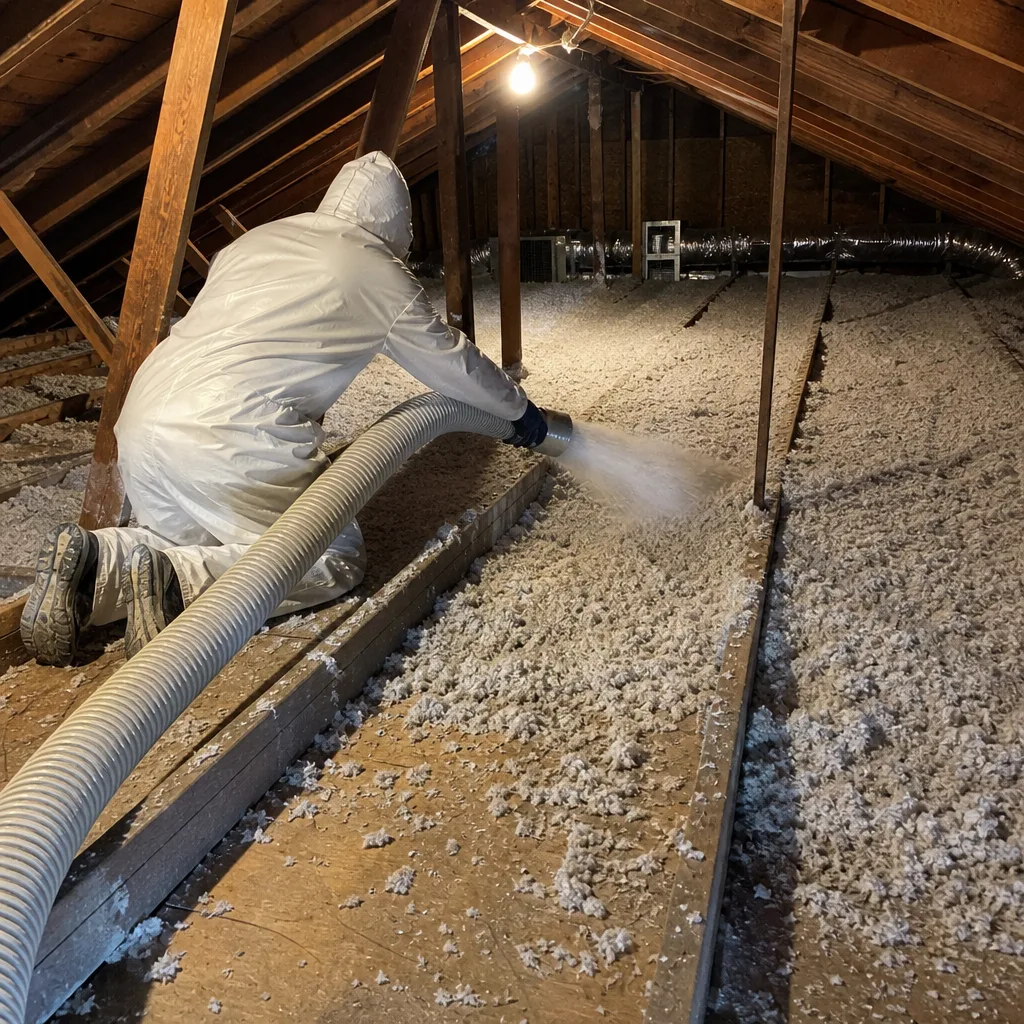
The order of operations matters. We will not blow insulation over an unsealed attic floor – that’s not a policy preference, it’s the technical reason top-ups fail. Air sealing is a hard prerequisite, not an upsell. Here’s what the process looks like from the first visit to the final photo.
- Pre-work inspection and blower-door baseline. Before we quote anything, a technician enters the attic and measures current insulation depth at multiple points, inspects the condition of existing material, and identifies bypasses – top plates, can lights, plumbing and electrical penetrations, attic hatch edges. On applicable jobs, we run a blower-door test – a pressurization reading that shows, in a single figure (CFM50), how much conditioned air the building envelope is currently losing. That number becomes your before reading. You get a written scope and a flat price before the conversation ends. Under Haven Standard Clause 1: written price before any work starts, always.
- Air sealing the attic floor – first, without exception. Top plates are sealed with fire-rated foam or caulk. Can lights are capped if they’re not IC-rated airtight fixtures. Plumbing stacks, electrical chases, and any other penetrations through the ceiling plane are sealed with appropriate material – foam, mineral wool backing, or metal flashing depending on the penetration type. This step alone typically drops a West Hollywood home’s blower-door reading by 20 to 40 percent before a single bag of insulation is opened.
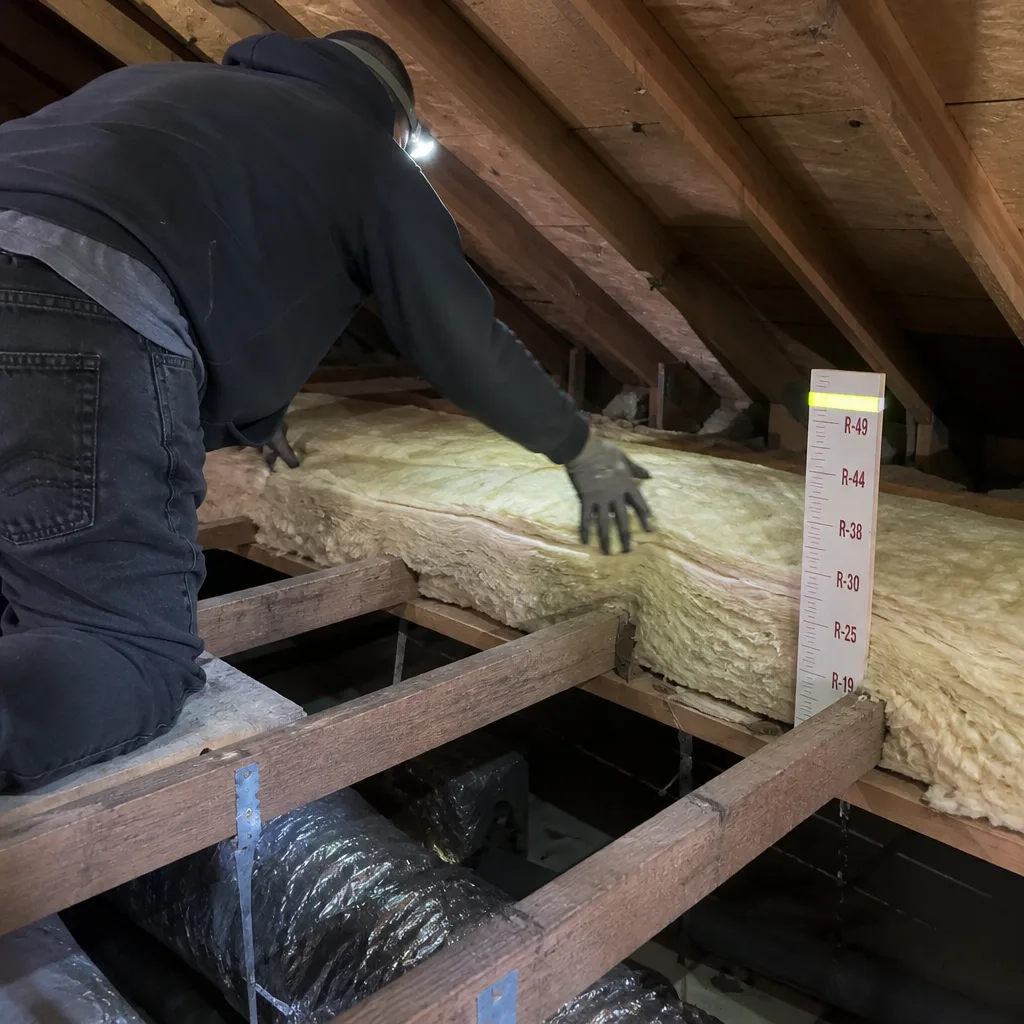
- Existing insulation assessed and, where necessary, leveled. If existing material is badly compressed, contaminated, or uneven, we level it or remove the problem sections before adding new material on top. Adding depth over a compromised base doesn’t recover the full R-value you’re paying for. We document the existing condition with photos before touching it.
- Blown-in insulation installed to the specified depth. We use GreenFiber cellulose or Owens Corning blown fiberglass, depending on the existing material in the attic and the depth target specified in the scope. Depth markers are installed across the attic floor so you – and any future inspector – can verify the installed depth without guesswork. We bring the attic to the R-value in the written scope, not to whatever the bags allow.
- Post-install blower-door test. After the insulation is in and the attic is closed, we run a second blower-door test. The before and after numbers are recorded, written down, and handed to you. If a job reads 3,800 CFM50 before we start and 2,100 CFM50 after, you get both numbers. That’s the documented evidence that the air sealing portion of the work performed as intended.
- Documented photo record and written warranty delivered before we leave. Every photo taken during the job – before, during, and after – is compiled and delivered. The 365-Day Done Right Promise is in writing in the warranty document. If anything isn’t right within 365 days, we make it right. That’s the closing step on every job, not an optional add-on.
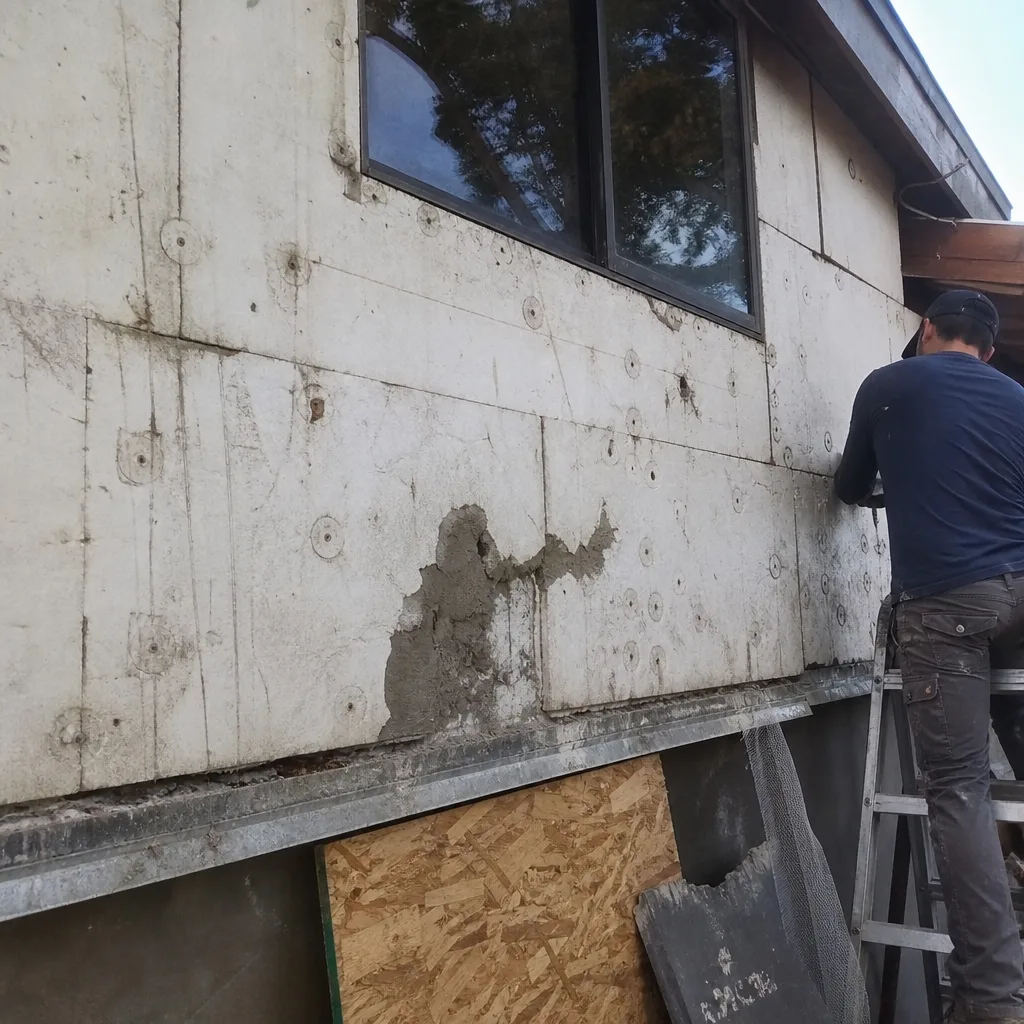 Before
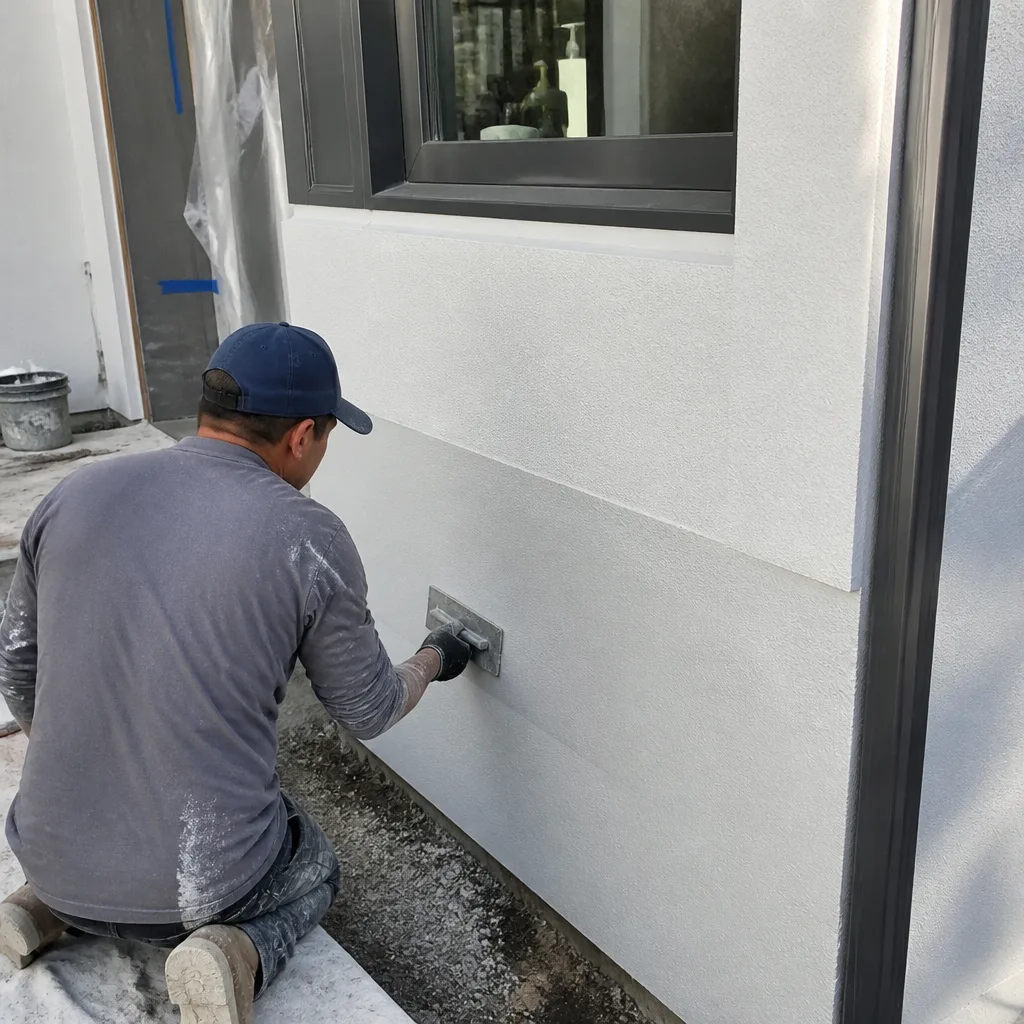 After
AfterAttic Insulation Top-Up Pricing in West Hollywood
Most attic insulation top-ups in West Hollywood run between $900 and $2,400 for a single-family home or townhome. Here’s how the range breaks down by the variables that move the number.
| Variable | Typical Range / Impact |
|---|---|
| Attic square footage (under 800 sq ft) | $900 – $1,300 |
| Attic square footage (800 – 1,400 sq ft) | $1,200 – $1,900 |
| Attic square footage (1,400 – 2,000 sq ft) | $1,700 – $2,400 |
| Air sealing required (top plates, can lights, penetrations) | Included – not a separate line item |
| Low or restricted attic access (common in mid-century West Hollywood construction) | Adds $150 – $350 depending on difficulty |
| Existing insulation removal before top-up (contaminated or collapsed) | Adds $400 – $900 depending on volume |
| Blower-door test (before and after) | Included on applicable jobs |
A few notes on what moves the price. West Hollywood’s housing stock skews toward smaller attic footprints – many of the bungalows and mid-century boxes between Fountain and Santa Monica have attics under 900 square feet, which keeps most Attic Batt Insulation top-ups toward the lower end of the range. Townhomes and larger Spanish-style homes on the west side of the city can push into the upper tier. Low-pitch roofs and difficult access points – common in the neighborhood’s flatter post-war construction – add labor time.
Air sealing is included in every top-up scope we write. We don’t quote a top-up price and then surface an air sealing upsell once the job starts. The written price you receive before work begins is the price you pay.
If you have a competing written estimate, bring it. Under the Haven Standard, we offer a Free Second Opinion on any written estimate – we’ll read it with you, note what’s included and what isn’t, and give you an honest read on whether the scope covers what your attic actually needs. Call (213) 306-2607 to schedule.
What Affects Long-Term Performance After a Top-Up
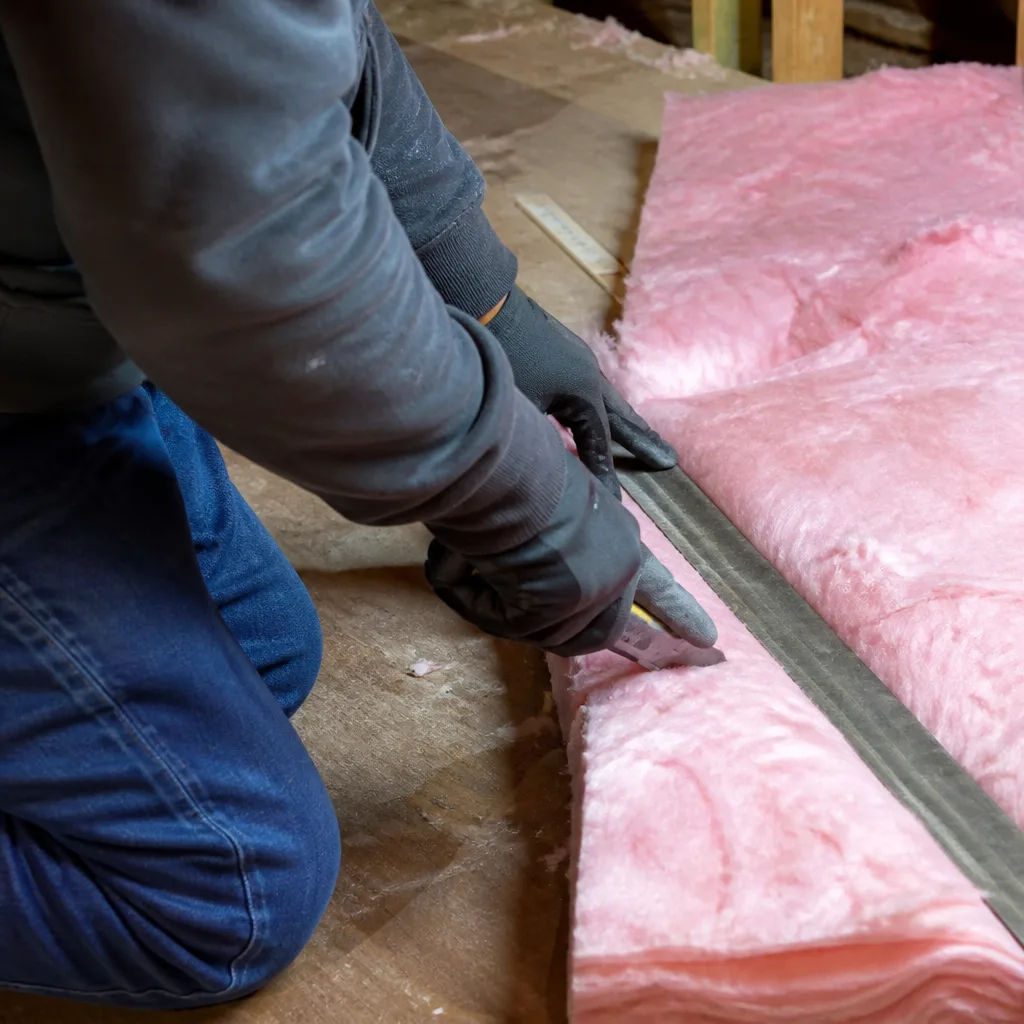
The R-value on the bag is a lab measurement taken under still-air conditions. In a real attic, performance depends on two things the bag label doesn’t account for: air movement through the insulation and the continuity of coverage across the full attic floor.
Air movement is why sealing comes first. Johns Manville and other major manufacturers publish data showing that even small air bypasses – a single unsealed top plate, one can light without an airtight cap – can degrade effective R-value by 30 to 50 percent in the areas around the bypass. This is measurable with a blower-door test. It’s also invisible to the eye, which is why we run the pressurization reading rather than relying on a visual inspection alone.
Coverage continuity is why we install depth markers and photograph them. An attic that reads R-38 in the center and R-11 at the eaves performs like an attic with significant gaps – because it has them. We document depth at the perimeter, around hatches, and in low-access corners, not just at the center of the span.
West Hollywood’s Mediterranean climate means the insulation is working in both directions across the year. Summer heat gain through an under-insulated attic drives cooling costs up from June through October. In December and January, when nighttime temps drop toward the mid-40s, the same attic loses heat upward through the ceiling. A properly completed top-up addresses both directions. The before-and-after blower-door numbers tell you whether the envelope work held up under pressurization – the thermal performance follows from there.
FAQs – Attic Insulation Top-Up in West Hollywood
How much does an attic insulation top-up cost in West Hollywood?
Most top-ups in West Hollywood run between $900 and $2,400, depending on attic size, the depth of insulation needed, and whether any existing material needs to be removed before new insulation is added. Air sealing is included in our scope – it’s not a separate charge. A flat written price is provided before any work begins, under Haven Standard Clause 1. Call (213) 306-2607 to schedule an inspection; the quote comes before anyone enters your attic with equipment.
Can you add insulation on top of old insulation, or does the existing material need to come out first?
In most cases, existing insulation in good condition can remain, and new blown-in material is added on top of it. We assess the condition of existing material during the inspection. If it’s compressed below functional depth, contaminated (rodent activity, moisture, or mold), or so uneven that it would compromise the finished depth, we remove it first and document the before-state with photos. Adding material over badly compromised insulation wastes money on R-value you won’t actually get. For more on the full attic insulation scope, visit our Attic Insulation in West Hollywood page.
Do you have to seal the attic before adding insulation?
Yes – and we won’t skip this step. Air sealing top plates, can lights, and penetrations before blowing in new insulation is the technical prerequisite that determines whether the R-value you paid for actually performs in your home. A blower-door test – a pressurization reading that shows, in a single figure, how much conditioned air your building is losing – is used to measure the attic floor before and after sealing so you can see the result in writing. We have not blown insulation over an unsealed attic floor since 2016, and we’re not starting now.
How long does an attic insulation top-up take?
Most top-ups in a West Hollywood home under 1,400 square feet are completed in a single day – typically four to seven hours from arrival to final photos, depending on attic access and the amount of air sealing work involved. Larger attics or those with difficult access points may require a second morning. The written scope you receive before the job starts will specify the expected timeline, so you’re not guessing when your day ends.
How do I know the top-up actually improved my home’s performance?
We run a blower-door test before the air sealing work starts and again after the insulation is in. Both numbers – expressed in CFM50, the volume of air moving through the envelope at a standardized pressure – are written down and handed to you. If the reading drops from 4,100 CFM50 to 2,300 CFM50, you have a documented record of that change. The Documented Photo Record shows installed depth. The written warranty, backed by the 365-Day Done Right Promise, covers the work for a full year. That’s what leaving looks like when we’re done.
Key Takeaways
- Attic insulation top-ups in West Hollywood typically cost $900 to $2,400, depending on attic size and condition of existing material.
- Air sealing is completed before any insulation is added – this is a hard prerequisite, not an optional service.
- Before-and-after blower-door readings are provided on applicable jobs so you have documented evidence of the air sealing result.
- A written price is delivered before any work begins – Haven Standard Clause 1, no exceptions.
- The 365-Day Done Right Promise and Documented Photo Record are included on every completed job.
- Topside Attic Insulation West Hollywood has operated under The Haven Standard since 2016, with 9,000+ homes sealed and insulated across the region.
Get a Written Price Before Any Work Starts
If your West Hollywood home is running warmer than it should, your HVAC is cycling more than it used to, or you simply haven’t had the attic inspected since you moved in, a top-up assessment is a practical starting point. We’ll measure current depth, identify any air sealing gaps, and hand you a flat written price before anyone opens a bag of insulation. No obligation, no pressure, and a Free Second Opinion if you have a competing written estimate you’d like us to review.
Call (213) 306-2607. A live person picks up. We serve West Hollywood and the surrounding neighborhoods – scheduling is straightforward and we’ll text you when your technician is on the way.
For the full picture of what we do in the attic, including removal, replacement, and full new installs, visit our home page or read through the complete Attic Insulation in West Hollywood service page.
Written by Wes Okafor, Owner at Topside Attic Insulation West Hollywood, serving West Hollywood.