
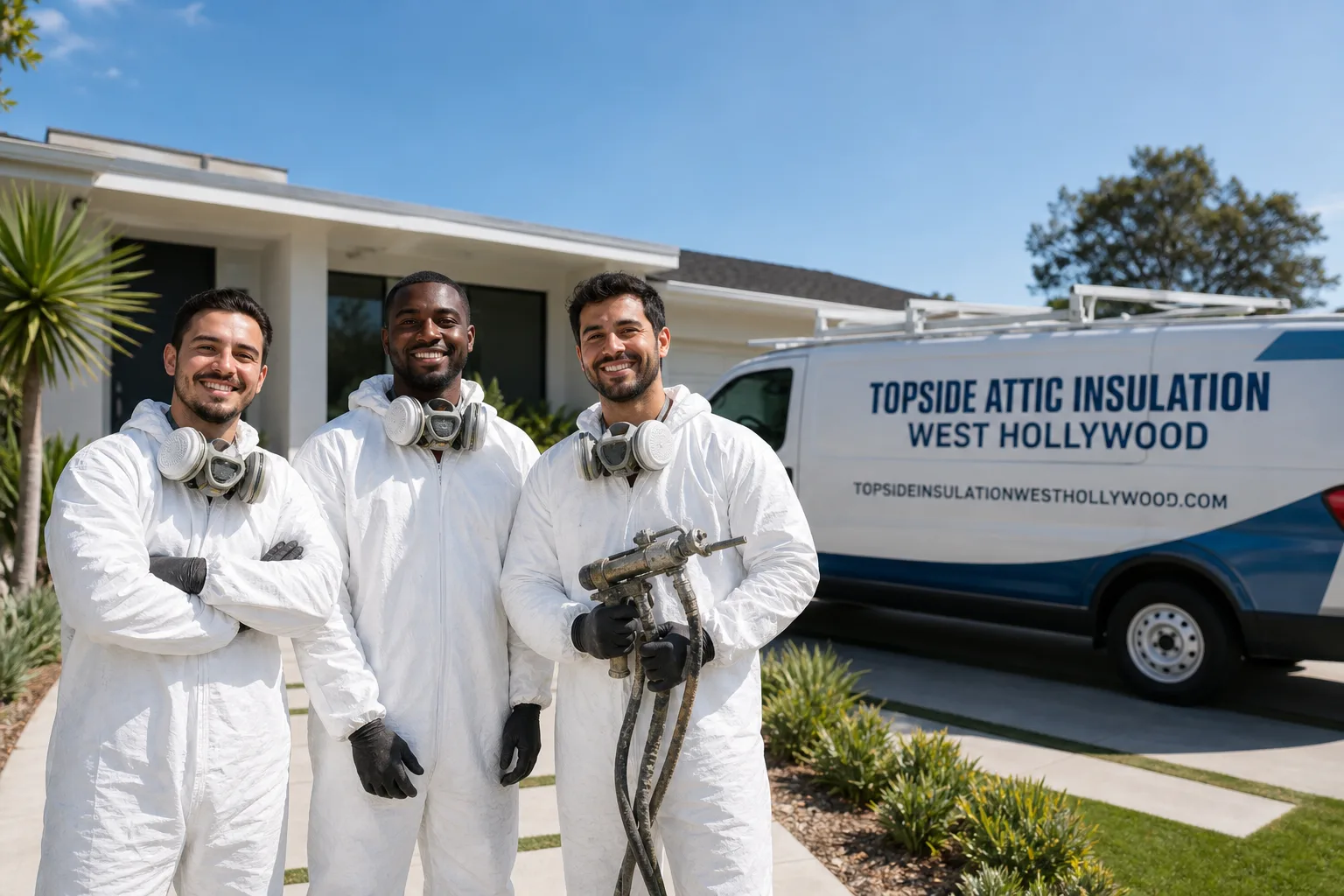
How Much Does Attic Insulation Cost in West Hollywood?
Attic Insulation Near Me in West Hollywood, CA typically costs between $1,800 and $4,200 for a standard single-story home, with most jobs falling around $2,400 to $3,000 once air sealing is included. The wide range reflects real variables: attic square footage, current R-value, whether old insulation needs to come out first, and whether the attic floor has been properly air-sealed before anything gets blown in. Most jobs we complete in West Hollywood are finished in a single day.
Attic Insulation Cost Breakdown (2026)
Most attic insulation estimates break into four or five line items. Here is what each one typically costs in the West Hollywood market as of 2026:
| Service | Typical Price Range (West Hollywood, 2026) |
|---|---|
| Blown-in fiberglass or cellulose (1,000 sq ft attic) | $900 – $1,600 |
| Blown-in fiberglass or cellulose (1,500 sq ft attic) | $1,300 – $2,200 |
| Blown-in fiberglass or cellulose (2,000 sq ft attic) | $1,700 – $2,900 |
| Attic air sealing (top plates, can lights, penetrations) | $450 – $950 |
| Spray foam insulation (rim joists, critical gaps) | $350 – $750 |
| Old insulation removal (per 1,000 sq ft) | $600 – $1,200 |
| Radiant barrier installation | $600 – $1,400 |
| Blower-door test (before and after) | Included on applicable jobs at Envelope Insulation Co. |
| Full job (average West Hollywood home, air sealing + insulation) | $1,800 – $4,200 |
A few things push a West Hollywood job toward the higher end of that range. Older Spanish-style and bungalow homes in the flats near Santa Monica Boulevard often have low-slope rooflines with limited attic clearance, which slows the work and adds labor cost. Homes built before 1980 frequently have fiberglass batts laid directly over unsealed top plates – meaning before new insulation can be installed correctly, the old material comes out and the air leaks get addressed. Skipping that step is how most insulation jobs underperform: the insulation is there, but conditioned air is still bypassing it through every unsealed gap. We don’t skip that step. At Envelope Insulation Co., air sealing is a hard prerequisite, not an upsell, and the scope is written before anyone starts.
At the lower end, you’ll typically find a well-maintained attic in a post-1990 condo or townhome in the Norma Triangle or eastern WeHo corridor – smaller square footage, existing insulation at partial depth, no removal needed, and an attic floor that only needs spot-sealing before top-up with blown-in fiberglass from Owens Corning or Johns Manville.
What Affects Attic Insulation Pricing in West Hollywood
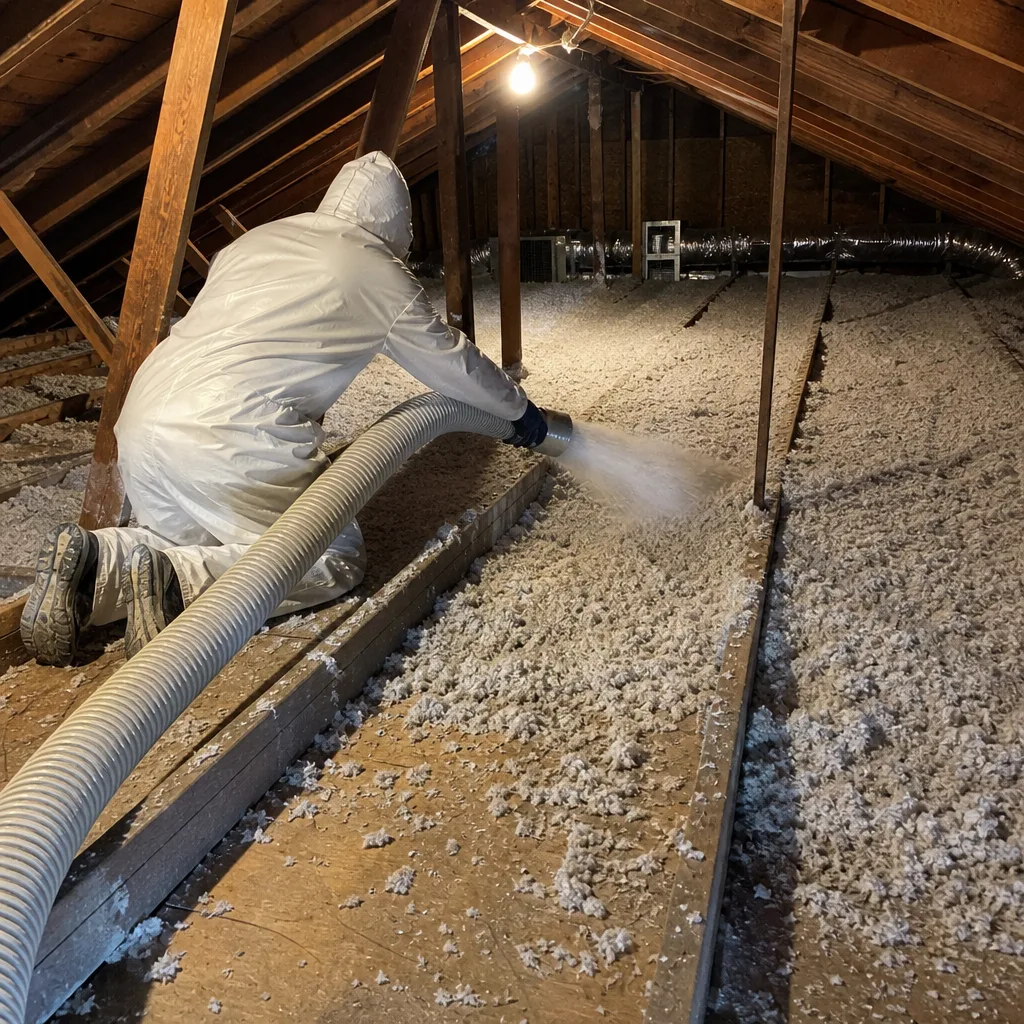
Six factors move the number up or down more than anything else:
- Attic square footage: This is the biggest single driver. Material cost scales directly with area, and labor scales with how much space the crew has to work in. A 900-square-foot attic above a WeHo bungalow is a fundamentally different job from a 2,200-square-foot attic above a larger home near Laurel Canyon.
- Existing insulation condition: If the attic already has insulation above R-19, a top-up to R-38 (California’s Title 24 minimum for most residential attics) costs less than a full removal-and-replacement. If there’s rodent damage, moisture intrusion, or old vermiculite present, removal is not optional – it changes the scope and the price. Wes Okafor’s crew photographs the attic condition before any decision is made, and that photo record is included in your job documentation.
- Air sealing complexity: Older homes in West Hollywood – especially the 1920s and 1930s cottages in the Beverly-Fairfax adjacent blocks – have dozens of unsealed penetrations: recessed can lights punched through the ceiling, plumbing chases, framing gaps at interior wall top plates. A straightforward modern attic might need two hours of air sealing; a pre-war home can need a full day before insulation material ever enters the picture.
- Insulation type: Blown-in cellulose (made from recycled paper fiber, treated for fire resistance) runs slightly cheaper per square foot than blown-in fiberglass, but fiberglass from manufacturers like Knauf or Owens Corning is more moisture-resistant, which matters in West Hollywood’s marine-influenced climate – June Gloom is real, and attics that run cooler than expected in summer often carry more moisture than homeowners expect. Spray foam from Icynene or Demilec costs more per board foot but is the right tool for rim joists and irregular framing gaps where blown-in material won’t stay put.
- Access and attic clearance: Low-pitch rooflines on Mediterranean and Spanish Revival homes mean technicians may be working in 18 to 24 inches of clearance across part of the attic. That slows down both air sealing and insulation installation, and it’s reflected honestly in the written price before any work starts – Haven Standard Clause 1.
- Permit requirements: Los Angeles County (which has jurisdiction over most West Hollywood building permits, since West Hollywood contracts its building and safety services) generally does not require a permit for attic insulation top-ups. However, insulation removal tied to a re-roof, or spray foam application that changes the attic from vented to unvented (conditioned attic conversion), can trigger a permit requirement. We tell you upfront what applies to your job.
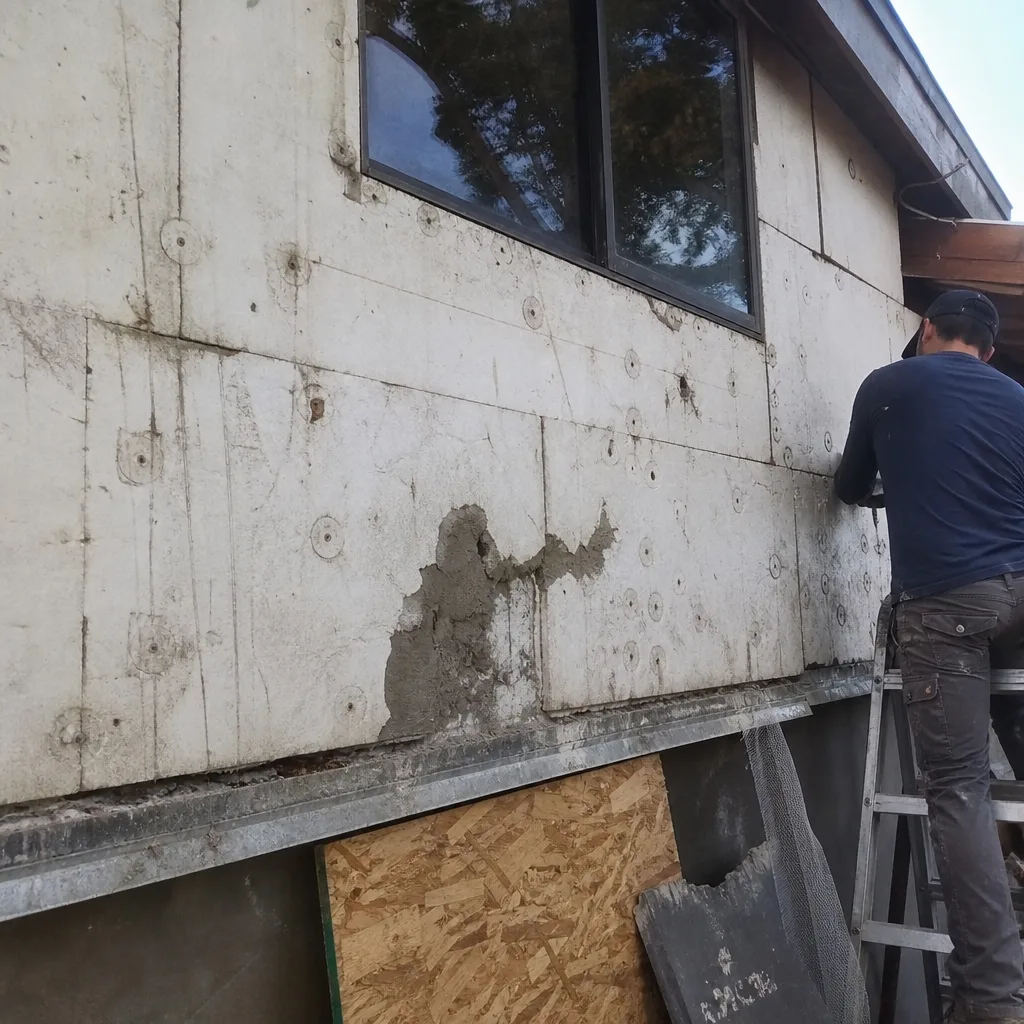 Before
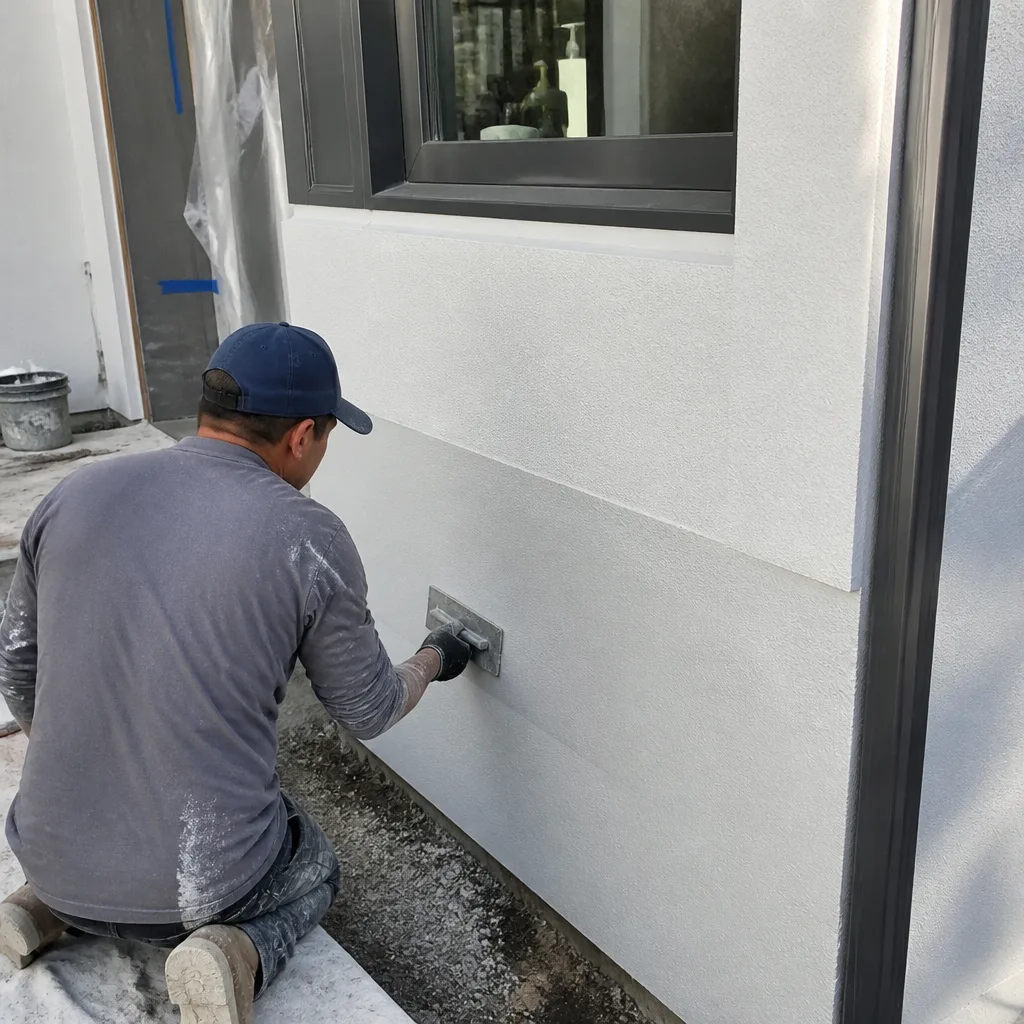 After
AfterWest Hollywood Climate and Why It Changes the Insulation Math
West Hollywood sits in a microclimate that doesn’t behave like the San Fernando Valley or even like downtown Los Angeles. The Pacific Ocean is close enough that June, July, and August mornings are frequently overcast – what locals call June Gloom but which stretches well into August in some years. Afternoon temperatures in WeHo rarely hit the 100-degree marks seen in Chatsworth or Northridge.
That sounds like good news for energy costs, but it creates a specific insulation challenge: the temperature differential driving heat gain into the home is modest compared to inland cities, which means radiant heat through an uninsulated or under-insulated attic deck is a proportionally larger share of the problem. A home in Reseda fighting 108-degree heat has so much thermal load that the insulation level matters enormously; a home in West Hollywood in the mid-80s on a sunny afternoon loses a bigger fraction of its cooling load to radiant transmission than to temperature difference alone.
This is why radiant barrier installation – a perforated reflective foil stapled to the underside of the roof deck to reflect radiant energy before it enters the attic air space – is a cost-effective addition for many West Hollywood homes in a way it might not be in a cloudier climate. The California Energy Commission’s Title 24 standards account for this by setting R-38 as the minimum attic floor insulation standard for Climate Zone 9, which covers West Hollywood. Many homes we assess in West Hollywood are sitting at R-11 or R-19 – well below that threshold – because insulation was never updated after the original construction.
If your home was built between 1945 and 1985 and you haven’t had the attic touched since purchase, there’s a reasonable chance you’re losing conditioned air through both insufficient R-value and an unsealed attic floor. A blower-door test – a pressurization reading that measures, in a single figure called CFM50, how much air your building envelope is losing – will show you exactly where you stand before any money changes hands.
Air Sealing: The Step That Most Contractors Skip
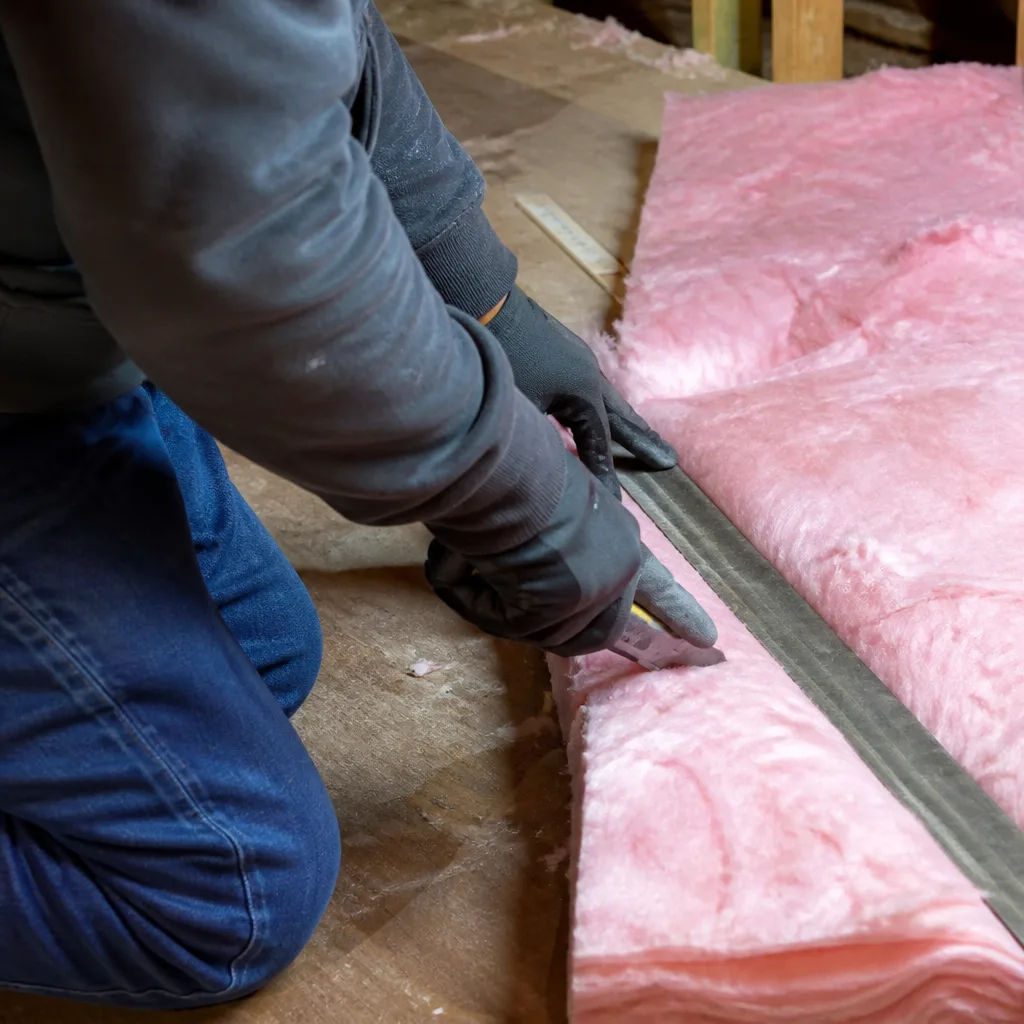
This point matters enough to say plainly: blowing insulation over an unsealed attic floor is one of the most common ways an insulation job underperforms its promise. Insulation slows conductive heat transfer – heat moving through a solid material. It does very little to stop convective bypass – conditioned air literally flowing out of the living space through gaps and into the attic.
In a typical West Hollywood home built before 1990, the attic floor has multiple bypass pathways: recessed can lights (especially older non-IC-rated fixtures), gaps at interior wall top plates, plumbing and electrical penetrations, attic hatch perimeters, and sometimes open-web floor trusses that connect interior wall cavities directly to the attic. None of that is sealed by adding R-30 blown-in fiberglass on top of it. The air just moves through the insulation instead of through open air.
At Envelope Insulation Co., air sealing is completed – and documented – before insulation goes in. That means foam at every can light penetration, caulk or foam at top plate gaps, and blocking at chases. On applicable jobs, we run a blower-door test before the work starts and again after it’s complete. The before-and-after numbers are published in your job record so you can see the result – not as a feeling, but as a measurement. A job that drops from 3,800 CFM50 to 1,900 CFM50 is a job where the air sealing worked. We show you the numbers.
How to Save on Attic Insulation in West Hollywood
There are legitimate ways to bring the cost down without cutting corners on the work itself:
- Get a second opinion on any written estimate. If you have a written quote from another contractor, we’ll read it with you – line by line – at no charge. This is not a sales technique; it’s how we make sure you’re comparing the same scope. A $1,800 quote that doesn’t include air sealing is not cheaper than a $2,600 quote that does. Free Second Opinion on any written estimate is part of how we operate.
- Check LADWP rebates before signing anything. Los Angeles Department of Water and Power offers rebates for attic insulation upgrades that bring a home to or above Title 24 minimums. The rebate amount varies by existing insulation level and square footage, but it’s real money – sometimes several hundred dollars – and the rebate form needs to be submitted correctly to pay out. We flag this during the estimate so it doesn’t get missed.
- Consider the California Alternative Energy and Advanced Transportation Financing Authority (CAEATFA) sales tax exclusion, which can apply to qualifying insulation materials. Eligibility depends on the scope of work; we’ll tell you upfront whether your job qualifies rather than letting you discover it after the fact.
- Combine air sealing and insulation in one job. Running both in a single visit costs less than scheduling them separately. The crew is already in the attic; sealing before insulating doesn’t add a full second mobilization cost the way a second appointment would.
- Don’t over-specify the insulation depth. Upgrading from R-19 to R-38 has a clear payback case in the West Hollywood climate. Going from R-38 to R-60 has diminishing returns at current Southern California gas and electricity rates. We’ll tell you where the line is for your specific attic rather than defaulting to the highest number.
- Ask about the photo record before the job starts. Every job gets a Documented Photo Record – included, not an add-on. You’ll have before-and-after photos of the attic condition, the air sealing work, and the final insulation depth measured at multiple points. That documentation matters if you sell the home, file a warranty claim, or ever have a question about what was done.
For a written price specific to your attic, call (213) 306-2607. The estimate is free, the price is written before any work starts, and you’ll have a documented scope in hand before anyone arrives at your door.
Neighborhoods We Regularly Work in Across West Hollywood
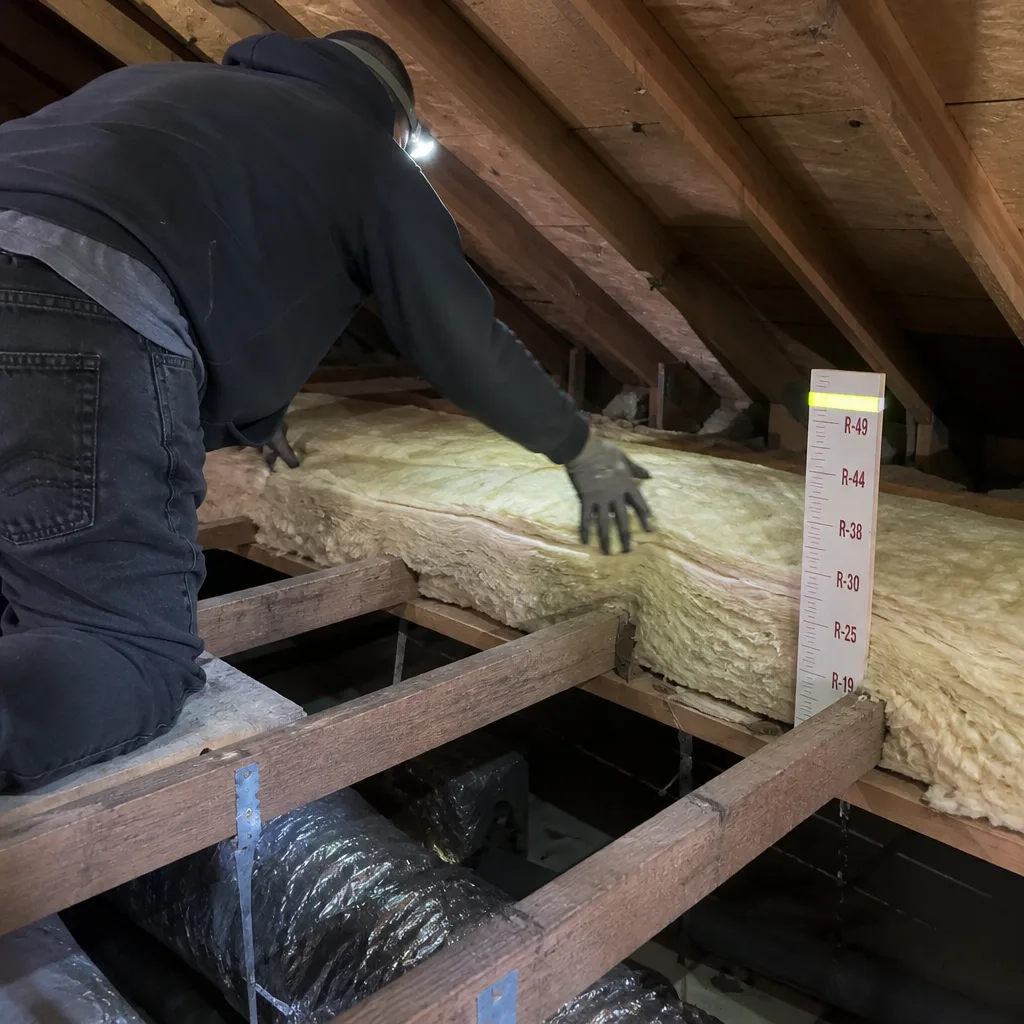
West Hollywood is a small city – 1.9 square miles – but the housing stock is varied enough that no two jobs are identical. We work throughout the city, and the attic conditions differ block to block:
- West Hollywood West (near Doheny and Santa Monica Blvd): Older apartment buildings and single-family homes converted from bungalow stock. Low-slope rooflines are common, attic access is sometimes through a single hatch in a closet, and original fiberglass batts from the 1970s are the most frequent finding. Most of these attics need full removal before new insulation goes in.
- Norma Triangle: A mix of 1940s Spanish Revival homes and 1980s infill construction. The older homes have detailed ceiling work that sometimes means more penetrations to seal. The newer buildings sometimes have spray foam already at the rim joists but nothing at the attic floor. We find the gap and price the fix.
- West Hollywood East (Fairfax corridor): Closer to the Hollywood Hills micro-geography, where some lots have split-level construction and attic configurations that don’t follow a standard floor plan. Spray foam from Icynene or Demilec is often the right material choice for hard-to-reach framing gaps in these homes.
- Sunset Strip adjacents: Higher-end renovations that sometimes include a conditioned attic conversion – shifting from a vented attic to an unvented attic where the spray foam goes on the underside of the roof deck rather than the attic floor. This changes the permit picture and the cost structure significantly; it also changes where your HVAC equipment lives thermally, which can matter if your air handler is in the attic.
What the Job Documentation Looks Like
Before anyone from our crew enters your attic, you’ll have a written price in hand – a flat number with a written scope describing exactly what gets done and what materials get used. Under Haven Standard Clause 1, no work starts without it. There are no verbal estimates that turn into different invoices.
When the job is complete, you receive a Documented Photo Record: photographs of the attic before work started, the air sealing in progress (foam at can lights, caulk at top plates), and the finished insulation at measured depth at multiple points across the attic floor. On applicable jobs – specifically those where air sealing is part of the scope – the record also includes the blower-door readings before and after, so you have a number, not just a description, of what changed.
The 365-Day Done Right Promise applies to everything we complete. If something isn’t right – insulation depth short, air sealing missed a penetration, anything covered in the written scope – we make it right within the warranty period. That promise is in writing before the job starts, not offered after a complaint.
Wes Okafor has led every job under this standard since Envelope Insulation Co. began operating in 2016. More than 9,000 homes have been sealed and insulated under that model, each one with a written price before work started and a documented record when the crew left.
FAQs – Attic Insulation Cost in West Hollywood
How much does attic insulation cost in West Hollywood in 2026?
Most attic insulation jobs in West Hollywood run between $1,800 and $4,200, with the midpoint for a typical 1,200-to-1,500-square-foot attic landing around $2,400 to $3,000 when air sealing is included. Smaller jobs – a 900-square-foot attic needing only a top-up with no removal – can come in under $1,500. Jobs requiring full old insulation removal, extensive air sealing, or a conditioned attic conversion with spray foam on the roof deck can exceed $4,500. Call (213) 306-2607 for a written price specific to your attic – the estimate is free.
Is it cheaper to add insulation on top of existing insulation, or remove and replace?
Adding insulation on top (an Attic Insulation Top-Up) costs less in almost every case – typically $600 to $900 less than a full removal-and-replacement for a 1,200-square-foot attic. But a top-up is only appropriate when the existing insulation is dry, undamaged, and free of rodent activity. If the existing material is compressed, contaminated, or wet, topping up over it doesn’t recover its R-value and can trap moisture. We photograph the existing condition before making a recommendation, so the decision is based on what’s actually there.
Does attic insulation require a permit in West Hollywood?
Standard attic insulation top-ups and most blown-in replacement jobs in West Hollywood do not require a permit under current Los Angeles County building and safety requirements (West Hollywood contracts those services to LA County). However, converting a vented attic to an unvented conditioned attic using spray foam on the roof deck does typically require a permit and may require a Title 24 energy calculation. We identify permit requirements during the estimate and handle the process – you won’t discover a permit issue after the work is done.
What R-value do I need in a West Hollywood attic?
California’s Title 24 energy code requires a minimum of R-38 at the attic floor for most residential buildings in Climate Zone 9, which covers West Hollywood. Many homes we assess in WeHo are at R-11 to R-19 – well below that. The code minimum is the floor, not necessarily the target: R-49 can make sense in a home with high cooling costs or a home where the air handler sits in the attic. We’ll tell you the payback math honestly rather than defaulting to the highest number.
How long does attic insulation installation take in West Hollywood?
Most jobs are completed in one day. A straightforward top-up on a 1,200-square-foot attic with no removal needed runs three to five hours. A job involving old insulation removal, full air sealing, and blown-in installation in a more complex attic can run six to eight hours. We give you a realistic time estimate in the written scope before work starts, so you know what to expect for access to your home that day.
Can I get a tax credit for attic insulation in West Hollywood?
Yes. The federal Inflation Reduction Act’s Section 25C tax credit – as extended and structured through 2026 – allows homeowners to claim 30% of the cost of qualifying insulation improvements, up to $1,200 per year. This applies to materials that meet the applicable IECC standards, which R-38 blown-in fiberglass or cellulose from manufacturers like GreenFiber or Knauf typically satisfy. You’ll need the manufacturer’s certification statement and your itemized receipt. We provide the documentation you need to file; we don’t file on your behalf. Consult a tax professional for your specific situation.
Key Takeaways
- Attic insulation in West Hollywood costs $1,800 to $4,200 for most homes, with the average landing around $2,400 to $3,000 including air sealing.
- Air sealing – completing all top plates, can lights, and penetrations before insulation is installed – is a prerequisite, not an upsell. Skipping it is how most insulation jobs underperform.
- California Title 24 sets R-38 as the minimum attic floor insulation for West Hollywood (Climate Zone 9). Most pre-1990 homes we assess are significantly below that.
- Before-and-after blower-door readings are included on applicable jobs so you can see, in a single number, what the air sealing actually changed.
- LADWP rebates and the federal 25C tax credit can meaningfully reduce out-of-pocket cost – but only if the paperwork is handled correctly from the start.
- Every job at Envelope Insulation Co. begins with a written price and ends with a Documented Photo Record. The 365-Day Done Right Promise applies to all completed work.
- A free estimate and a free second opinion on any written competitor quote are both available – call (213) 306-2607.
Get a Written Price for Your West Hollywood Attic
If you want to know what attic insulation will actually cost for your specific home, the fastest path is a free on-site estimate. We’ll assess the current insulation level and condition, identify the air sealing work the attic floor needs, and give you a written price – flat, scoped, and clear – before any work starts. No verbal estimates, no pricing that changes at the invoice stage.
To schedule your free estimate or to get a second opinion on a written quote you’ve already received, call (213) 306-2607. A live person answers – no voicemail loop, no callback window. You can also learn more about how we approach every job on our home page, or read through the full service details on our Attic Insulation in West Hollywood page.
Wes Okafor leads every job at Envelope Insulation Co., and the same written standard – price before work starts, documentation when we leave – applies to every attic we touch in West Hollywood, whether it’s a 900-square-foot bungalow near Fairfax or a 2,000-square-foot home off Doheny. That hasn’t changed since 2016, and it won’t change on your job either.
Pricing reflects the West Hollywood market as of 2026. Topside Attic Insulation West Hollywood offers free estimates – call (213) 306-2607.
Written by Wes Okafor, Owner at Envelope Insulation Co., serving West Hollywood since 2016.
What Our Customers Say
"Turned up on time, protected the hallway, and the written scope matched what was actually done."
- Bruno S."Two other companies quoted to blow more insulation on top of what was there. These were the only ones who said the existing material had to come out first, and explained why."
- Clifford E."Crawl space encapsulation done properly. Photographs of the vapour barrier at every seam, and the damp smell in the hallway is gone."
- Ainsley P.