
Attic Baffles & Ventilation Prep in West Hollywood, CA
Attic baffles – also called rafter vents or vent chutes – are the rigid channels installed between roof rafters that keep a clear airflow path from your soffit vents to your ridge vent, even after insulation is blown in on top of them. In West Hollywood, where attics in the older Spanish-revival and Craftsman bungalow stock along Gardner Street and Havenhurst Drive are tight and often compromised by decades of add-on insulation jobs, getting the ventilation prep right before any new material goes in is the single most important step in a lasting attic batt insulation install.
Ventilation prep means more than dropping baffles in place. It includes a full assessment of existing vent pathways, soffit clearance, ridge vent condition, and any blocked gable vents – followed by air sealing of top plates, can-light penetrations, and any wiring or plumbing chases before a single pound of attic insulation near you in West Hollywood, CA is added. That sequencing matters. Blown-in insulation laid over an unventilated attic floor traps heat in summer and moisture in winter, and both failure modes show up fast in the West Hollywood climate, where June marine layer humidity gives way to dry Santa Ana conditions in fall with very little transition time in between.
Topside Attic Insulation West Hollywood, operating under The Haven Standard since 2016, treats ventilation prep as a prerequisite to Attic Insulation in West Hollywood – not an optional add-on billed afterward. Wes Okafor built the company on a single principle: seal first, then insulate, in that order, with a written price before anyone picks up a tool. If you want to know what your attic needs before committing to anything, call (213) 306-2607 and we’ll walk you through it.
When You Need Attic Baffles & Ventilation Prep
Not every attic needs new baffles installed from scratch. But most West Hollywood homes we’ve assessed since 2016 – across more than 9,000 jobs in the greater metro – show at least one of the following conditions. If your home shows two or more, ventilation prep should happen before any other attic work is scheduled.
- Hot upstairs rooms in summer, even with existing insulation. If your second floor or top-floor rooms on Flores Avenue or Larrabee Street stay noticeably warmer than the rest of the house from June through September, the most common cause isn’t thin insulation – it’s insulation that has blocked soffit airflow and turned the attic into a heat trap. Baffles restore that pathway.
- Visible moisture staining or mold along the roof deck. West Hollywood sits close enough to the coast that marine layer moisture in June and July is a real factor. An attic without clear soffit-to-ridge airflow holds that humidity against the roof deck, and dark staining along the sheathing at the eaves is a direct sign that conditioned air and outdoor moisture are mixing where they shouldn’t.
- Your soffit vents are painted or covered over. This is common in the Spanish Colonial and stucco-exterior homes that make up a large share of the housing stock between Sunset Boulevard and Santa Monica Boulevard. Painted-over soffits look tidy from the curb but cut off the intake side of the ventilation loop entirely – meaning even a well-installed ridge vent does nothing.
- You’re adding new blown-in insulation over old batts. Existing fiberglass batts pushed toward the eaves routinely cover the last 18 to 24 inches of rafter bay. When new material gets blown over that without baffles in place, the added depth pushes further into the soffit throat and the problem compounds. Installing baffles first physically protects the airway for the life of the new insulation layer.
- Your attic has no blower-door data on file. If you’ve never had a pressurization test done – a blower-door reading that shows, in one number, how much conditioned air your home is losing – you’re working without a baseline. Under The Haven Standard, every applicable job at Topside Attic Insulation West Hollywood includes before-and-after blower-door readings so you can see the measurable change, not just take our word for it.
- You’re replacing insulation in a post-1978 home where the original setup is unknown. West Hollywood has a significant stock of 1940s-through-1970s apartment conversions and single-family homes where previous owners added insulation without permits or documentation. Going in blind on those attics routinely reveals blocked vent channels, disconnected bath fans exhausting into the attic space, and missing top-plate air sealing – all of which need to be corrected before new material goes in.
Our Attic Baffles & Ventilation Prep Process
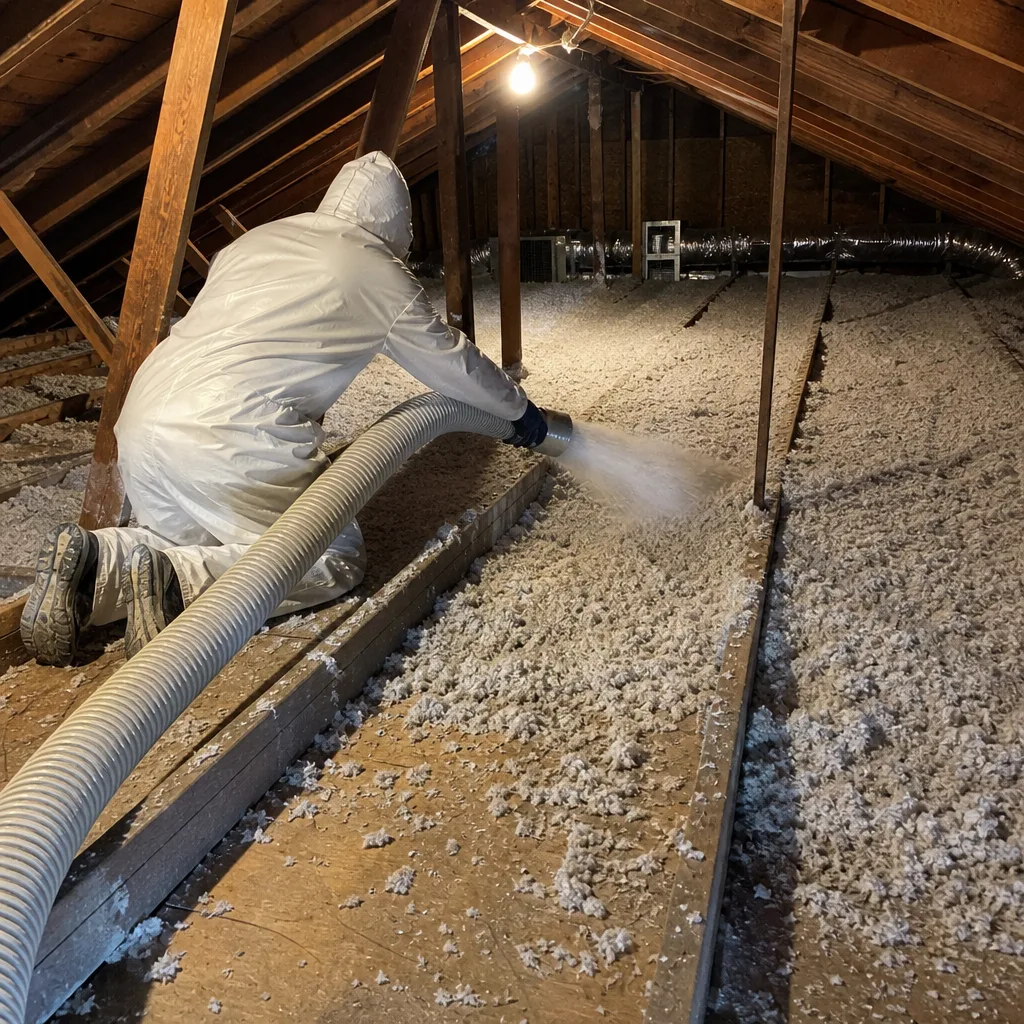
Every ventilation prep job in West Hollywood follows the same documented sequence. The steps below are what we complete before any insulation material is quoted or ordered. A written scope covering all of them is provided before work begins – Haven Standard Clause 1, no exceptions.
- Initial attic assessment and blower-door baseline. We enter the attic with a high-lumen inspection light and document the current condition: rafter-bay clearance at the eaves, existing baffle presence or absence, soffit vent status (open, painted, blocked), ridge vent type, and any gable vent configurations. Simultaneously, a blower-door test establishes a CFM50 baseline – the pressurization reading that shows, in one figure, how much air the building envelope is currently losing. This reading goes into your written scope and becomes the “before” number in your documented photo record.
- Air sealing of the attic floor plane. Before baffles go in, we seal every penetration at the top plate: recessed can lights (a major source of stack-effect air loss in West Hollywood’s older single-story homes), wiring chases, plumbing vents, and HVAC boot connections. We use fire-rated foam and caulk rated for the application – no shortcuts on material spec because the attic floor air barrier is what the blower-door test actually measures. This step is never skipped at Topside Attic Insulation West Hollywood.
- Soffit vent clearing and free-area verification. We confirm each soffit vent is open and unobstructed. In homes along the Norma Triangle and the streets east of La Cienega, painted-over soffits are routine. We clear them mechanically and document the before condition with photos. Net free area – the actual open square inches of vent space – is calculated against the attic square footage to confirm the 1:150 ventilation ratio required under California Building Code, or 1:300 if a vapor retarder is present.
- Baffle installation in each rafter bay. We install rigid rafter baffles – typically Owens Corning ProPink baffles or equivalent – in every bay that will receive insulation, running from the top plate to at least the ridge-vent intake point. Each baffle is stapled and foam-sealed at the top plate end to prevent insulation from migrating into the soffit throat. The channel maintained is a minimum 1-inch clear airway per code; we target 2 inches where rafter depth allows it, which is standard in the 2×6 rafter stock common in West Hollywood’s post-1950 construction.
- Ridge vent and upper exhaust inspection. The baffle system only works if the exhaust end is functional. We inspect ridge vent continuity, confirm that shingle-over ridge vents haven’t been compressed or bridged by roofing crews, and assess any powered attic ventilators or gable fans for proper sizing. An undersized or incorrectly positioned exhaust vent creates negative pressure that pulls conditioned air from the living space – which shows up directly in the blower-door numbers.
- Post-seal blower-door reading and written documentation. After air sealing is complete and before insulation is added, we run a second blower-door test. The before and after CFM50 numbers go into the written job record alongside the photo documentation. You receive both figures. If a number doesn’t move the way the scope predicted, we find out why before closing the job – not after. The 365-Day Done Right Promise covers every step in writing.
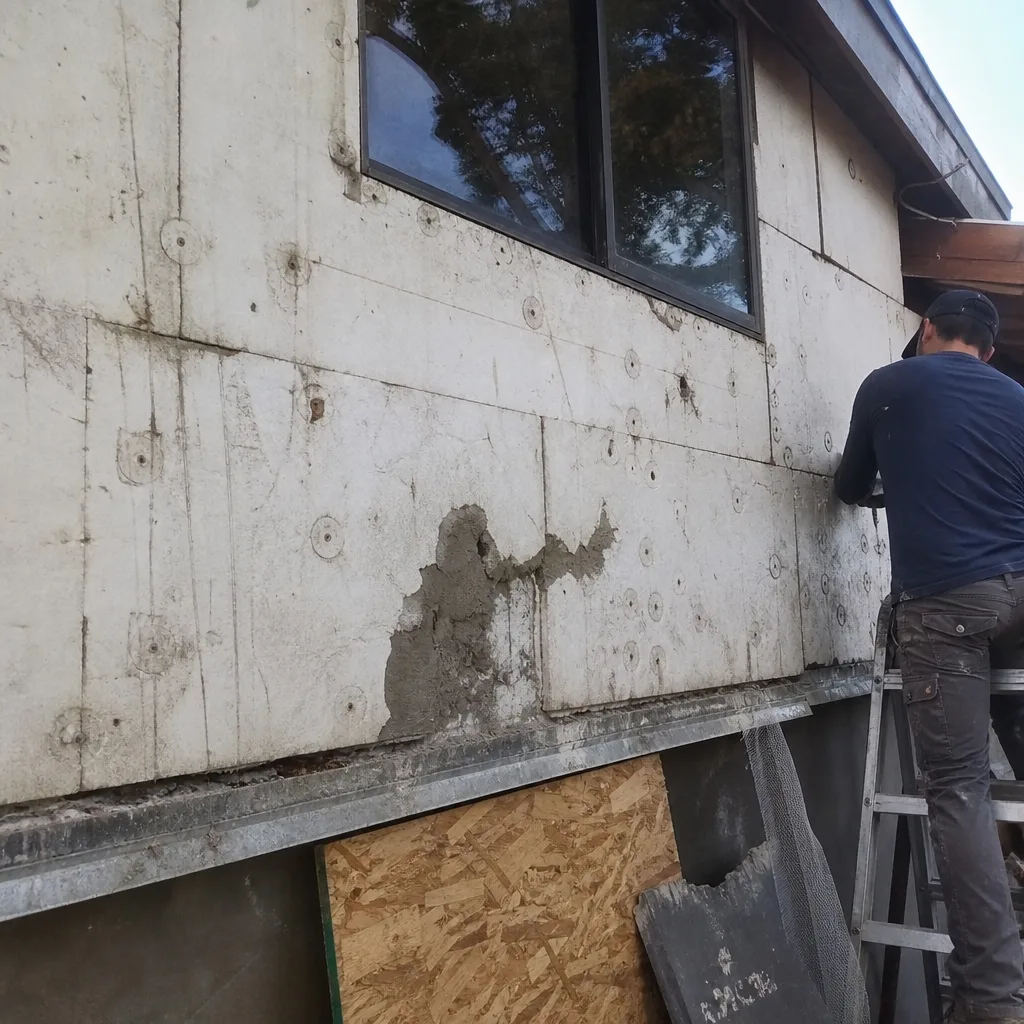 Before
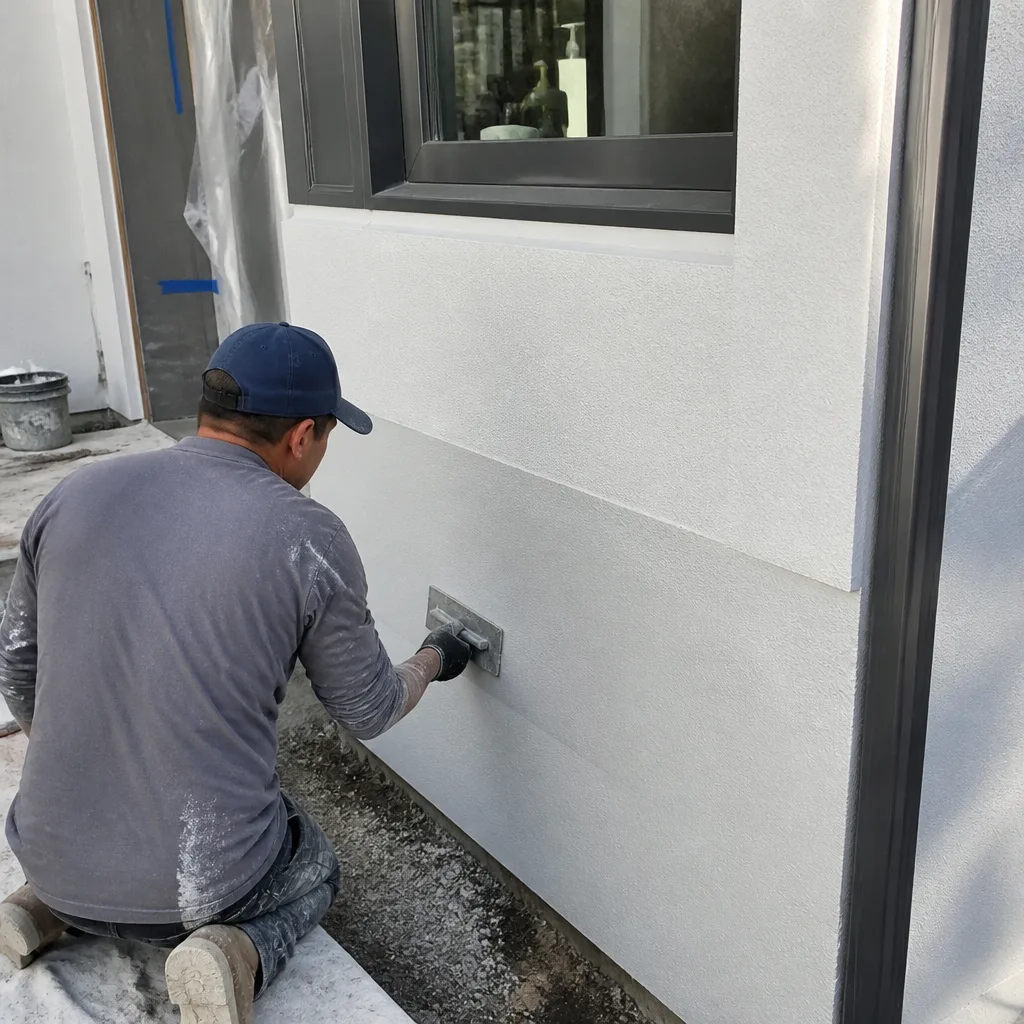 After
AfterAttic Baffles & Ventilation Prep Pricing in West Hollywood
Attic baffle and ventilation prep work in West Hollywood typically runs between $350 and $950 as a standalone scope, depending on attic size, rafter bay count, and how much corrective work the soffit vents and air sealing require before baffles can go in. When ventilation prep is combined with a full Attic Insulation job, the prep labor is quoted as a line item in the written scope so you can see exactly what you’re paying for each phase.
| Scope Item | Typical Range (West Hollywood) |
|---|---|
| Baffle installation only (existing soffits clear, no air sealing) | $350 – $550 |
| Baffle installation + top-plate air sealing | $550 – $800 |
| Full ventilation prep (baffles, air sealing, soffit clearing, blower-door baseline + post-seal reading) | $750 – $950 |
| Soffit vent clearing only (painted or blocked vents, no baffle work) | $150 – $300 |
| Blower-door test as a standalone assessment | $250 – $350 |
A few factors push a job toward the higher end of those ranges:
- Attics with interrupted rafter bays – common in West Hollywood’s Spanish bungalows with dormers or hip-roof sections – require more individual baffle cuts and more foam sealing at irregular top plates.
- Homes with a high density of recessed can lights (a very common feature in remodeled 1960s ranch-style homes in the Melrose Hill area) take longer to air-seal properly because each fixture has to be addressed individually.
- Attics where prior insulation has been pushed into the soffit throats require cleanup before baffles can be placed, adding labor.
- Jobs requiring a permit – West Hollywood enforces mechanical and energy permits on ventilation modifications affecting conditioned space – include the permit fee in the written price, not as a surprise line item at close.
Under Haven Standard Clause 1, a flat written price and a full written scope are delivered before any work begins. There is no “we’ll assess it when we’re up there and call you” pricing here. If the scope changes because we find something unexpected once we’re in the attic, we come back down, update the written price, and get your sign-off before proceeding. That’s how it works on every job.
FAQs – Attic Baffles & Ventilation Prep
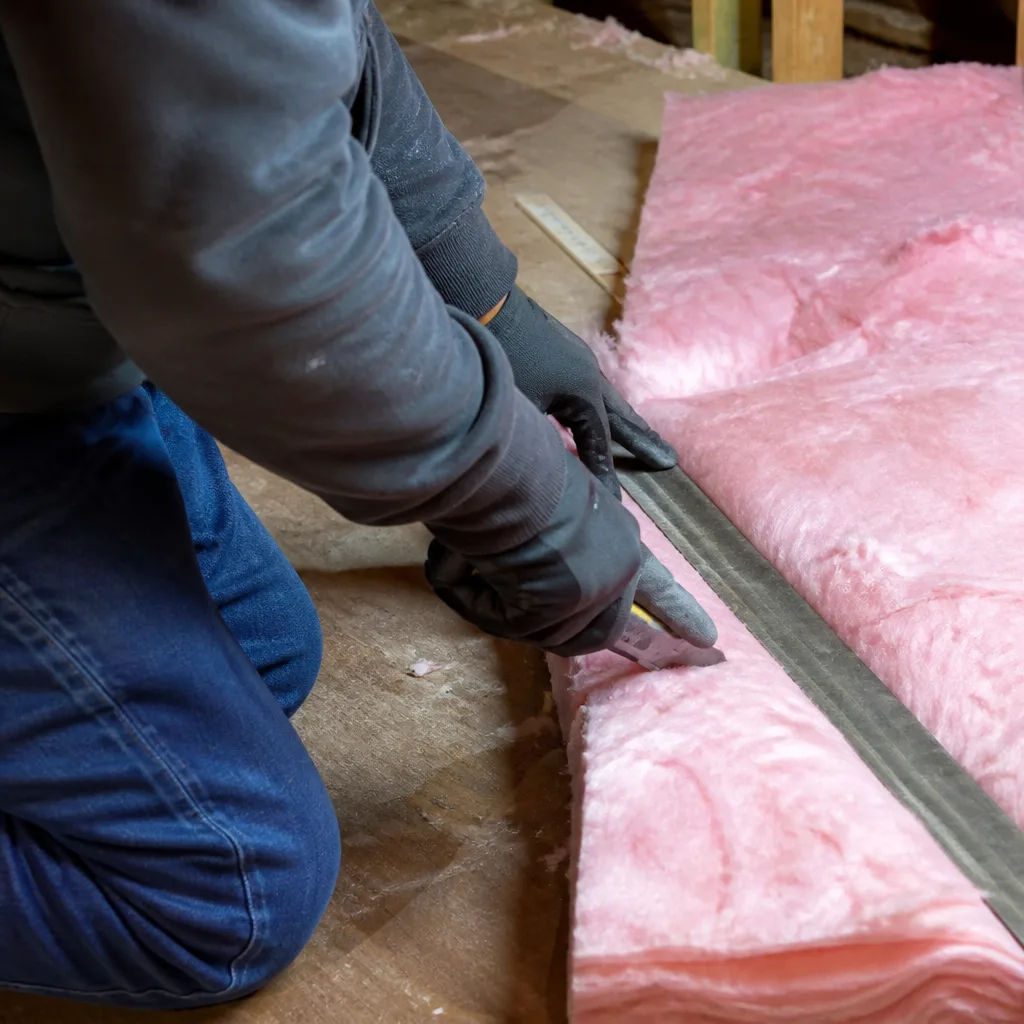
What is an attic baffle and do I actually need one in a West Hollywood home?
An attic baffle is a rigid channel – usually made from polystyrene or cardboard – that fits between roof rafters and holds a clear air passage from your soffit vent opening up to the attic space, so insulation can’t block that path. In West Hollywood specifically, most homes built before 1985 were never fitted with baffles, meaning every insulation layer added since then has progressively closed off the soffit intake. If your soffit vents are open but your attic runs hot in summer, missing baffles are the most likely cause. Call (213) 306-2607 for a written assessment – there’s no charge for the estimate.
Can I install attic baffles myself, or is this something that needs a contractor?
The baffle installation itself is not technically dangerous – it doesn’t involve high-voltage components or gas lines – but the work it enables matters a great deal if done incorrectly. Baffles installed without confirmed soffit clearance, without top-plate air sealing, and without a post-install blower-door check leave you with the appearance of proper ventilation prep and none of the thermal or moisture performance. Most West Hollywood homeowners who’ve had us correct a prior DIY job spent more in the end than if they’d started with a documented scope. The value in hiring a contractor for this scope is in the sequencing and the verification, not the staple gun.
How much does attic ventilation prep affect energy bills in West Hollywood?
Directly measured: on homes in the WeHo area where we’ve run blower-door tests before and after a full ventilation prep plus insulation job, CFM50 readings have dropped by 30 to 55 percent. That number translates directly to conditioned air your HVAC no longer has to replace. Exact dollar savings depend on your utility rate and how often your cooling system runs, but a 40 percent reduction in air leakage in a typical 1,400-square-foot West Hollywood bungalow represents a material change in June-through-October energy consumption. We publish the before and after numbers on every applicable job so you have a figure to work from, not an estimate.
Does West Hollywood require a permit for attic baffle and ventilation work?
West Hollywood falls under Los Angeles County building jurisdiction for most single-family residential work. Ventilation modifications that change the net free area of an attic vent system – including adding mechanical ventilation or significantly altering an existing passive vent setup – typically require a mechanical or Title 24 energy permit. Straightforward baffle installation and top-plate air sealing on an existing passive vent system generally do not trigger a standalone permit, but any job that touches the vent area calculation gets assessed at quote time. If a permit is required, the fee is included in your written price before work starts. We don’t add it afterward.
Key Takeaways
- Attic baffles protect the soffit-to-ridge airflow path that prevents heat buildup and moisture accumulation – without them, insulation blocks the very ventilation it depends on.
- In West Hollywood’s climate, the marine-to-dry cycle makes unventilated attics a consistent source of moisture damage and summer cooling load.
- Air sealing comes before baffles, and baffles come before insulation. That sequence is non-negotiable at Topside Attic Insulation West Hollywood.
- Before-and-after blower-door numbers are included on every applicable job – you receive both readings in writing.
- A written price covering every line item is delivered before any work begins, under Haven Standard Clause 1.
- The 365-Day Done Right Promise covers all completed work in writing.
If your West Hollywood home hasn’t had its attic ventilation assessed since the last insulation job, or if you’re planning to add insulation and want to confirm the vent prep is in order first, reach out to Wes Okafor and the Topside Attic Insulation West Hollywood team. Call (213) 306-2607 to schedule a written estimate – you’ll have a flat price and a full scope before anyone sets foot in your attic. Visit our home page to see the full range of building-envelope services we provide.
Written by Wes Okafor, Owner at Topside Attic Insulation West Hollywood, serving West Hollywood.