
Owens Corning Attic Air Sealing: The West Hollywood Owner’s Guide
Most Owens Corning attic air sealing jobs in West Hollywood run between $1,800 and $3,400 installed, depending on attic square footage and how many top plates, can lights, and penetrations need sealing. We stock Owens Corning-compatible acrylic latex sealant, high-temperature caulk for flue penetrations, and metal flashing for dammed chases on our trucks, and we can usually start the same day you call. Homeowners usually figure out something’s wrong when their upstairs rooms won’t stay cool despite new insulation, or when their energy auditor hands them a blower-door number north of 3,500 CFM50 and points to the attic hatch.
Which Owens Corning Models This Applies To
Owens Corning doesn’t sell attic air sealing as a discrete “system” with model numbers the way they sell insulation batts. What you’re looking for is the air-sealing layer specified in Owens Corning’s complete attic system documentation, the part that comes before the ProPink or AttiCat blown-in product goes down. If your attic already has Owens Corning insulation but no visible sealed top plates, plumbing chases, or recessed light covers, you’re working with an incomplete install.
To identify what you need, check the existing insulation bag labels for the Owens Corning product line, ProPink L77, AttiCat Expanding Blown-In, or EcoTouch PINK Fiberglas Batts. The air-sealing work is independent of the insulation series but must be compatible with California Title 24 requirements for conditioned-space separation. We use Owens Corning-sourced acrylic latex sealant for general gaps, plus fire-rated caulk where the assembly meets a chimney or flue. Aftermarket equivalents exist, but the Owens Corning-specified sealants are formulated to stay flexible from 40°F attic winter nights to 140°F summer peak roof deck temperatures. That’s not a minor detail in West Hollywood, where unvented roof assemblies can see that swing in a single July day.
Signs Your Owens Corning Attic Air Sealing Is Failing
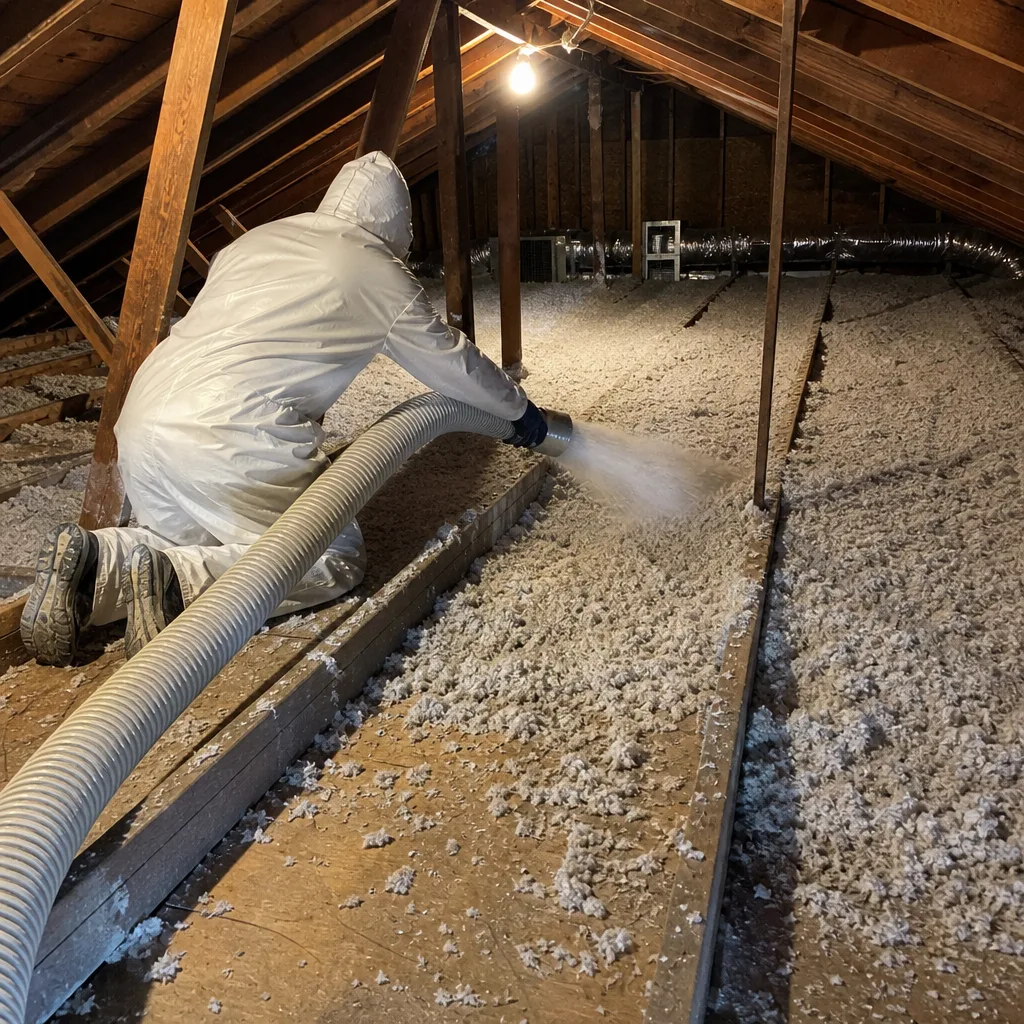
- Upstairs rooms run 8-12 degrees warmer than downstairs. Conditioned air is escaping through unsealed top plates and pulling 100°F attic air down through wall cavities. The temperature split is usually worst in late afternoon when solar load peaks on your roof deck.
- Dust streaks around ceiling registers or can lights. Those dark lines are filtration soiling, attic air being drawn through gaps around the fixture housing because the pressure boundary sits at the drywall instead of at a sealed cover.
- Ice damming or moisture staining at the eaves. Warm, humid indoor air leaks into the attic through bypasses, condenses on the underside of the roof sheathing, and runs down to the plate line. In West Hollywood’s occasional winter rains, that moisture shows up as ceiling stains before it shows up on your energy bill.
- Blower-door test shows little improvement after insulation upgrade. If a previous contractor blew in Owens Corning or another product over unsealed gaps, the CFM50 number barely moved. We’ve seen this exact scenario in bungalows off Fairfax Avenue where the insulation looks thick but the house still breathes like a screen door.
- Can lights flicker or fail prematurely. Unsealed IC-rated housings draw superheated attic air across the socket and wiring. The thermal cycling degrades connections. It’s not an electrical problem. It’s an air-sealing problem wearing an electrical mask.
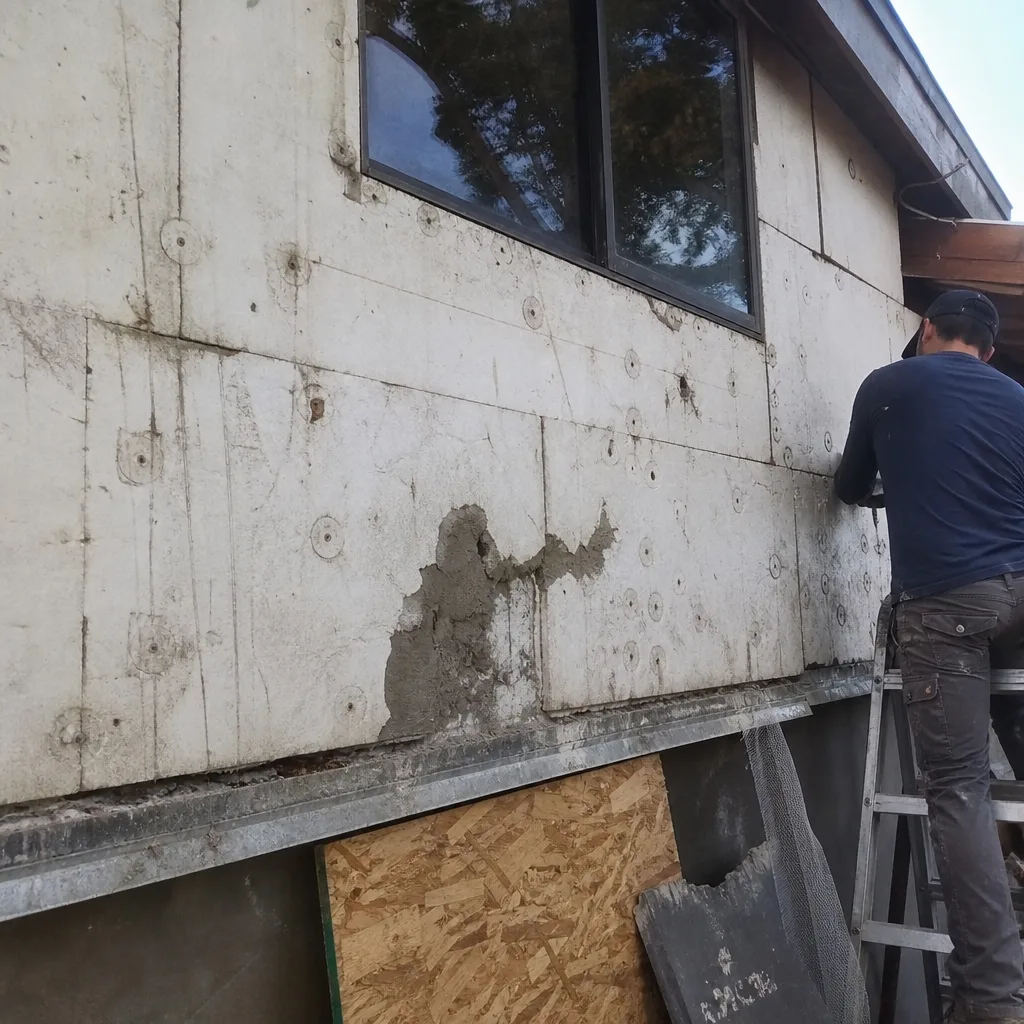 Before
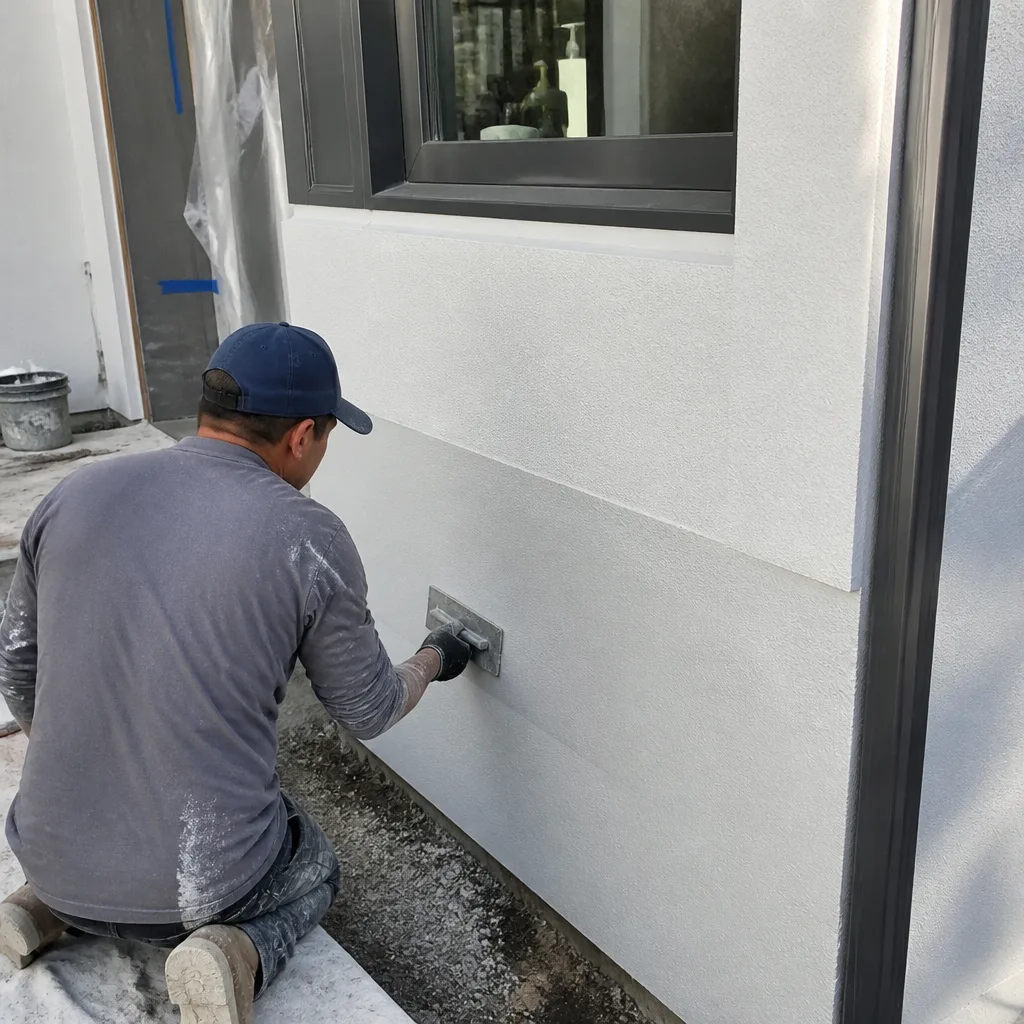 After
AfterReplacement Cost & What’s Included
In West Hollywood, a complete Owens Corning-compatible attic air seal on a 1,200-1,800 square foot home typically runs $1,800-$2,800. Larger homes with complex rooflines, multiple HVAC chases, or finished attic spaces push toward $3,000-$3,400. The range reflects labor hours, not material markup. Sealant and flashing are cheap. Accessing a 4:12 pitch roof cavity above a vaulted ceiling in the Norma Triangle is not.
What the price covers: blower-door pre-test to establish your baseline CFM50, manual sealing of all top plates and partition walls, fire-rated caulk at flue and chimney penetrations, pre-formed covers or site-built dams around can lights, sealed attic hatch or pull-down stair assembly, and a post-test with documented photo record. You get the before number, the after number, and photos of every sealed location. Under our 365-Day Done Right Promise, any missed leak identified within a year gets sealed at no charge. We also provide a Free Second Opinion on any written estimate you’ve already received, no obligation.
DIY or Call Us?
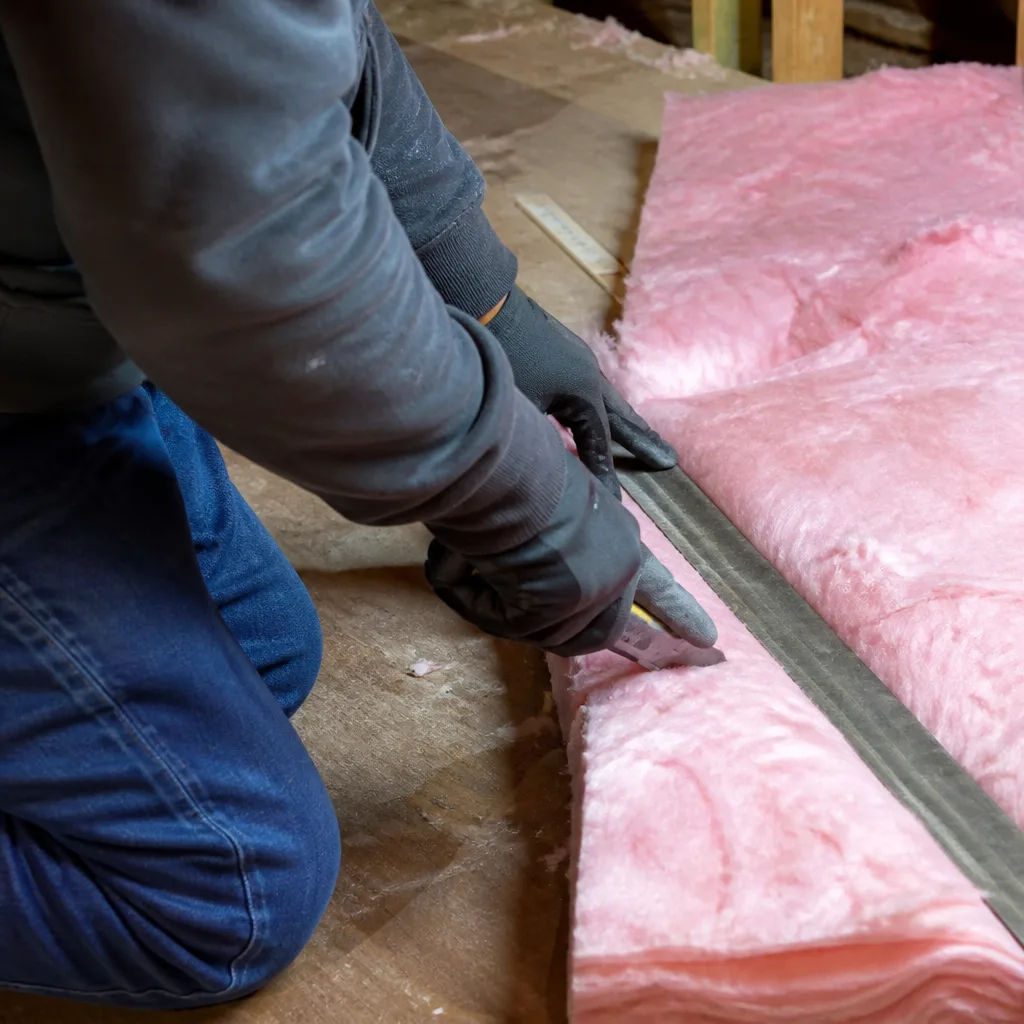
There’s no high-tension spring or live electrical here, but attic air sealing is still a job where DIY goes wrong in predictable ways. A homeowner can safely check the attic hatch for visible gaps, confirm whether can lights have covers, and look for daylight through top plates. What you can’t do from a Home Depot aisle is run a blower-door test to find the leaks you can’t see, or safely navigate a West Hollywood attic with 1940s knob-and-tube wiring still in service and decking that won’t hold a stapled boot.
The other common DIY failure is sealing the wrong side of the assembly. Caulking the drywall ceiling around a can light traps moisture and violates fire codes. The seal belongs at the housing, above the insulation plane. We’ve pulled out plenty of homeowner caulk jobs in West Hollywood attics. They always take longer to fix than an unsealed attic would have. If you want to know what you’re actually dealing with, call (213) 306-2607. The estimate is free, and you’ll get a written price before anyone touches a tool.
FAQs
Properly installed acrylic latex sealant and fire-rated caulk last 20-30 years in a vented California attic. The failure mode is usually not the sealant degrading, it’s the building settling or a subsequent contractor disturbing the seal during HVAC or electrical work. We document every sealed location with photos so future trades know where not to cut. Call (213) 306-2607 if you suspect a prior contractor compromised your seal layer.
Partial repair is common and often sufficient. If your original air seal was done correctly but one chase was missed, or a new bathroom fan was cut in without sealing the boot, we spot-seal and re-test. We only recommend full replacement when the original work used non-compatible materials, silicone that won’t bond to new acrylic latex, or when the attic has been disturbed so extensively that locating every breach costs more than starting fresh. We’ll tell you which category you’re in after the blower-door test.
Most West Hollywood attic air sealing jobs take one full day for a two-person crew. A simple 1,000 square foot attic with straightforward access might finish in six hours. Complex jobs with multiple dropped soffits, conditioned attic conversions, or active rodent damage requiring cleaning first can run into a second day. We don’t charge by the hour. Your written price is your price.
Yes. We carry Owens Corning-compatible acrylic latex sealant, fire-rated caulk, metal flashing, and pre-formed can light covers on every truck. We also stock Johns Manville, Knauf, and Rockwool materials, no proprietary lock-in. If your attic has a specific Owens Corning insulation product already installed, we match the air-sealing approach to that assembly. Same-day starts are available when you call before noon.
Topside Attic Insulation West Hollywood is an independent service provider, not affiliated with Owens Corning. We source materials from Owens Corning and other manufacturers based on what the job requires.
Seal the leaks first. Then insulate. The R-value on the bag assumes you did it in that order.
Call (213) 306-2607 for a free estimate. A live person answers 24/7. You’ll get a written price before any work starts, a documented photo record when the crew leaves, and before-and-after blower-door numbers so you can verify the result yourself.
Written by Wes Okafor, Owner, Topside Attic Insulation West Hollywood at Topside Attic Insulation West Hollywood, serving West Hollywood and nearby areas.